State capital Mainz
Cathedral city. Gutenberg city. Wine by the Rhine.
Cathedral city. Gutenberg city. Wine by the Rhine.
Mainz looks back on more than 2,000 years of history. The Romans built a legionary camp here, and in the Middle Ages the city developed into an important religious and political centre. Mainz Cathedral, the historic lanes and numerous traces of Jewish history tell the story of this past. In the 15th century, Johannes Gutenberg revolutionised the spread of knowledge with printing in Mainz.
Today, Mainz is easy to explore on foot. Around the cathedral, the weekly market, small shops and wine taverns invite you to stop and take your time. In Augustinerstraße and around Kirschgarten, you can discover the historic side of Mainz Old Town, while the Rhine promenade offers space for walks and events. The city also has museums, theatres, Fastnacht carnival and a lively wine culture.
From Roman remains and printing to wine and the Rhine – different eras come together within a small area in Mainz.
Cathedral & Old Town
From Cathedral Square through Augustinerstraße and Kirschgarten.
Wine & Rhine
Breakfast at the market, wine taverns and walks along the river.
A fire on the day the cathedral was consecrated, Roman finds beneath the shopping street and world-famous stained-glass windows – Mainz has some unusual stories to tell.
On the day of the cathedral’s first consecration in 1009, a fire broke out and destroyed the new building. The cathedral could not be used again until 1036.
In 2000, construction work on a shopping arcade uncovered the remains of a sanctuary dedicated to the goddesses Isis and Mater Magna. Today, the finds can be seen in the Römerpassage.
Between 1978 and 1985, Marc Chagall created nine glowing blue stained-glass windows for St Stephen’s Church. They symbolise hope and Jewish-Christian reconciliation.

In the 15th century, Johannes Gutenberg developed a printing process in Mainz that fundamentally changed how knowledge was shared. Movable metal type, suitable printing ink and the printing press made it possible to produce many identical pages of text. Books could now be produced on a scale never seen before.
The Gutenberg-Museum shows just how great the impact of this invention was. Among other exhibits, it preserves original Gutenberg Bibles and tells the history of printing. While the new museum building is under construction, the ‘Gutenberg-Museum MOVED’ exhibition is housed at the Natural History Museum at Reichklarastraße 1.
Tip: A printing demonstration is a particularly vivid way to explore the subject. Before your visit, check which demonstrations and guided tours are available.
The history of Mainz began long before Gutenberg. In 13 BC, the Romans built a legionary camp on the site of today’s Kästrich district. The military base developed into Mogontiacum, which later became the capital of the Roman province of Germania Superior.
Evidence of this period can still be found in various parts of the city today: the remains of the Roman theatre, the Römersteine as sections of a former aqueduct, and the Drususstein in the grounds of the citadel. The Sanctuary of Isis and Mater Magna is particularly remarkable. Its remains were discovered right in the city centre.
Tip: The Roman sites are spread across the city. If you would like to explore several of them, you can combine your visit with a themed city tour.

More than 2,000 years of history have shaped Mainz. The Romans laid the foundations for the city, Gutenberg revolutionised printing here, and the cathedral recalls the importance of Mainz in the Middle Ages. Yet among historic buildings, winding lanes in the old town and lively squares, one thing is especially clear: Mainz knows how to bring the past and present together.
Wine is part of the Mainz way of life. At the traditional market breakfast around the cathedral, locals gather for ‘Weck, Worscht un Woi’ – bread rolls, sausage and wine. Rheinhessen wines and regional specialities are served in the wine taverns of the old town and the seasonal wine taverns in the city’s wine-growing districts. Mainzer Fastnacht, Johannisnacht and the Weinmarkt show just how deeply social life and culture are rooted in the city.
And then there is the Rhine: the riverside promenade is perfect for walking, cycling or simply taking a break – just a few steps from the bustle of the city centre.


UNESCO World Heritage Site: SchUM-Stadt-Mainz
Mainz has more than a thousand years of Jewish history. As early as the 10th century, an important Jewish community developed in the city, which was once known as “Magenza”. Its scholars shaped the religious and cultural life of medieval Judaism in Europe. This heritage tells of a time of great scholarship and cultural prosperity, but also of persecution, pogroms and the Shoah.
Together with Worms and Speyer, Mainz is one of the SchUM sites that were added to the UNESCO World Heritage List in 2021. Today, historical records and places of Jewish life invite you to learn about this important history and follow its traces into the present day. Discover the New Synagogue, the historic Judengasse and other important sites of Jewish culture – on your own, on a guided city tour or with the SchUM storytelling app.
St Martin’s Cathedral
Discover 1,000 years of history and culture
Mainz riverfront
Leave everyday life behind together as you gaze into the distance
Old Town & Kirschgarten
Strolling and dining among half-timbered houses
Would you like to plan your stay in the state capital?
Whether you are planning a guided city tour, a museum visit, a wine tasting or a weekend on the Rhine, Mainz Tourismus offers further information, bookable experiences and practical tips for your visit.
Discover Mainz & save
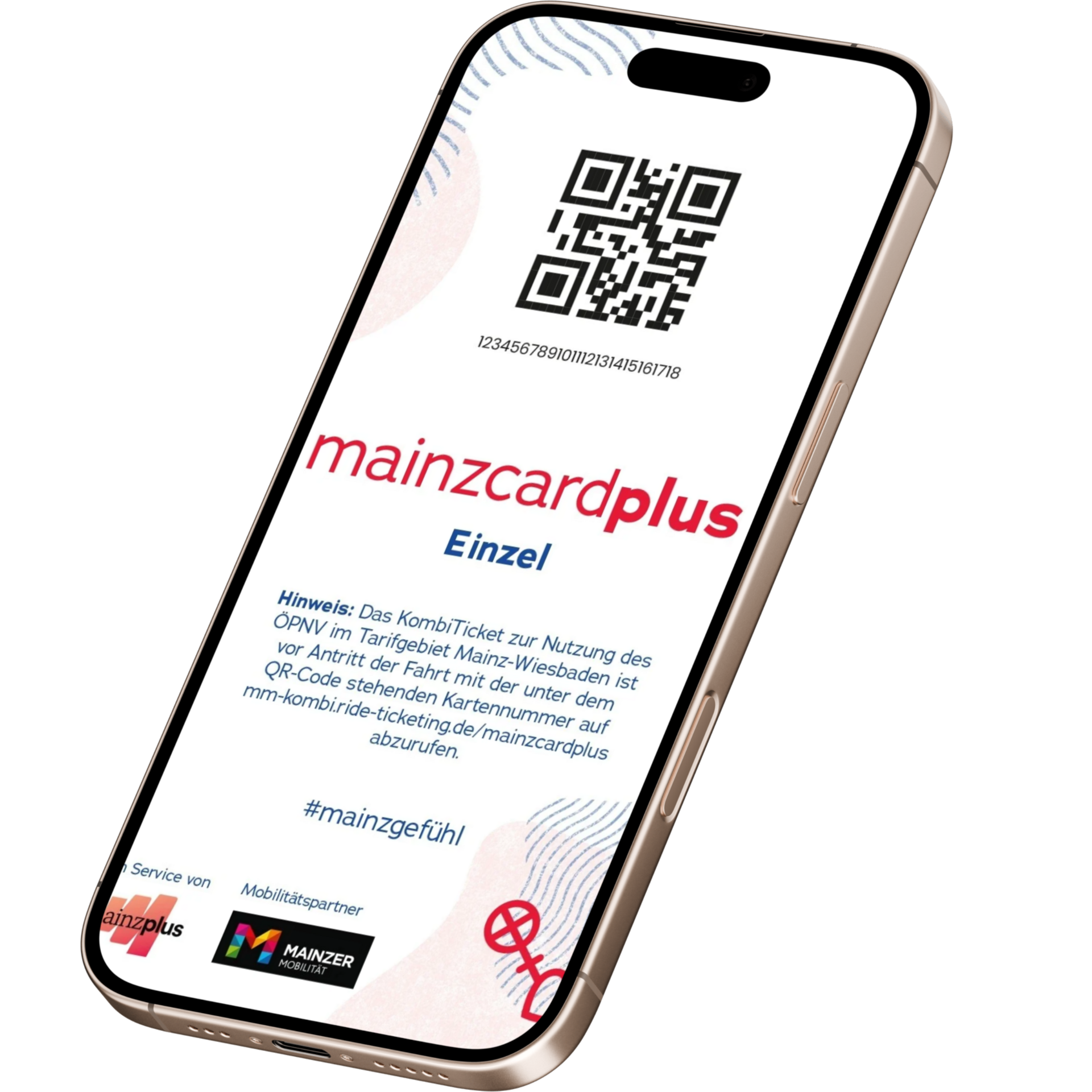
With the mainzcardplus, you can explore Mainz at your own pace and save on many cultural and leisure activities. A public guided city tour, free admission to the Gutenberg Museum and, if you wish, a public transport ticket are already included. You also receive further discounts at museums and on cultural and leisure activities.
Valid for 3 days · from €19