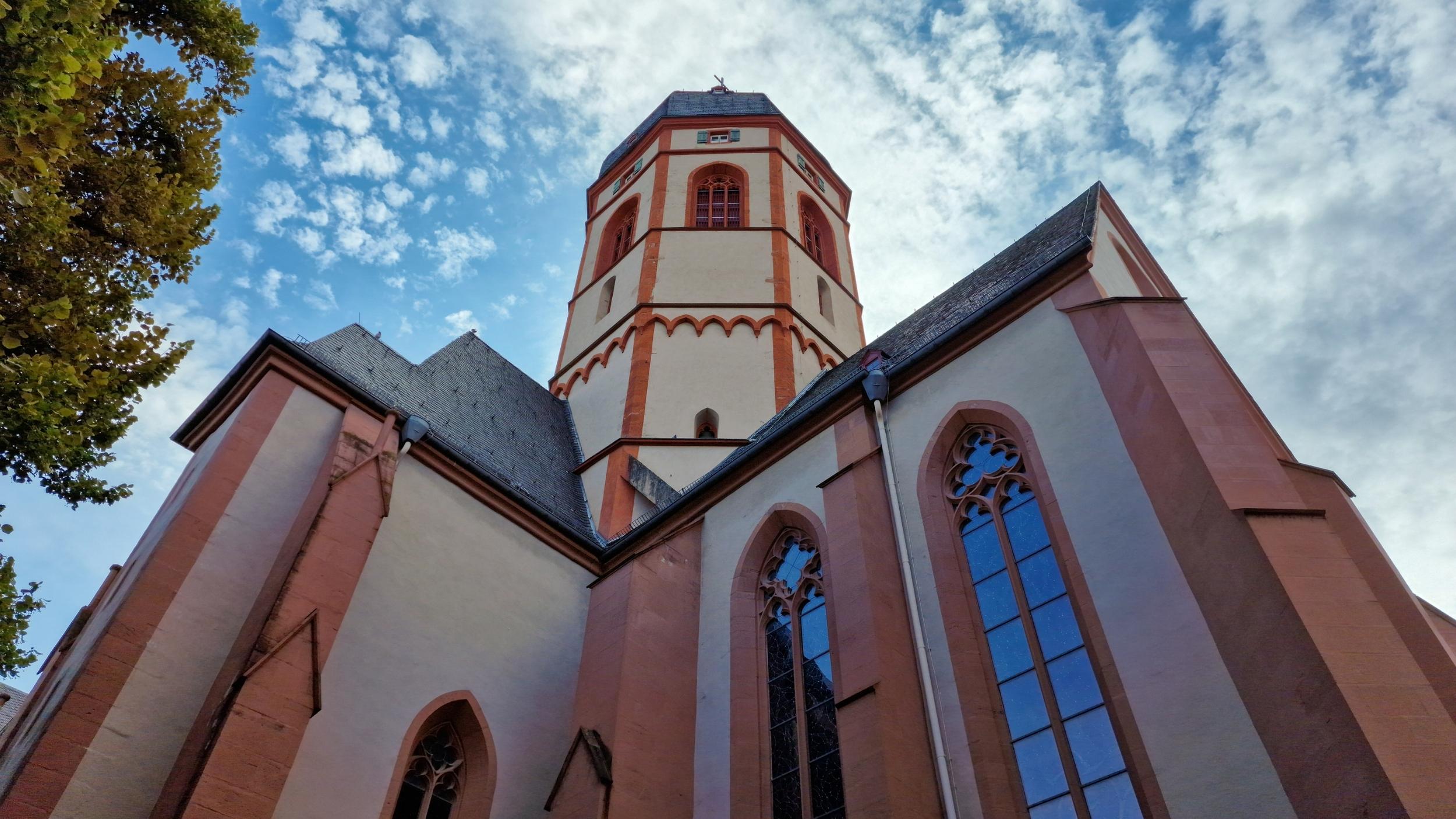
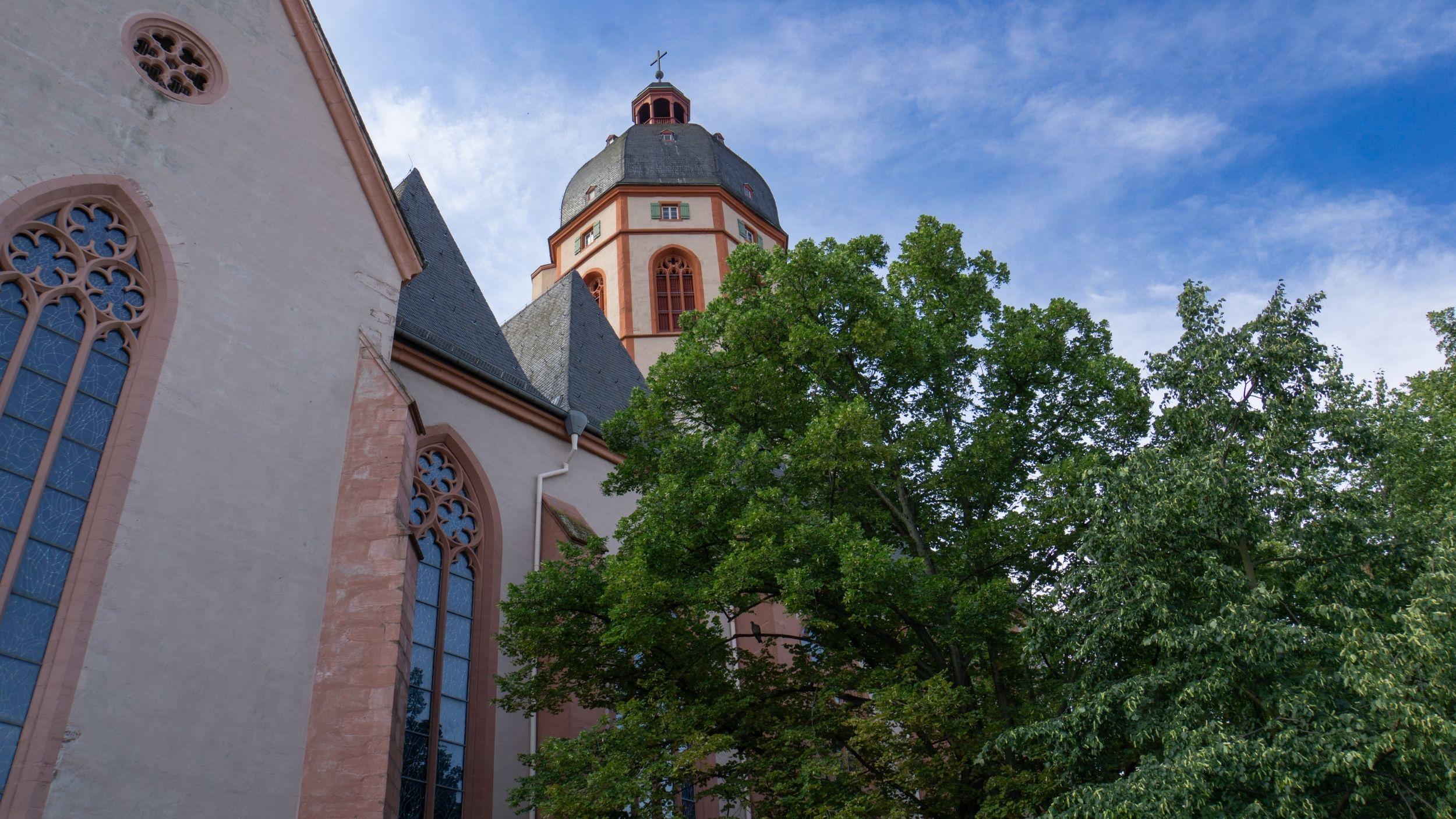
High above the old town of Mainz on the Stephansberg rises St. Stephen's Church – one of the most prominent landmarks of the city. The oldest Gothic hall church in Mainz was built in the late 13th and early 14th centuries and stands on the foundations of an even older church, which Archbishop Willigis had established around the year 990 as an imperial place of worship. Willigis, also the builder of Mainz Cathedral, found his final resting place here in 1011.
Heavily damaged in World War II, St. Stephen's was rebuilt in the post-war years. The clear design with white plastered walls and red sandstone today gives the interior a special tranquility and lightness. Parts of the original vault are still missing, which gives the building an authentic and open atmosphere.
A special highlight is the stained glass windows by Marc Chagall in the east choir and transept. Between 1978 and 1985, the world-famous French-Jewish artist created nine brightly colored blue windows with biblical motifs – as a symbol of reconciliation between Judaism and Christianity. Since Chagall never visited Mainz himself, his long-time collaborator Charles Marq took on the implementation of the later windows in the church nave.
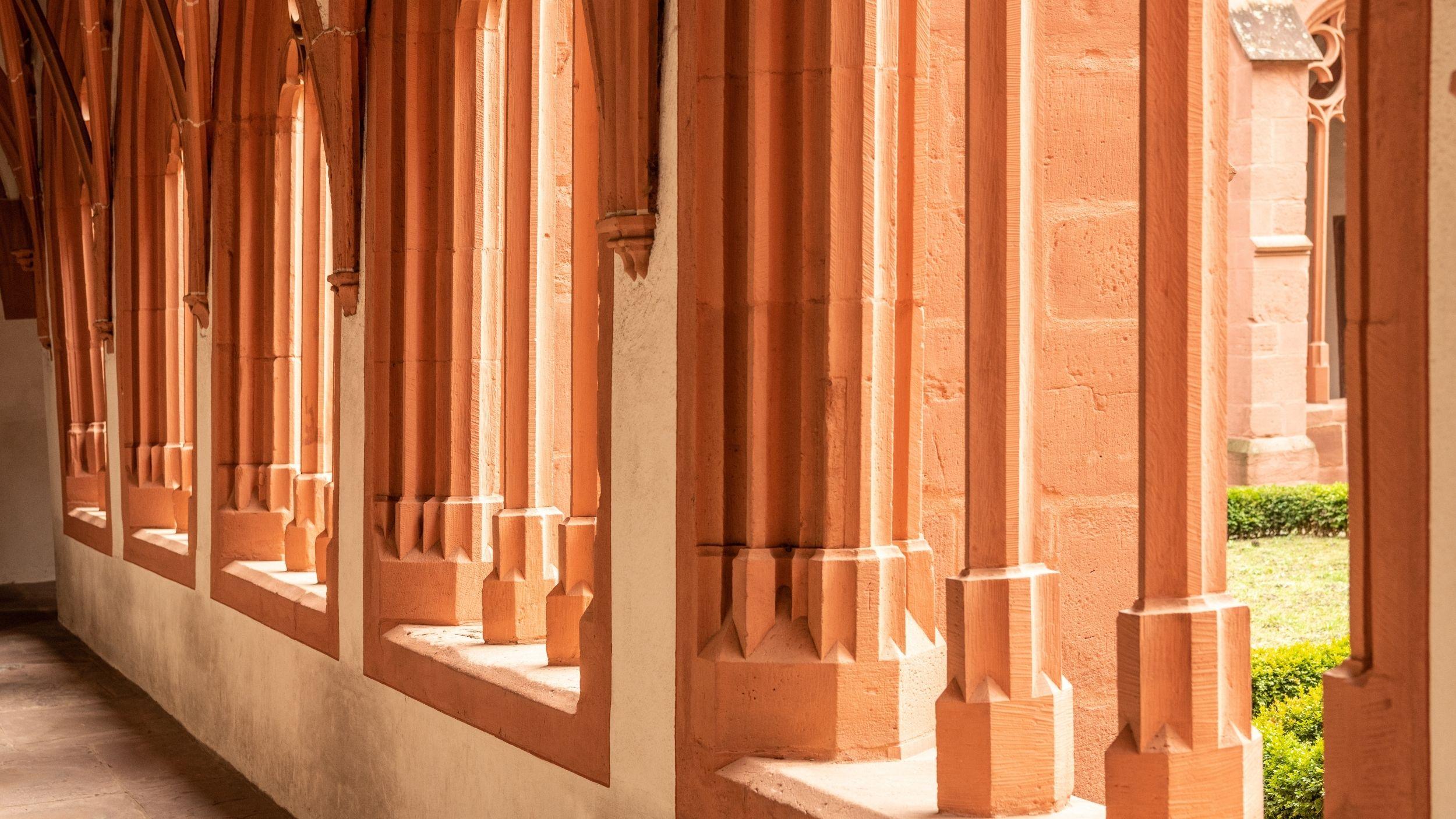
A stroll through the late Gothic cloister is also worthwhile: it is considered one of the most beautiful in Rhineland-Palatinate. Here you will find numerous grave slabs of former canons, elaborate coats of arms, and medieval sculptures such as the "Anna Selbdritt" group as well as a Gothic baptismal font from the year 1330, which is still in use today.
With around 200,000 visitors per year, St. Stephen's is not only a place of devotion and silence but also a significant cultural landmark of Mainz – rich in history, spirituality, and international art.