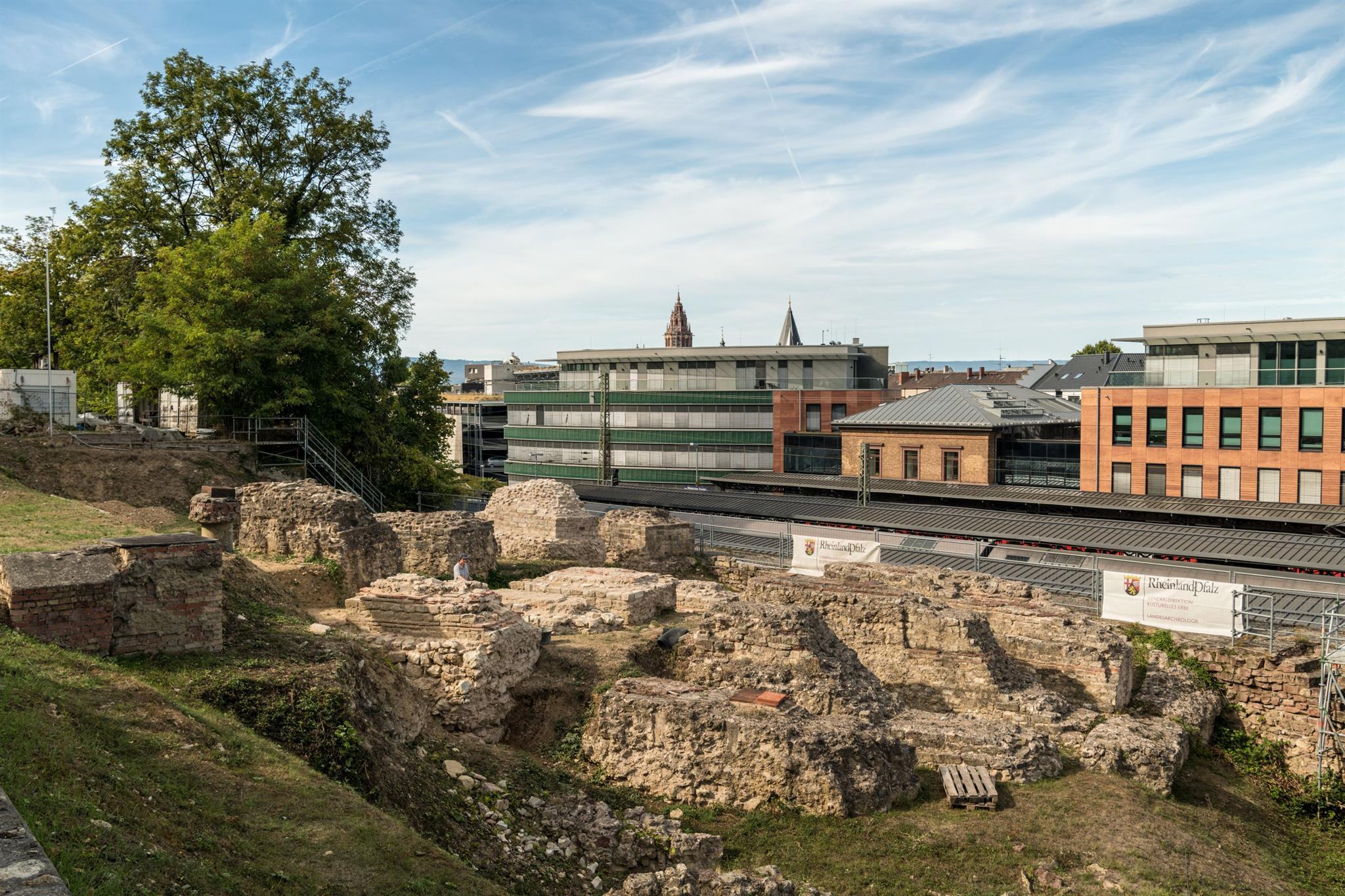
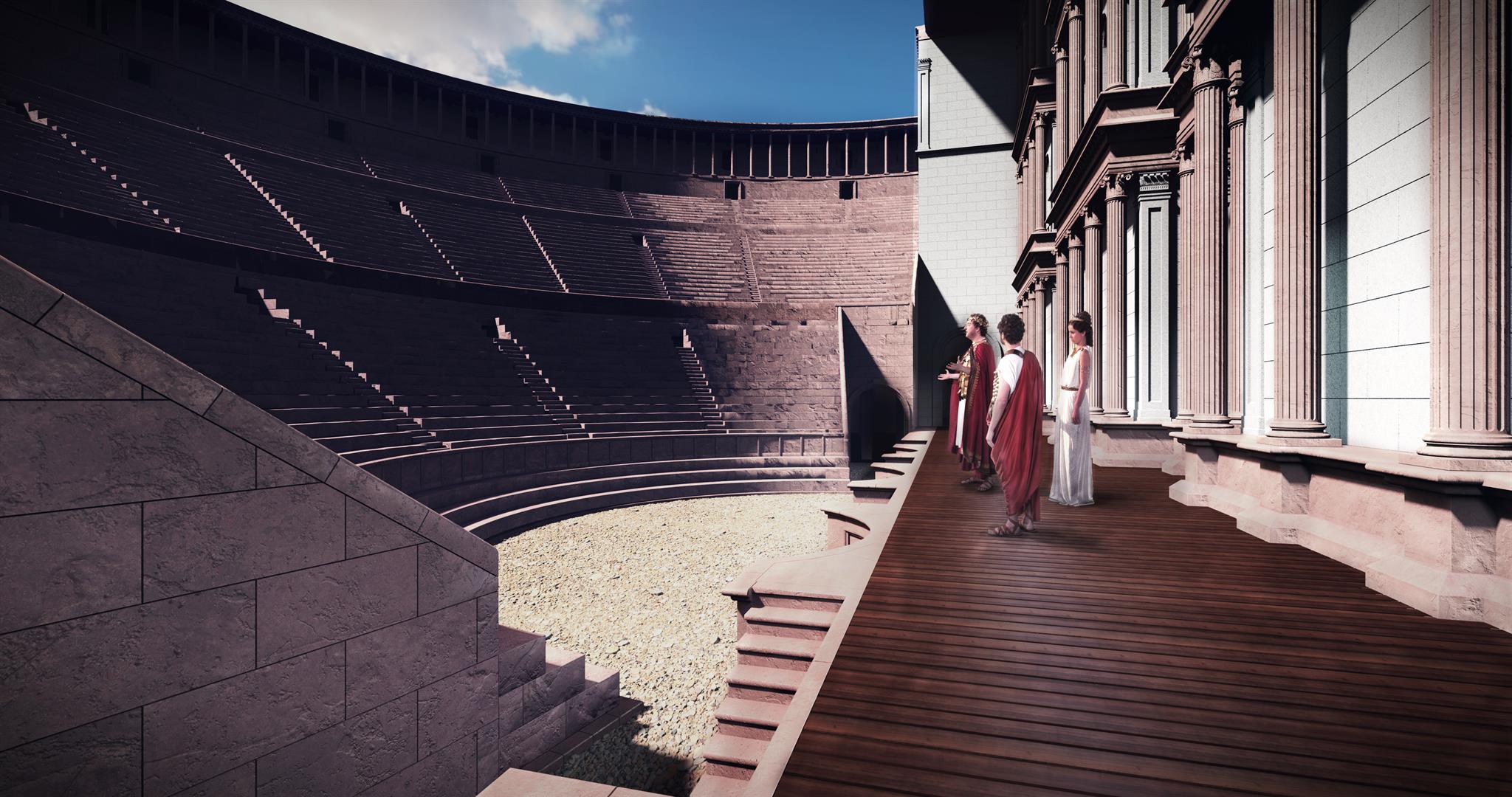
The Roman Theater in Mainz is one of the largest ancient stage buildings north of the Alps. Built presumably in the 1st century AD, it was located on the southern slope of the Kästrich, below the present-day citadel.
With a stage width of about 42 meters and an audience diameter of 116 meters, the theater could accommodate around 10,000 visitors – an impressive scale that clearly illustrates the importance of Mogontiacum, Roman Mainz. Theaters of this kind were central places of public life in the Roman Empire and reflected the urban culture.
After antiquity, the traces of the theater largely fell into oblivion. Initial hints appeared as early as the 19th century, but its existence was only confirmed at the beginning of the 20th century. The systematic uncovering of the site began later. Today, parts of the Roman Theater are visible and open to the public. Since 2006, the nearby train station has been named "Mainz – Roman Theater".
Through guided tours, information offerings, and civic engagement, the theater continues to be integrated into the urban landscape – as an impressive testimony to a time when Mainz was a significant garrison and administrative city of the Roman Empire.