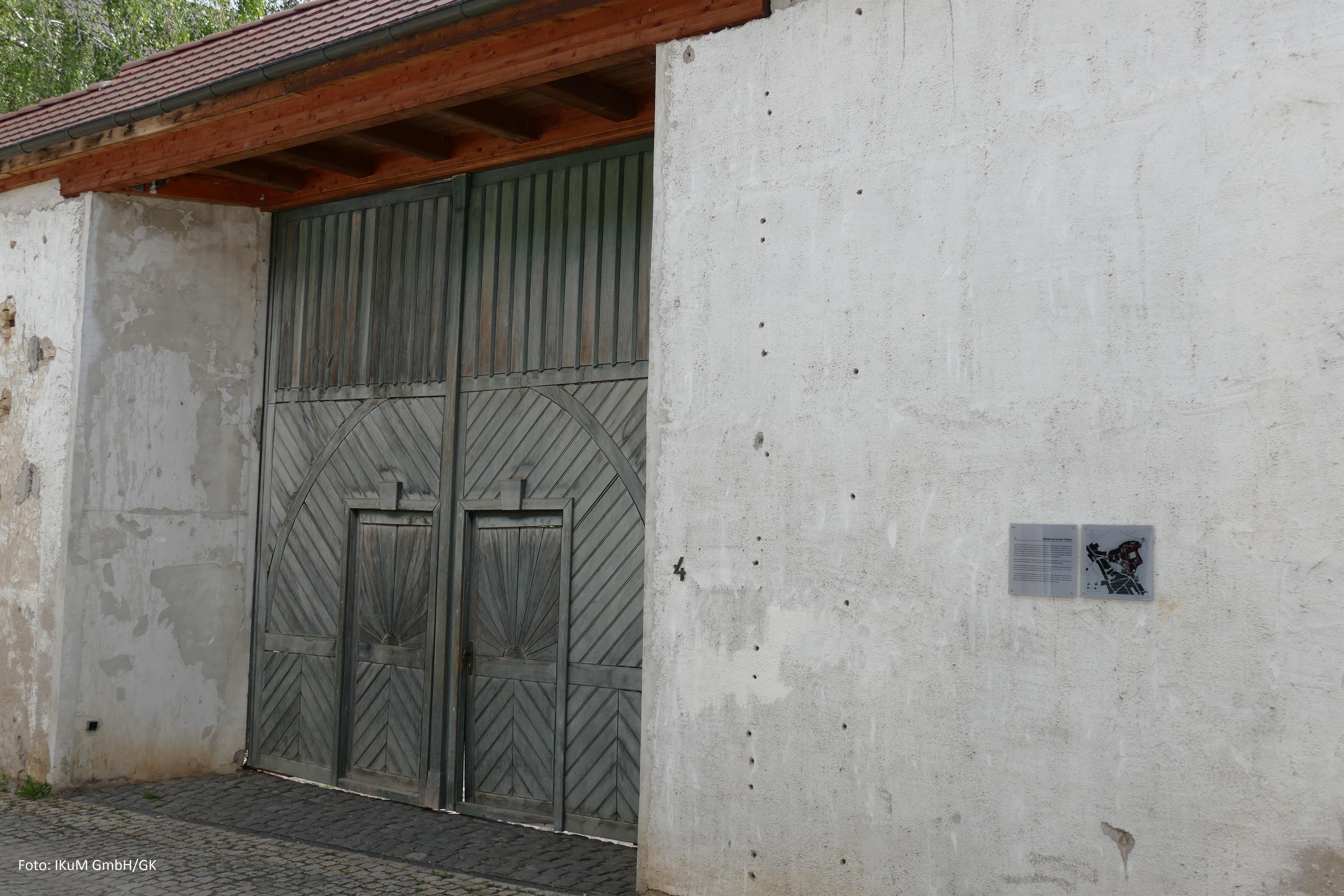
The estate, designed primarily in Baroque style in 1788 (Oberhofstraße No. 4), belonging to the Partenheim branch of the von Wallbrunn family, is regarded as an extremely vivid example of the wealth and significance of the noble families residing in Großwinternheim. The broad two-story main building with its steep mansard roof dominates a spacious courtyard, which is enclosed by buildings on three sides. The symmetrical façade is accentuated by a raised central projection with the main entrance.
The hillside location of the rear façade, however, only allows for a single story, but leads to an unusually generous park property extending to the area of Obergasse.
In the stairwell, traces of valuable interior furnishings have been preserved.
Above the bricked-in entrance of the left barn section, there is a sandstone relief featuring an so-called alliance stone in the shape of a triumphal arch with two marriage coats of arms and the date 1539 (or 1559), which may possibly originate from the Haxthäuser Hof (district of Nieder-Ingelheim).
An unforgettable local historical merit was achieved in 1796 during the French occupation by the Baroness von Wallbrunn. Through her personal appeal to General Custine's camp, she prevented the village from being burned down—a dire fate that did not spare the nearby Schwabenheim.