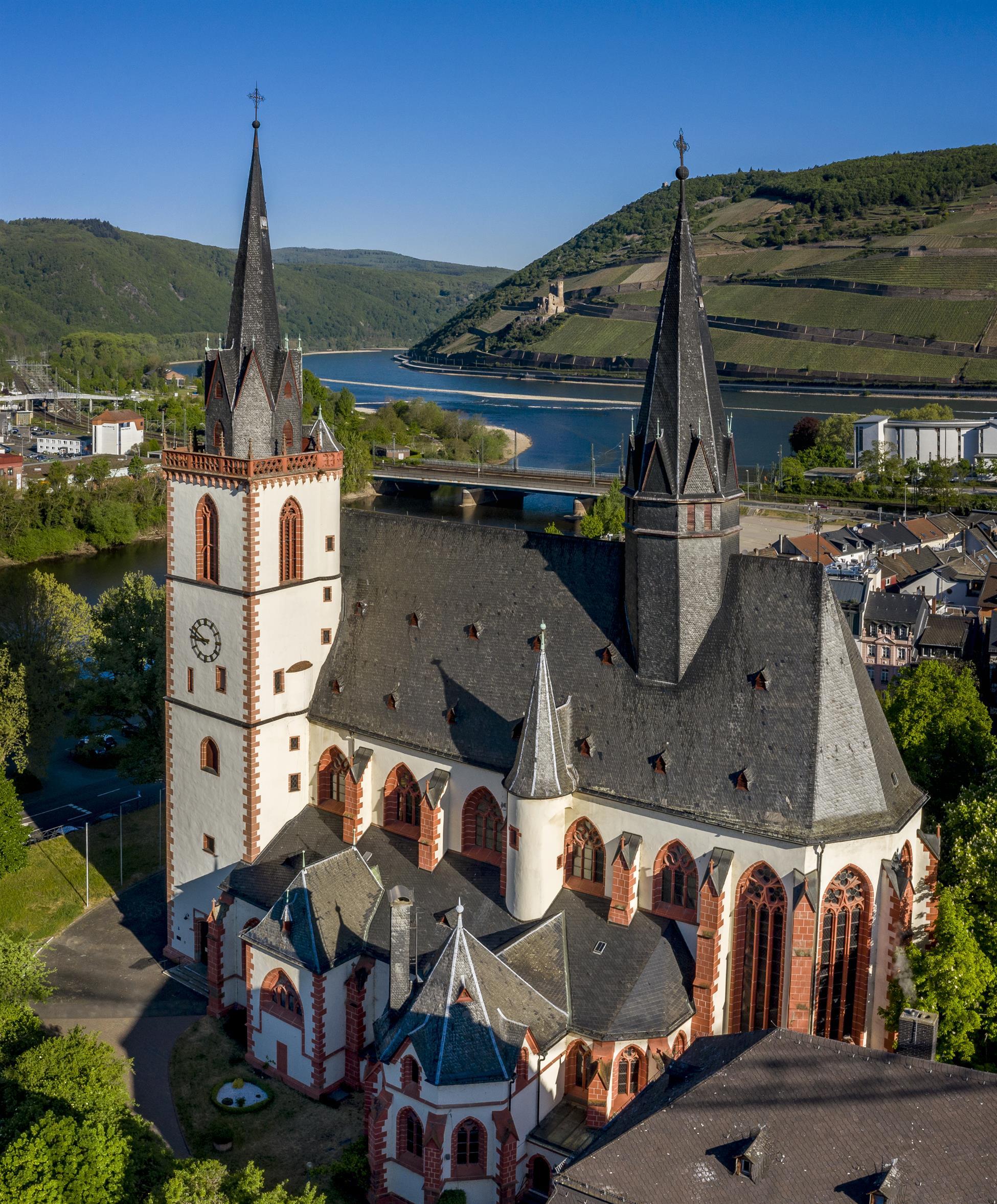
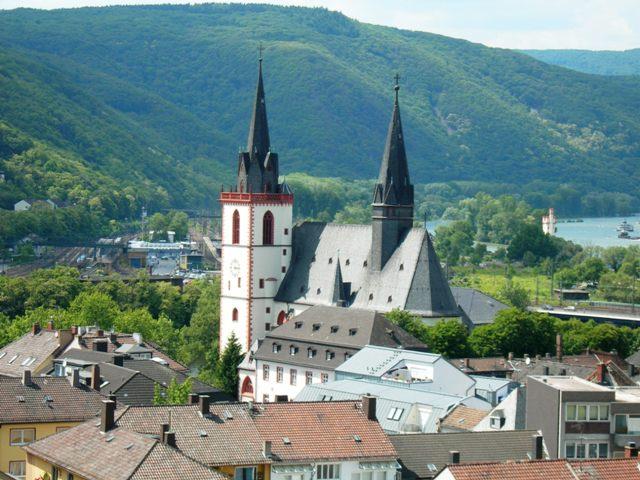
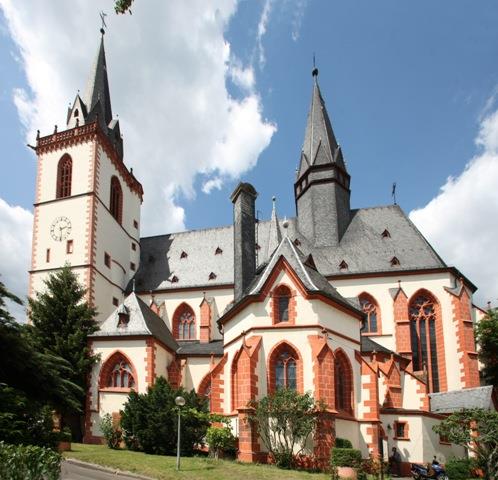
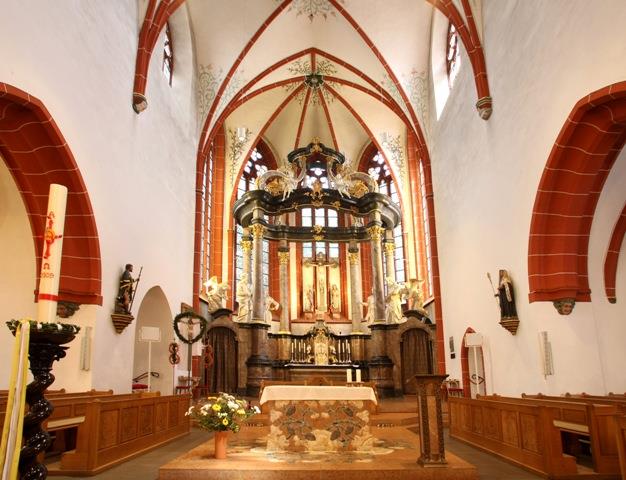
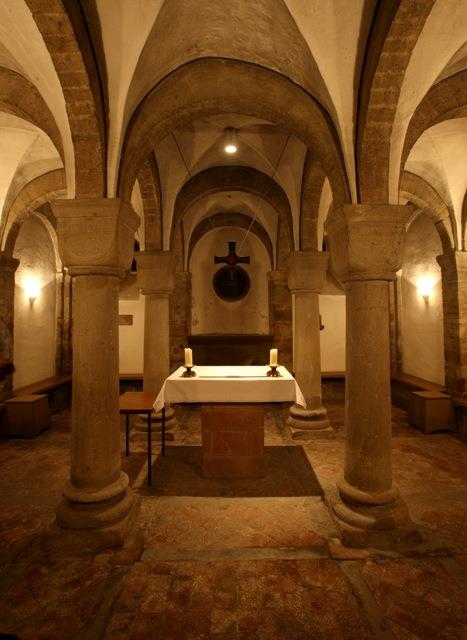
Tombstones attest that there was already a Christian community in Bingen in the 5th or 6th century. Probably in the Frankish period, the parish church was consecrated to Saint Martin. Since 1006, St. Martin is also documented as a collegiate church, where twelve clergymen served under the leadership of a provost. Only the crypt beneath the choir and the southwest tower remain as evidence of the Romanesque church structure. After the great city fire of 1403, the current nave was rebuilt first. The side aisles were only added later, although the northern one was already replaced between 1502-1505 with a double-aisled hall with a star vault. This so-called Barbarabau was separated from the other components reserved for the cathedral chapter, serving as the actual parish church. In 1817/18, the chapter buildings and cloister in front of the west portal were demolished: the current forecourt towards the Nahe river was created. In 1885, a careful restoration of the church took place by the creator of the Rochus Chapel, Max Meckel (construction of side chapels and sacristy; traceried galleries on the towers). In 1930, Pope Pius XI elevated the church to the title of basilica, but it largely fell victim to the bombing during the war in 1944. After the reconstruction, a comprehensive renovation followed from 1981 to 1988. On April 1, 1930, Pope Pius XI granted St. Martin the title of papal basilica. After the bombing in 1944, the vault of the main nave and part of the high altar collapsed. Today, visitors are once again welcomed by a house of worship of exceptional beauty.

searchMenu