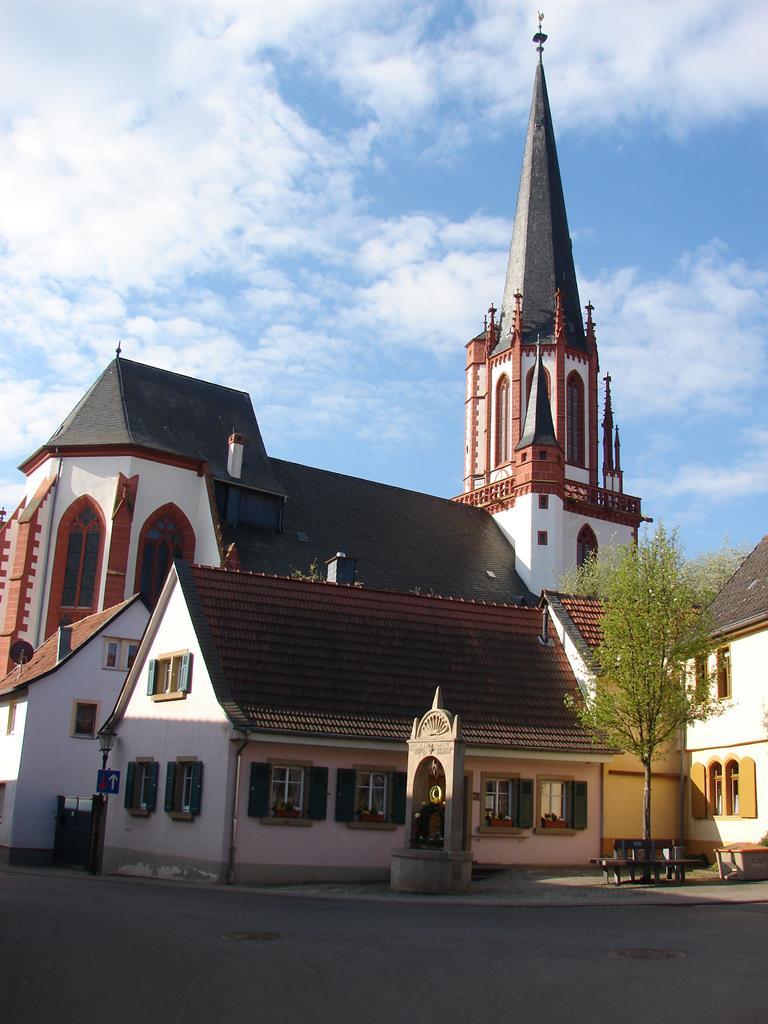
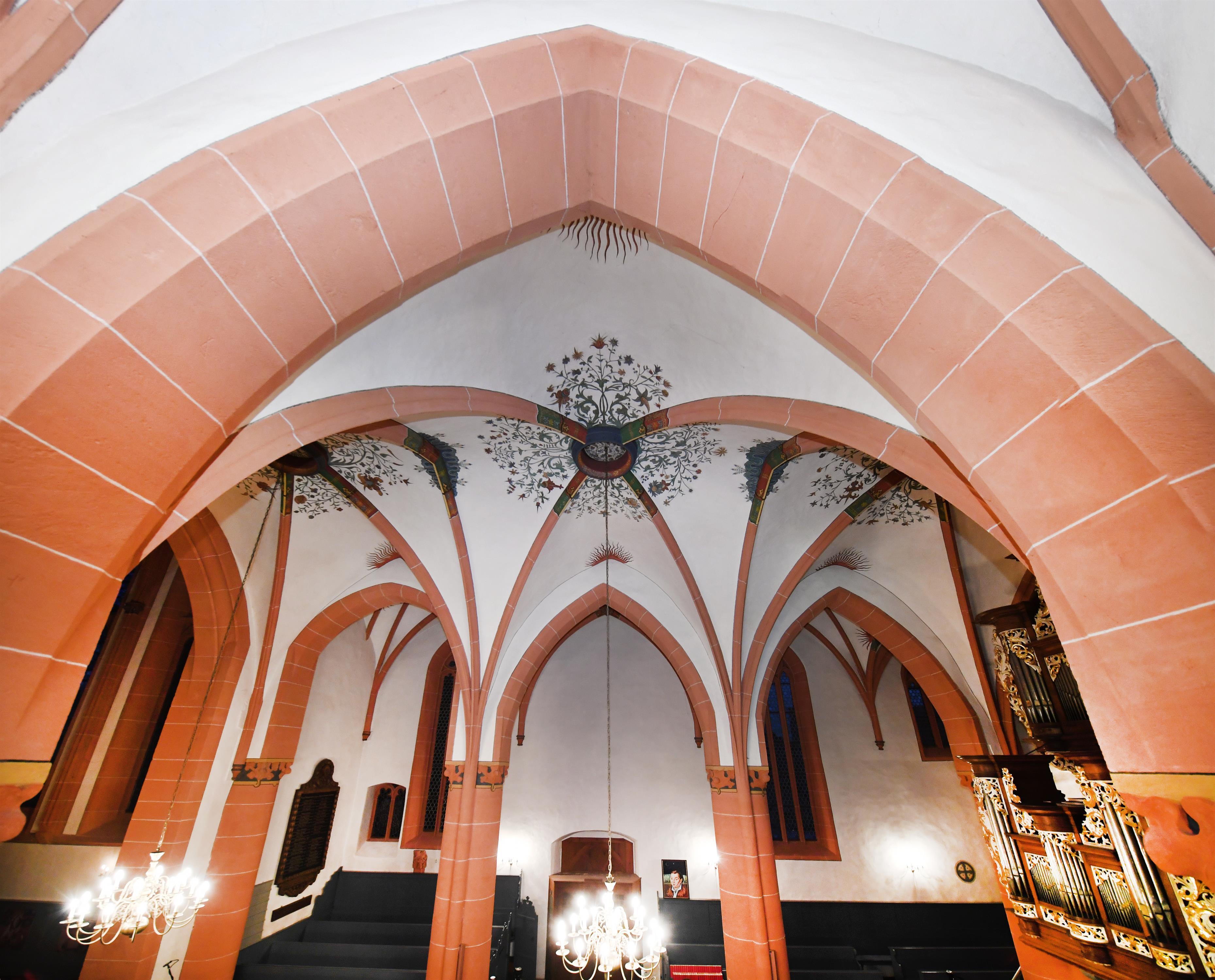
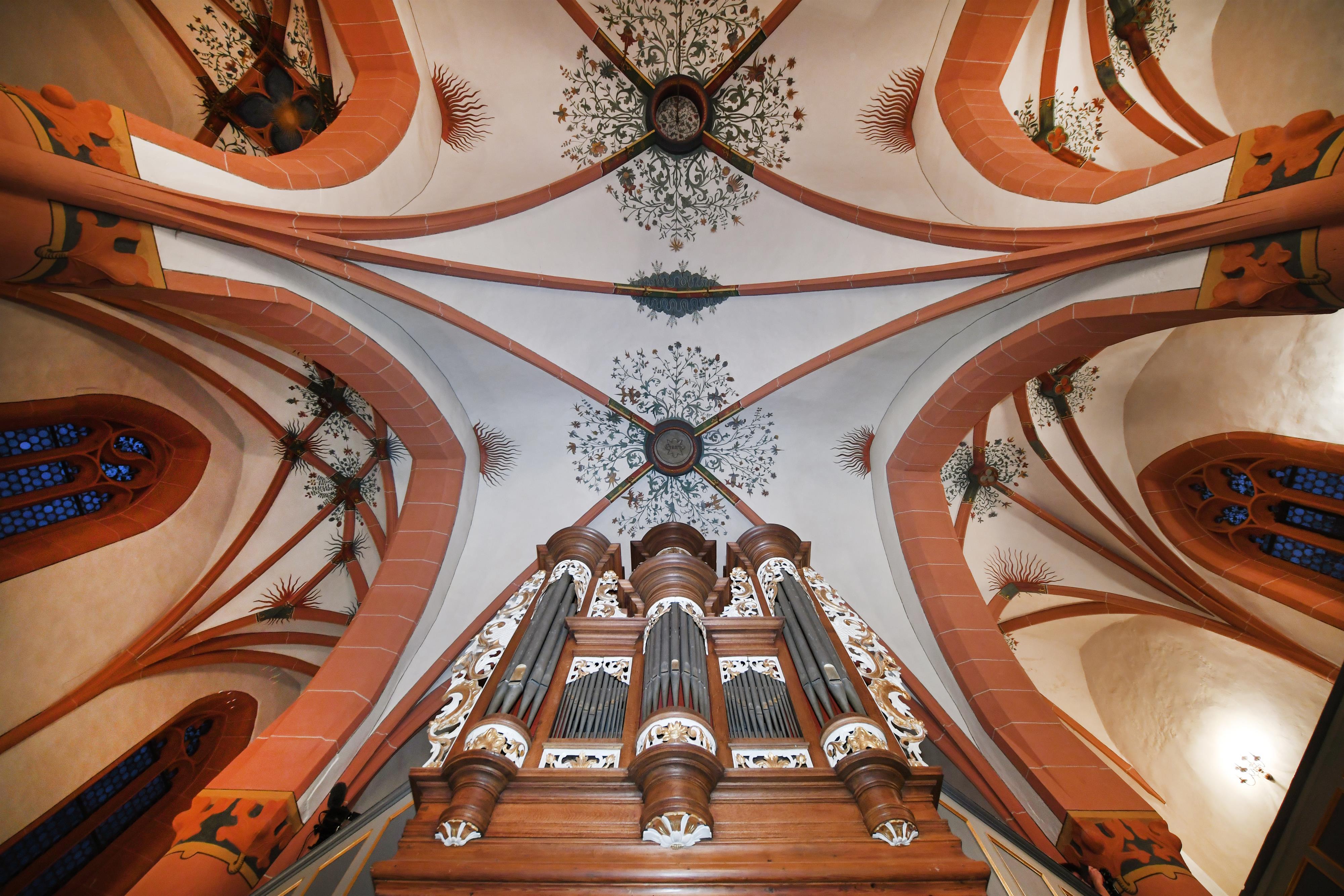
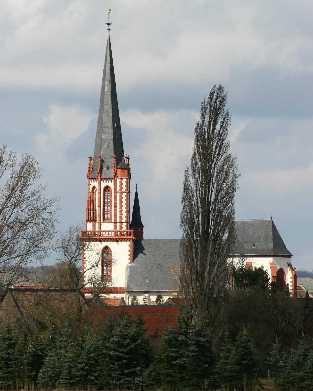
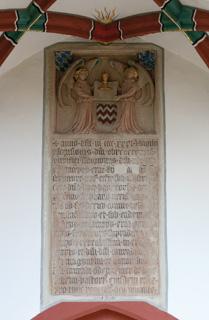
The church has developed over time into a defining landmark of the region. Even from a distance, the tower, which is over 60 meters high, indicates the former importance of the place, which once held city rights. The construction of the triple-naved church took place relatively quickly between 1431 and around 1475. The last Count of Veldenz and his son-in-law, who founded a new line of the Wittelsbach family with the House of Simmern-Zweibrücken, were the patrons. A prominently displayed foundation plaque above the entrance – showing two angels with a chalice – also commemorates the significant pilgrimage to the Holy Blood in the 15th century. Three different master builders shaped the structure, which still conveys a harmonious overall impression. The high, entirely glazed choir, with which the construction began, shows stylistic proximity to the works of Madern Gerthener. The short, wide nave, designed as a stepped hall and partially built on the predecessor structure, reveals influences from a Lower Rhine master. The tower, which stands at the city wall and has a defensively imposing appearance with its elegant finish, is attributed to Nikolaus Eseler.

searchMenu