Street Monument "Route Charlemagne"
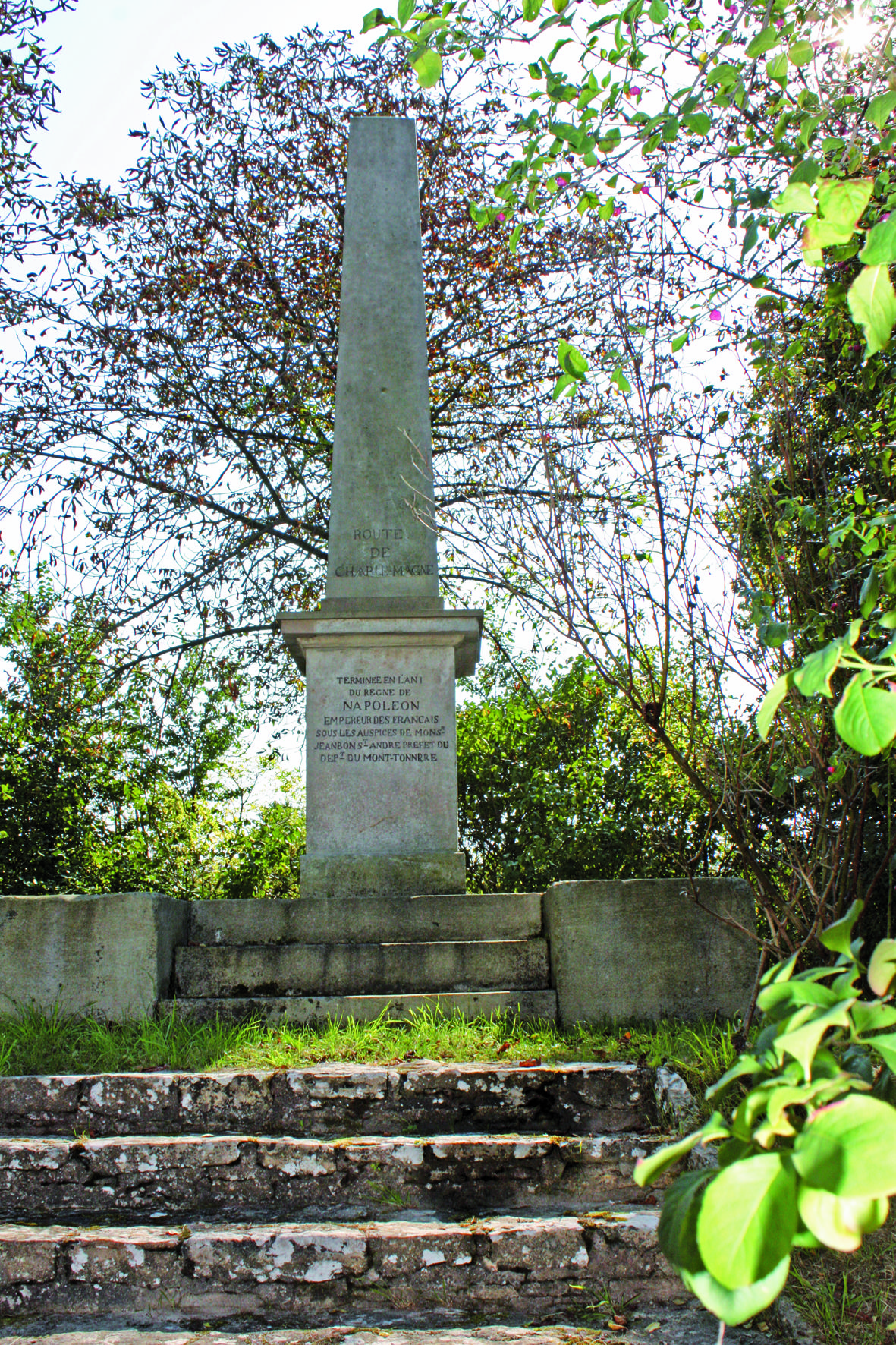
On the southern side of today’s L 419, a majestic sandstone obelisk commemorates the expansion of the road Mainz-Bingen by the then French government, which was completed in 1807. The bilingual inscriptions on the base name those responsible for the works, including Georg Arnold, who also designed the fountain in front of the Old Town Hall.
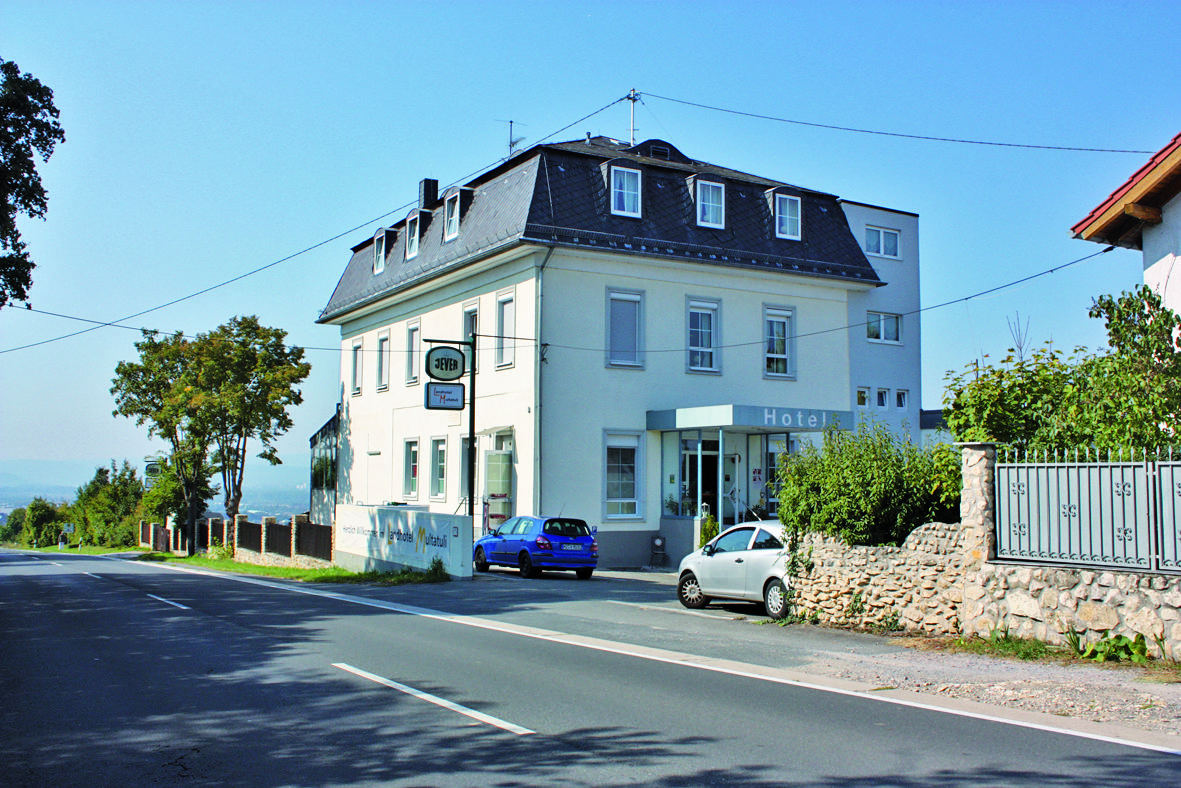
Opposite the monument is the "Villa Steig", where the Dutch writer Eduard Douwes Dekker lived from 1881 until his death in 1887. He had lived for about 20 years in the former colony of Dutch India, (first Java, later Sumatra and Celebes) and had reached a high position in the administration there. Due to his criticism of social injustices and corruption within the government, he was compelled to resign. Back in Europe, he published his experiences under the name Multatuli (lat.: "I have endured much") in his most famous work "Max Havelaar". The author is still highly regarded in his homeland today.
At the site of Villa Steig, there was a pilgrimage chapel in the 16th century. It was built at the location of a stone cross, which already existed in 1398. Here was a resting place for the pilgrims heading to Aachen, who mainly came from Hungary. The pilgrimage took place every seven years since the mid-14th century and brought many travelers to the area. The chapel lost its significance after the introduction of the Reformation in 1565. An altar stone and building materials are said to have been used in the Remigius Church. Today, the field name “Auf der Kreuzkirch” still reminds of the vanished structure.