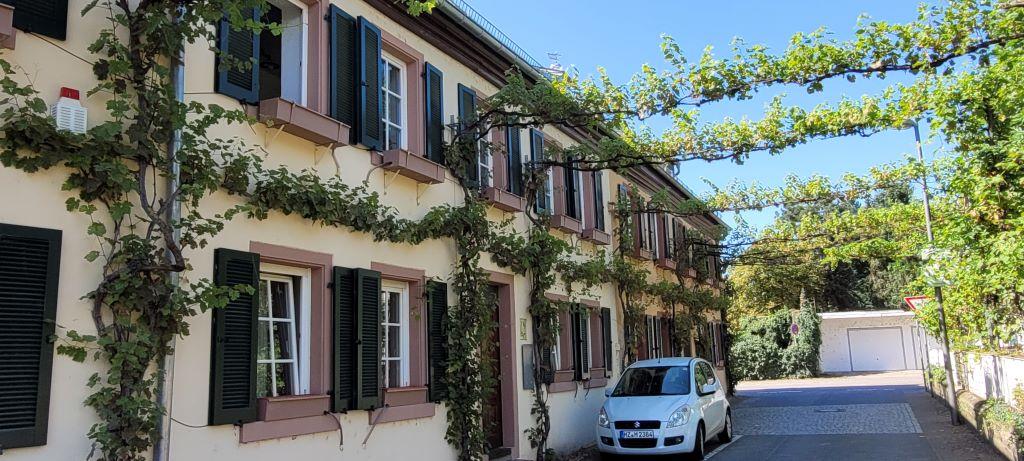
The construction of a forester's lodge in the second half of the 18th century is linked to the appointment of a kurfürstlichen forester. He was responsible for the entire Ingelheimer territory. The government aimed to combat the ongoing wood shortage with targeted reforestation. Sand dunes in the Nieder-Ingelheimer district were planted with pines. The wooded floodplains of the Rhine were managed. With the oversight of the planting of white mulberry trees to promote silk production, the forester received an important additional task starting in 1768. He also taught the population about silkworm breeding. He was also responsible for inspecting the towpath. Forester Johann Wilhelm Dietrich served in Frei-Weinheim for thirty years starting in 1778. He acquired the service building as private property in the 1790s. Under Hessian rule, forestry was restructured, and the forester position in Frei-Weinheim was abolished. After the death of the last forester, the building passed into the possession of Nikolaus Schauer, who combined it with his neighboring property.