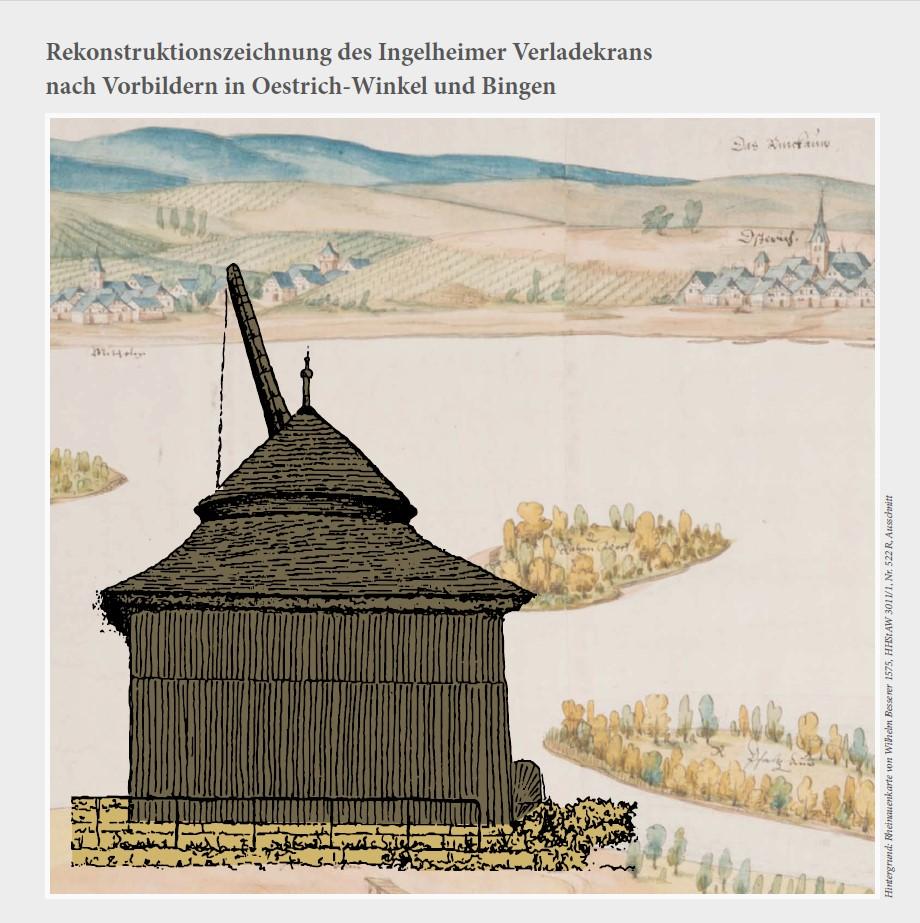
Already in the 14th century, a ship's crane is evidenced at the Frei-Weinheimer bank. A first massive land crane was erected in 1549 after the model of the Binger crane (1487).
The still visible foundation is a relic of the last crane powered by human labor, which was built around 1680. The rotating crane stand was embedded in the central shaft, to which the two tread wheels and the jib were attached. Two workers had to walk in the wheels to provide the drive for the system. Unloading and loading were subject to fees. The crane clerk kept a record of these revenues. The crane master was the mayor. A crane regulation governed the processes, working hours, and wages. This crane was destroyed between 1690 and 1694 and was not fully rebuilt despite the efforts of the Electoral Palatine prince. The right to operate the crane was repeatedly the subject of power-political disputes between the competing Electoral Palatine and Electoral Mainz lords.
Among the goods loaded, the regionally produced barrel wine held the highest rank.