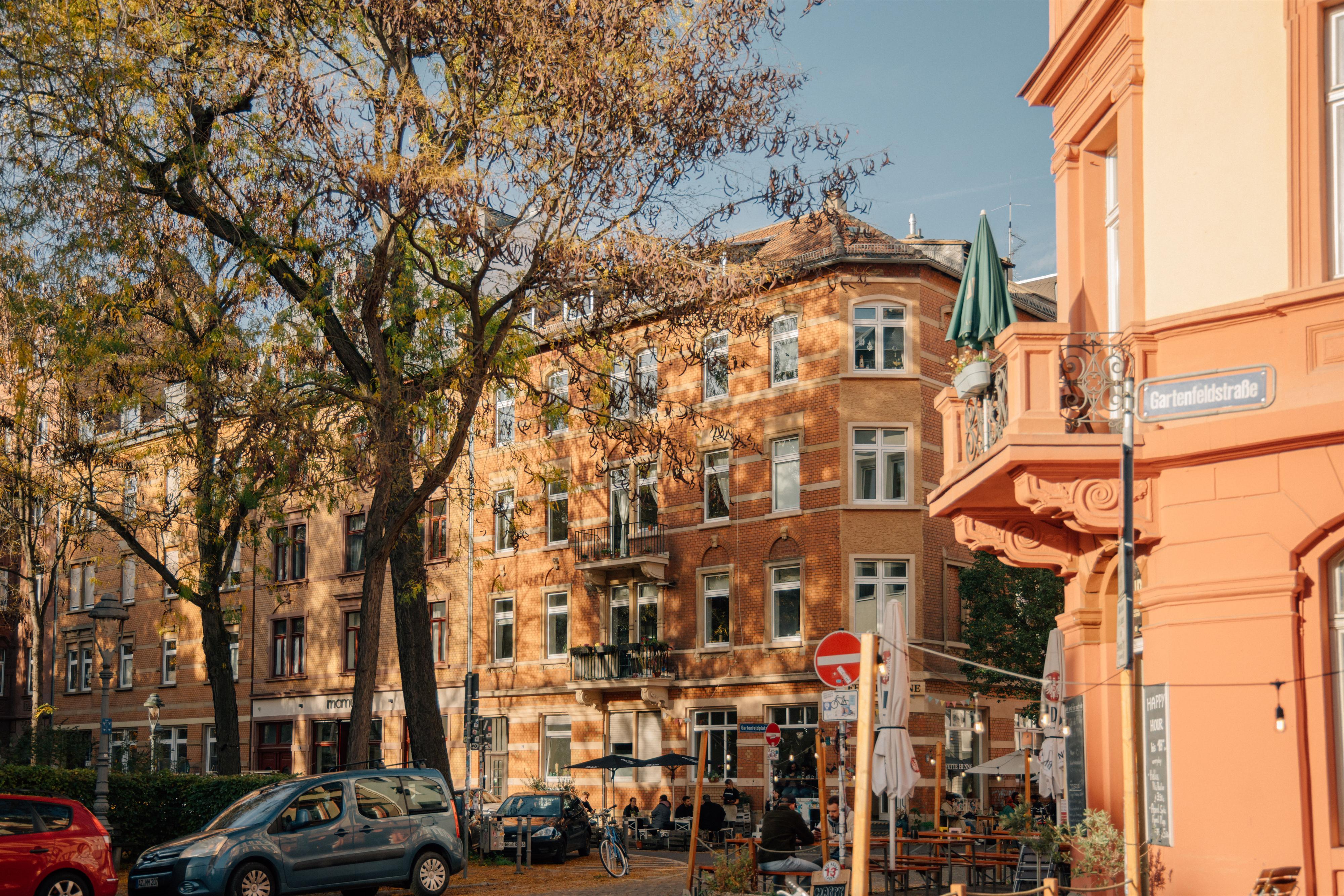
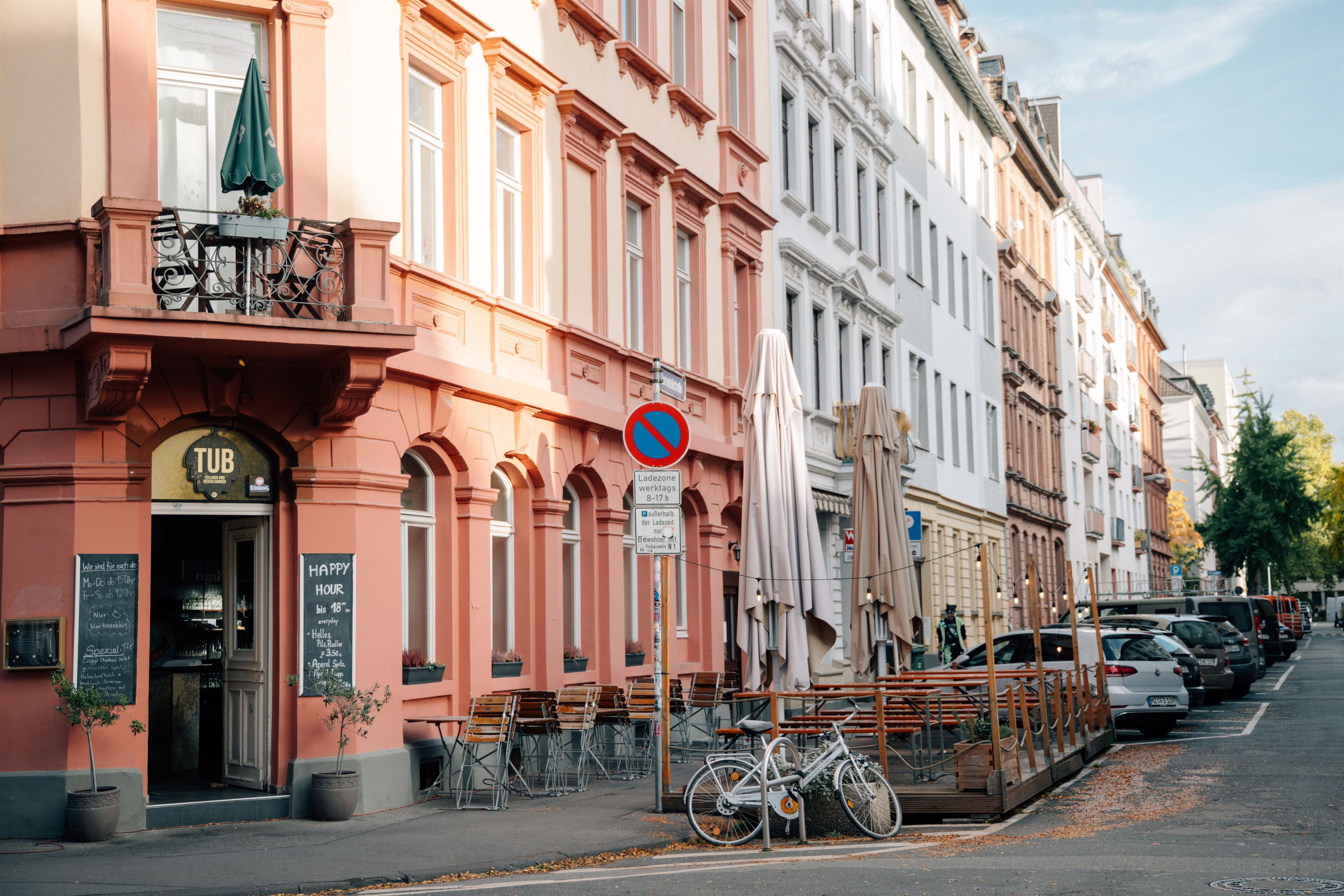
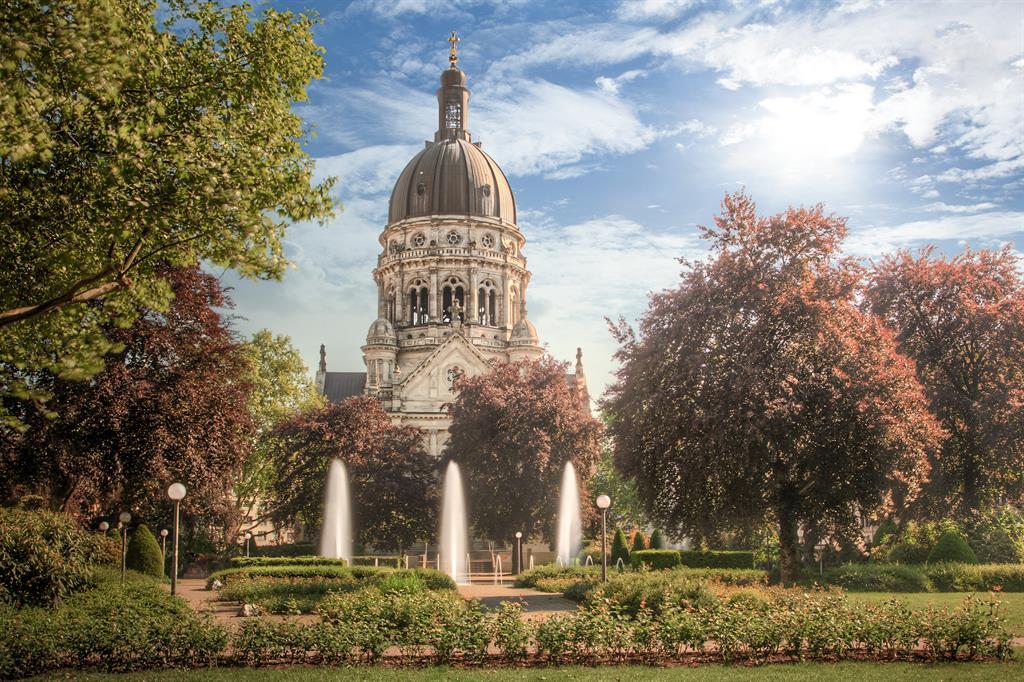
The city master builder Eduard Kreyßig (1830–1897) is responsible for giving the Neustadt its defining architectural and urban character, even though World War II left severe damages. Many Gründerzeit buildings, some with magnificent facades, as well as the prominently visible Christuskirche have, however, been preserved.
In recent years, a careful renovation of the district has taken place. Modern architects and artists have enriched the appearance of the Neustadt with their buildings and artworks – for example, Dieter Magnus with his Green Bridge or Hugo Becker with the Josefskirche.
A particular eye-catcher is the original Frauenlob Fountain on the banks of the Rhine, which commemorates the Minnesinger Heinrich von Meißen, known as Frauenlob, who died in Mainz in 1318. According to legend, women from Mainz buried him after he praised the female gender in his works. Along the banks of the Rhine, one arrives at the customs and inland port, which is to be transformed into a modern urban quarter in the coming years. Even today, new buildings shape the area, including the Kunsthalle Mainz with its distinctive glass tower and the Old Wine Warehouse, which is now used as a modern office complex.
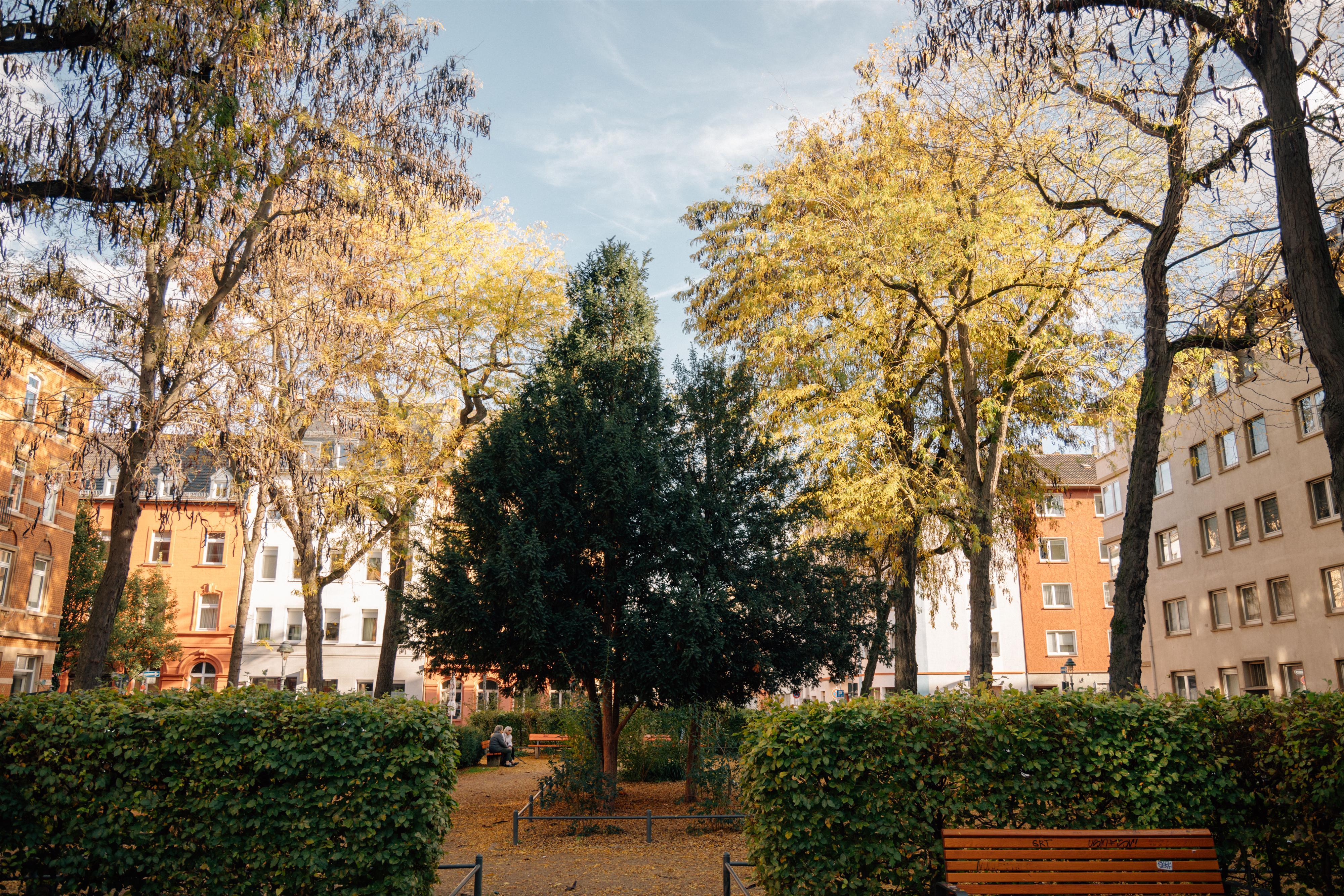
Characteristic of the Neustadt are its numerous squares, traffic-calmed streets, cafés, pubs, small shops, and craft businesses. Numerous social institutions are located here, providing points of contact for citizens. At Synagogenplatz, there is the new Mainz Synagogue, the seat of the Jewish community.
Today, the Neustadt thrives on its colorful mix of long-standing Mainz residents, newcomers, international citizens, and many young students. During the annual street festivals, residents celebrate the district and its distinctive character. Central meeting points are Goetheplatz, where the traditional "Gaadefelder Kerb" takes place, and the area around Gartenfeldplatz, which has developed into a popular scene meeting place. The Mainz Rosenmontagszug also starts in the Neustadt, creating a festive atmosphere and lively celebrations.