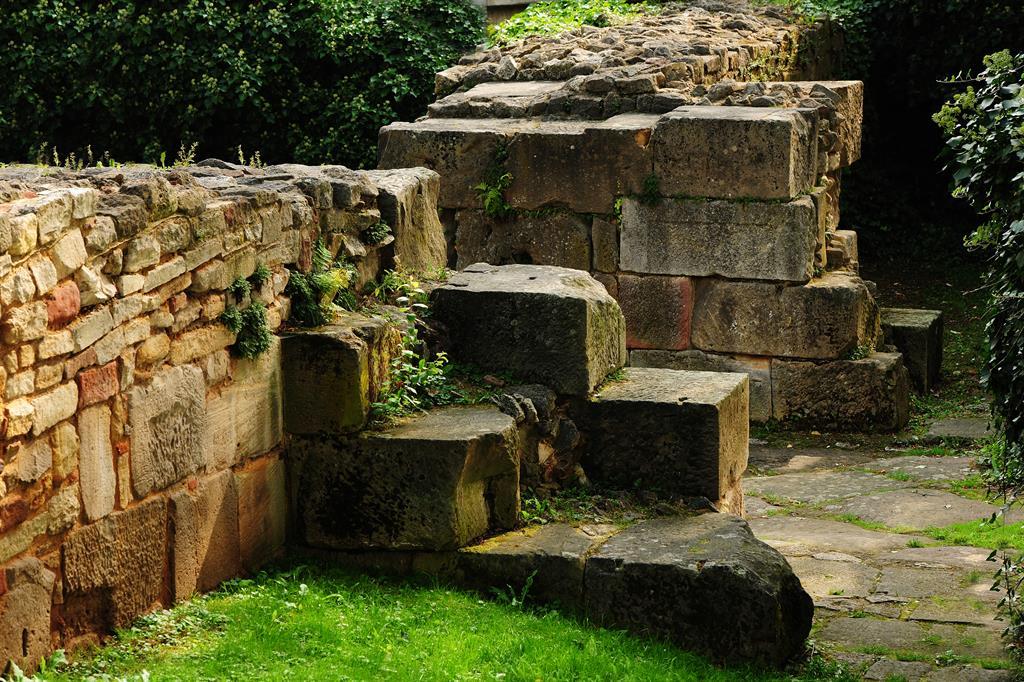
In the middle of the 4th century, the city wall that had existed until then, which originally dated back to the 3rd century, was reconstructed. The wall was significantly shortened, so that the Roman theater, the abandoned legion camp, and other central areas of the city were outside its boundaries. During the reconstruction, old building materials (spolia) from the camp buildings were reused. The sandstone paving of the camp road leading to the former porta praetoria remained in use. To allow for the use of this important road, the city wall was interrupted at this point by a gate. The diagonal red sandstone slabs of the road have survived to this day.
The Roman Gate is located in Mainz-Oberstadt on Kästrich at House No. 61. During excavations in 1985, the city gate, remnants of the camp road, and adjacent sections of the wall were uncovered. The wheel tracks, nearly two meters wide, are clearly visible in the sandstone slabs of the via praetoria, corresponding to the wheel widths of Roman carts and demonstrating the frequent use of the road.
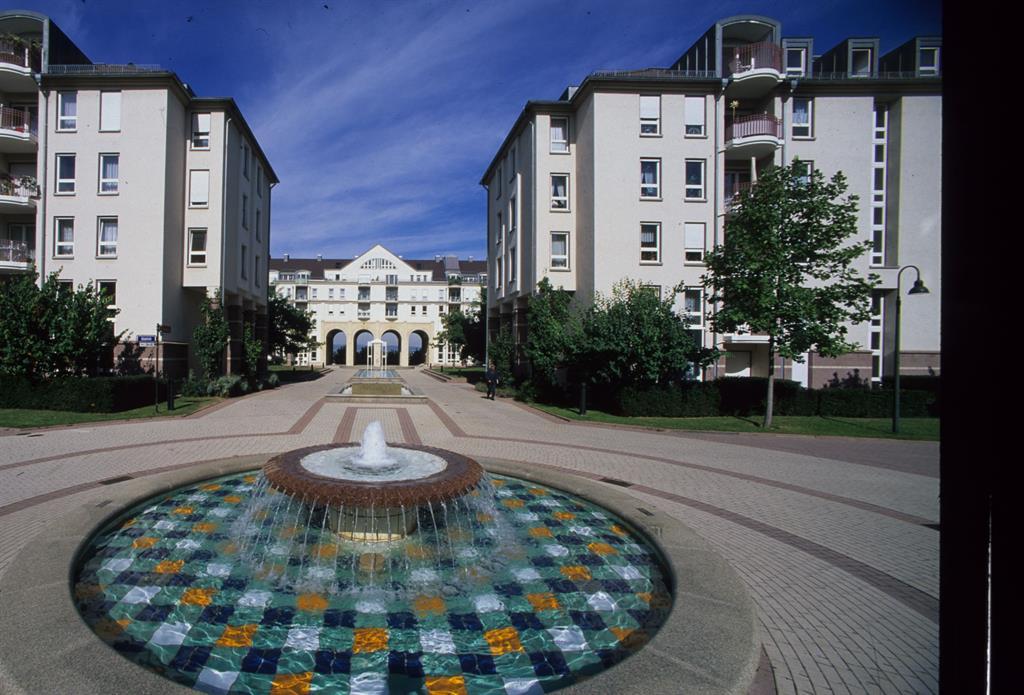
The city gate was discovered during the construction of a residential complex on Kästrich and is now integrated into it, allowing visitors to enter freely. The remains of the double-shelled wall and the gate lie about three meters below today's street level; two staircases provide access.
The structure is preserved at the base level and is considered the only Roman city gate found in Mainz. It also belongs to the most recent Roman city gates in Germany.
Nearby is the medieval Altertum, which was likely built on Roman foundations and marks the site of one of the numerous towers of the Roman city wall.