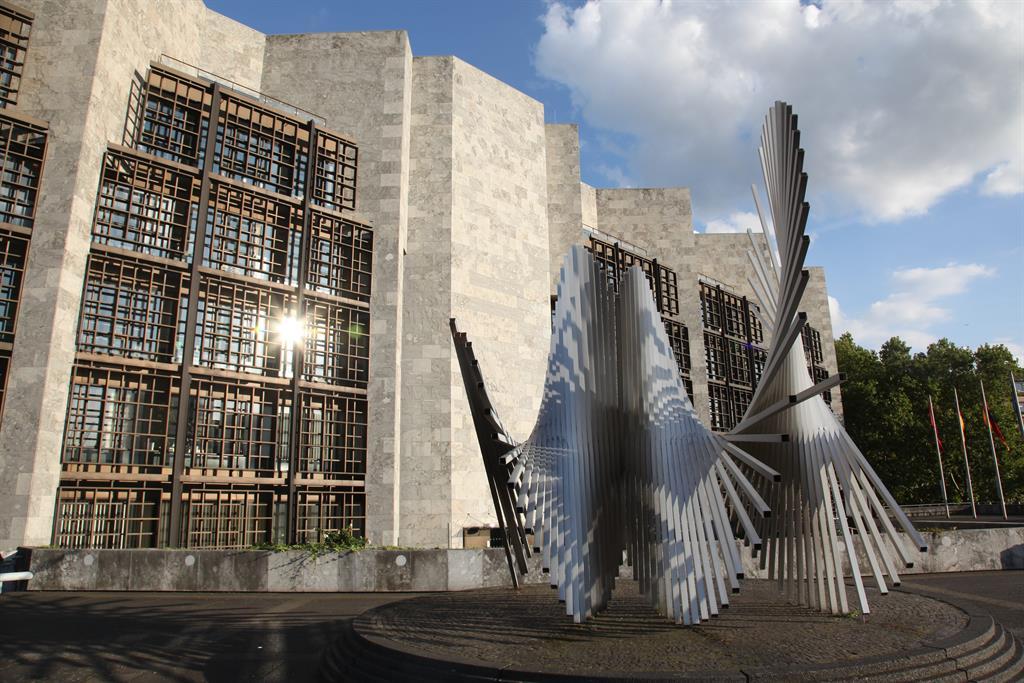
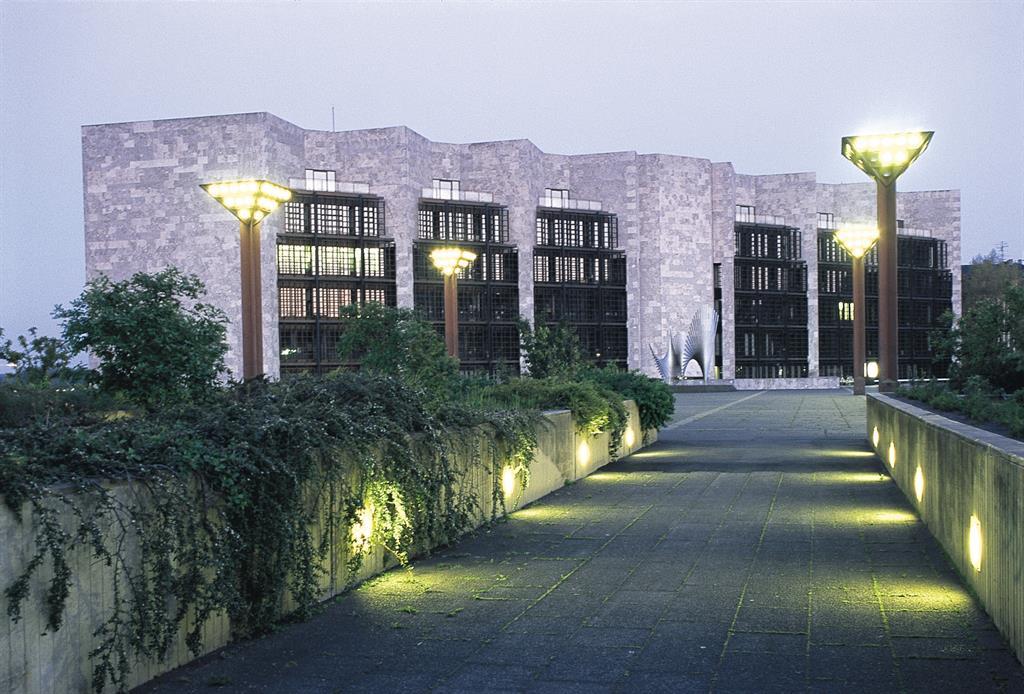
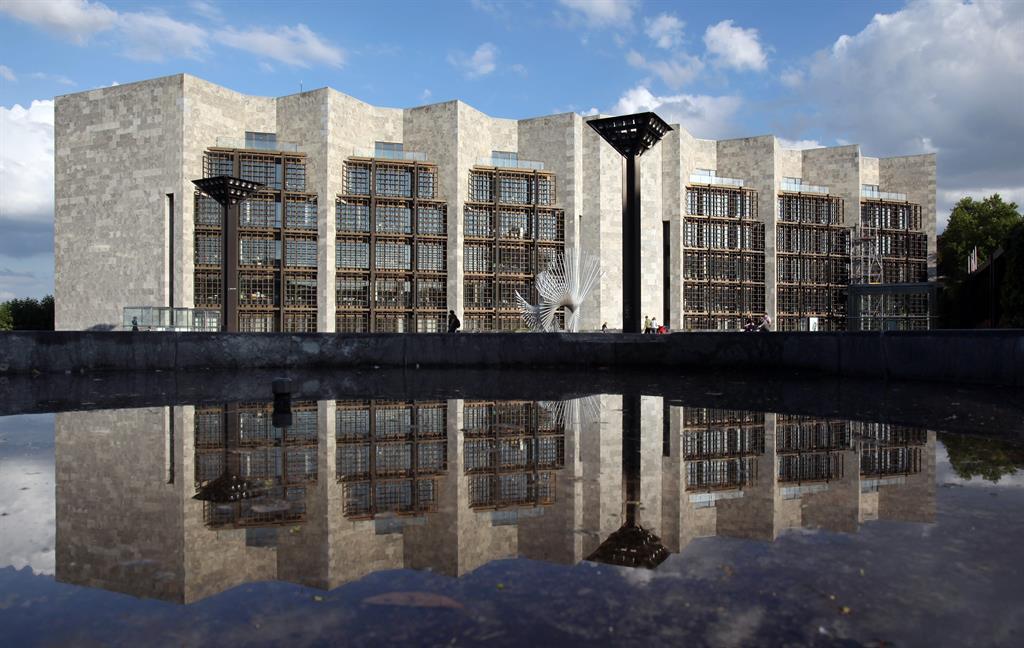
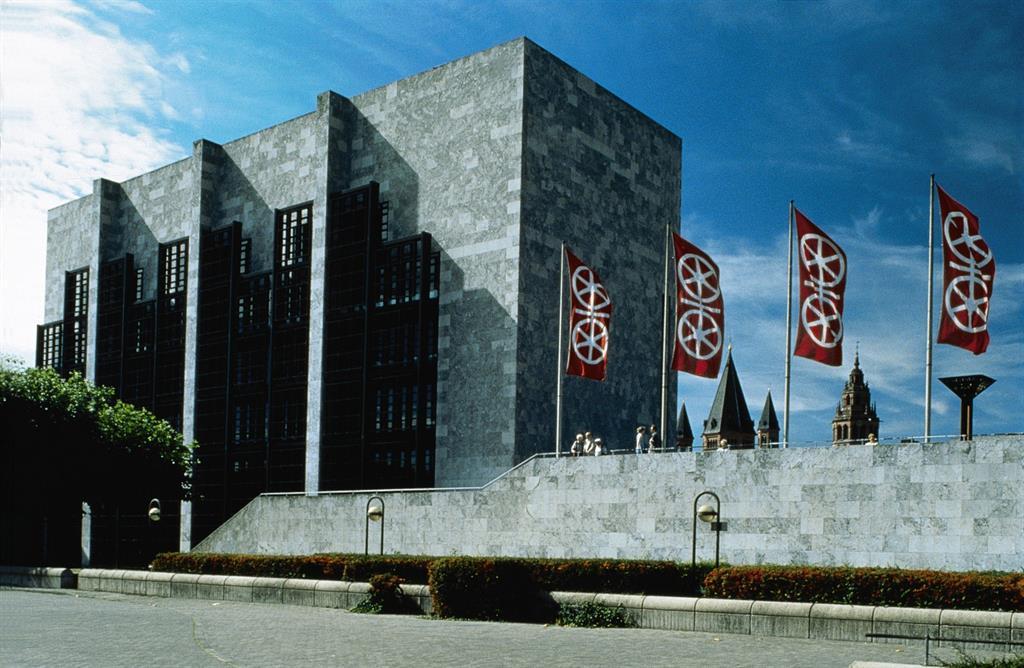
Colloquially, the building is jokingly referred to as "Fuchsbau" – in reference to the then-serving mayor Jockel Fuchs – or "officials' prison." It is undoubtedly a distinctive building with its own, unmistakable form language. For five centuries, Mainz had no town hall until the city council commissioned the renowned Danish architectural firm Jacobsen and Weitling to design a new building in 1968. Otto Weitling, one of the architects, expressed his hopes in 1974: "We believe we have created a place of high value that will arouse public interest and perhaps even discussion. A pro and con would already be a positive sign, because a building that people do not talk about is usually not worth discussing." These words from the construction documentation at the opening of the town hall remain valid to this day.
700 years after the construction of the first Mainz town hall in the Middle Ages, the city council realized the new building on Halleplatz – today's Jockel-Fuchs-Platz – following a Europe-wide competition. On July 21, 1972, Mayor Jockel Fuchs and the builders celebrated the topping-out ceremony. On New Year's Eve 1973, the building was officially put into operation – with a city council meeting. Already the next day, festive groups stormed the town hall square, and in the following festive week, around 50,000 residents of Mainz visited their new town hall.
Numerous distinguished guests from partner cities, the then Minister President of Rhineland-Palatinate Helmut Kohl, Wiesbaden's Mayor Rudi Schmitt, and, as a highlight, Federal President Gustav Heinemann, attended the opening. 600 employees moved into their offices. Architect Arne Jacobsen could not witness the building's commissioning, as he had already passed away in 1971. In 2002, on the occasion of his 100th birthday, the town hall received numerous inquiries worldwide for rental furniture from Jacobsen's collections for design exhibitions.