
What does the acronym SchUM actually stand for?
The acronym "SchUM" refers to the three historical Jewish communities in medieval Germany: Speyer, Worms, and Mainz. The letters "SchUM" come from the initial letters of the medieval names of these cities in Hebrew:
- S for Schpira (Speyer)
- U for Warmaisa (Worms)
- M for Magenza (Mainz)
These three cities had a significant Jewish presence and played a crucial role in Jewish history and culture during the Middle Ages. SchUM represents the outstanding Jewish communities and their cultural, religious, and intellectual significance during that time.
How can I best explore the Jewish heritage sites in Mainz?
When visiting Mainz, there are several ways to explore the rich Jewish heritage and the often painful history of the Jewish community in the city. A good option is to participate in a guided tour of Mainz led by local guides who share interesting details about Judaism in Mainz. Additionally, the Stadthistorische Museum and the Landesmuseum in Mainz host fascinating exhibitions focusing on the history and present of Judaism. Of course, you can also explore the sites of Jewish history on your own.
Check the opening hours of the museums and memorial sites you plan to visit before your trip.
Which places should I visit to learn more about the Jewish history of Mainz?
- Old Jewish Cemetery "Judensand": Once the oldest and largest medieval cemetery in Central European Jewry, it houses around 1,800 Jewish tombstones.
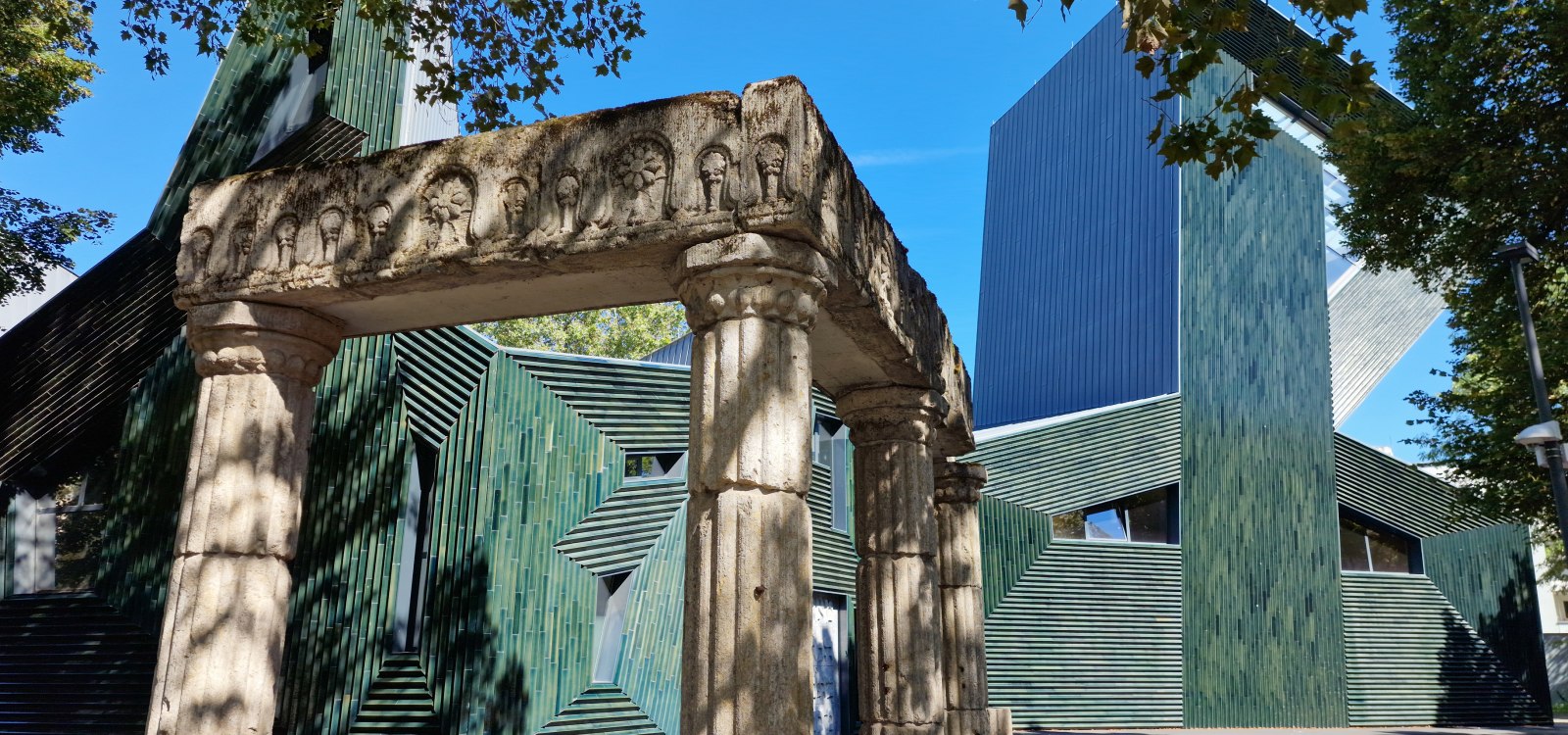
- New Synagogue: Built in 2010, the New Mainz Synagogue offers guided tours.
- Mainzer Judengasse: Located in the center of the former Jewish quarter, in parts of the 17th and 18th centuries, Mainz Jews were only allowed to live in this alley, resulting in densely built houses with above-average height and depth.
- Judaica Collection at the State Museum: This is home to an outstanding collection of Jewish ritual objects, as well as the oldest Jewish tombstone in Central Europe from 1049.
- Stolpersteine: As part of the memorial, now comprising over 100,000 stones, the "Stolpersteine" in Mainz commemorate the numerous victims of National Socialism.
- St. Stephan: The church in Mainz's Oberstadt is the only German church for which Marc Chagall created windows. The blue windows, installed in 1978, are intended to symbolize Jewish-Christian solidarity and understanding among nations.
You can explore these places either with a guided city tour or venture out on your own. If you want to delve deeper into the background of Judaism in the SchUM cities, you can embark on a journey through time with the SchUM App.