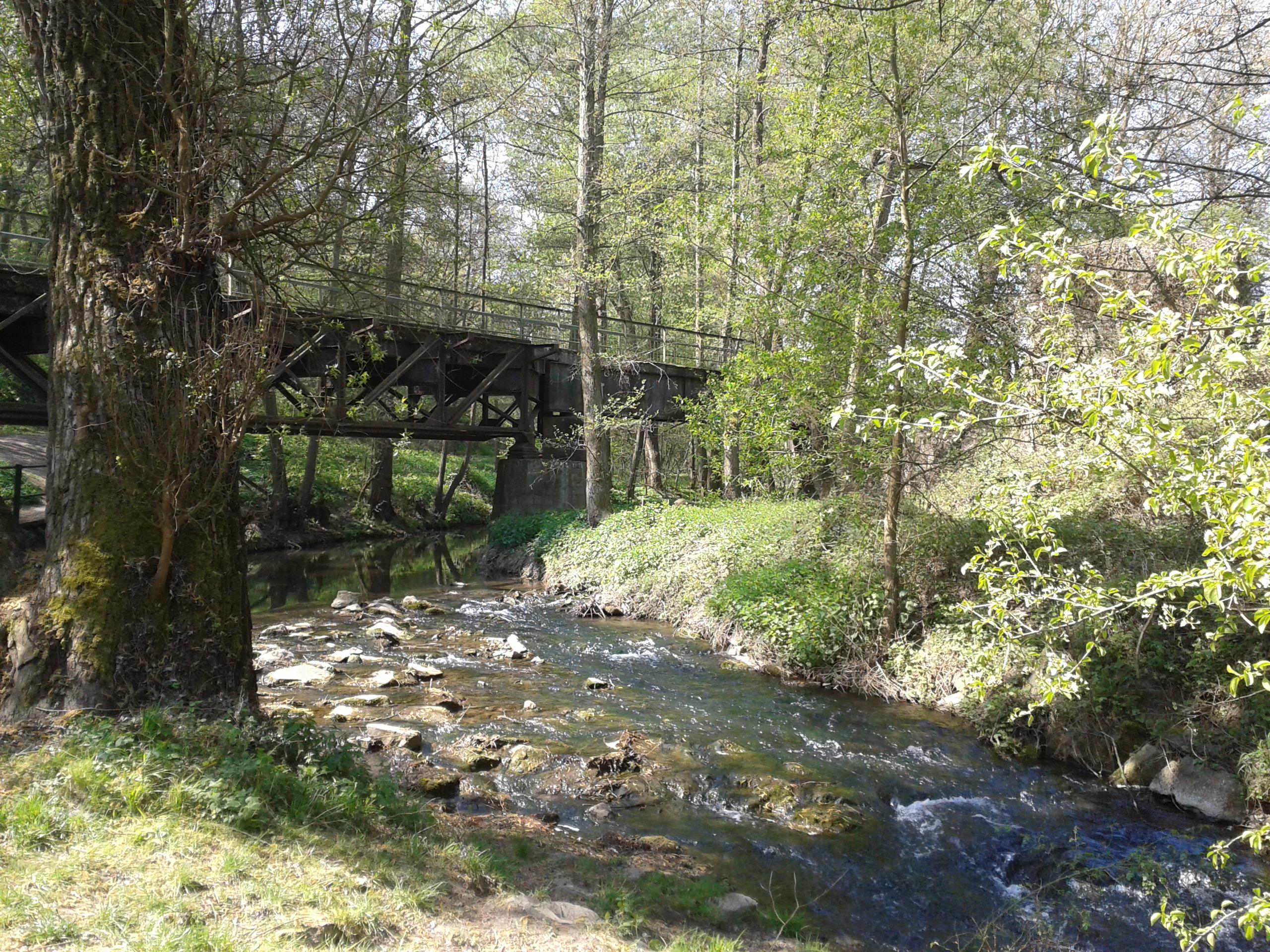
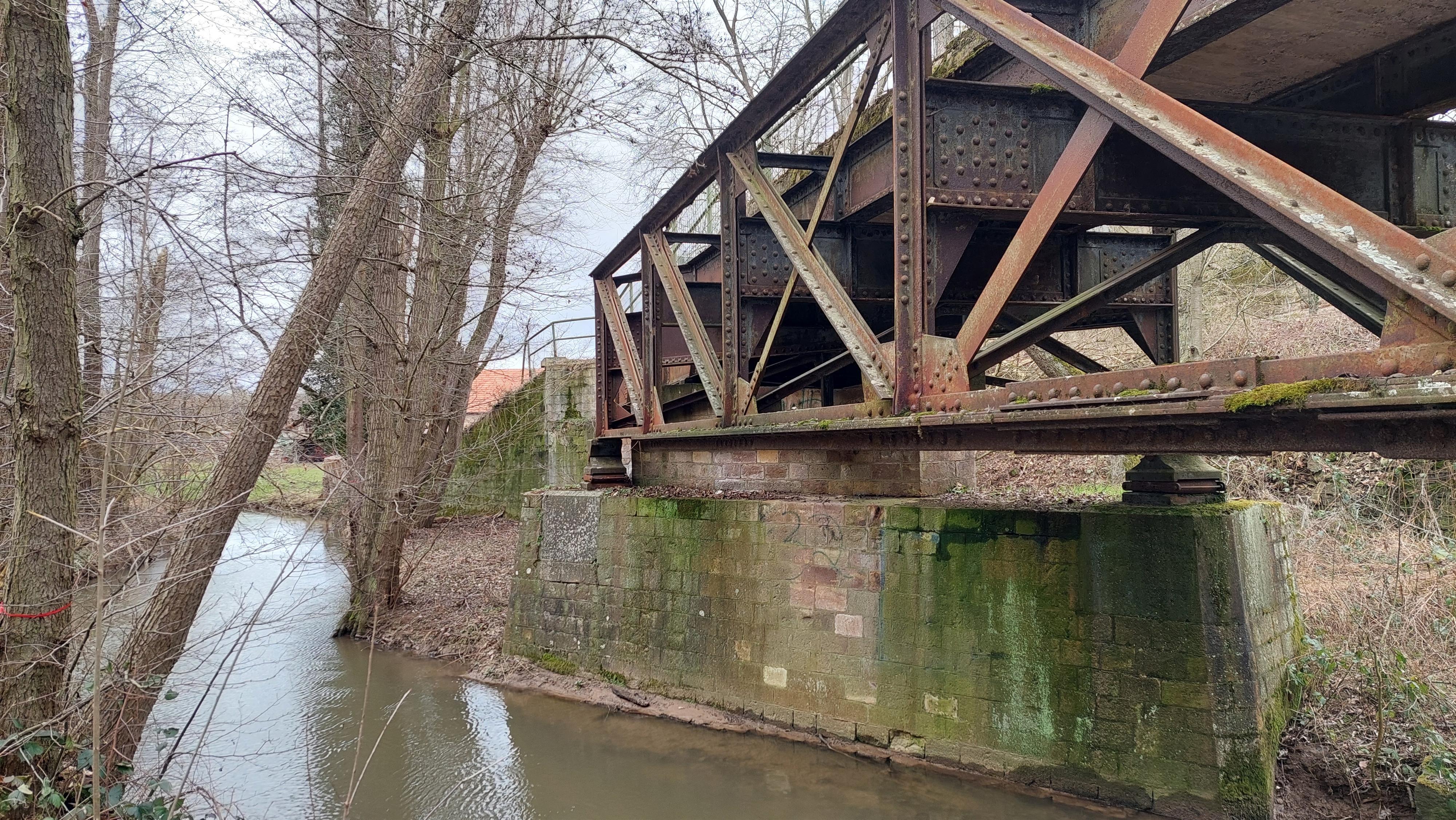
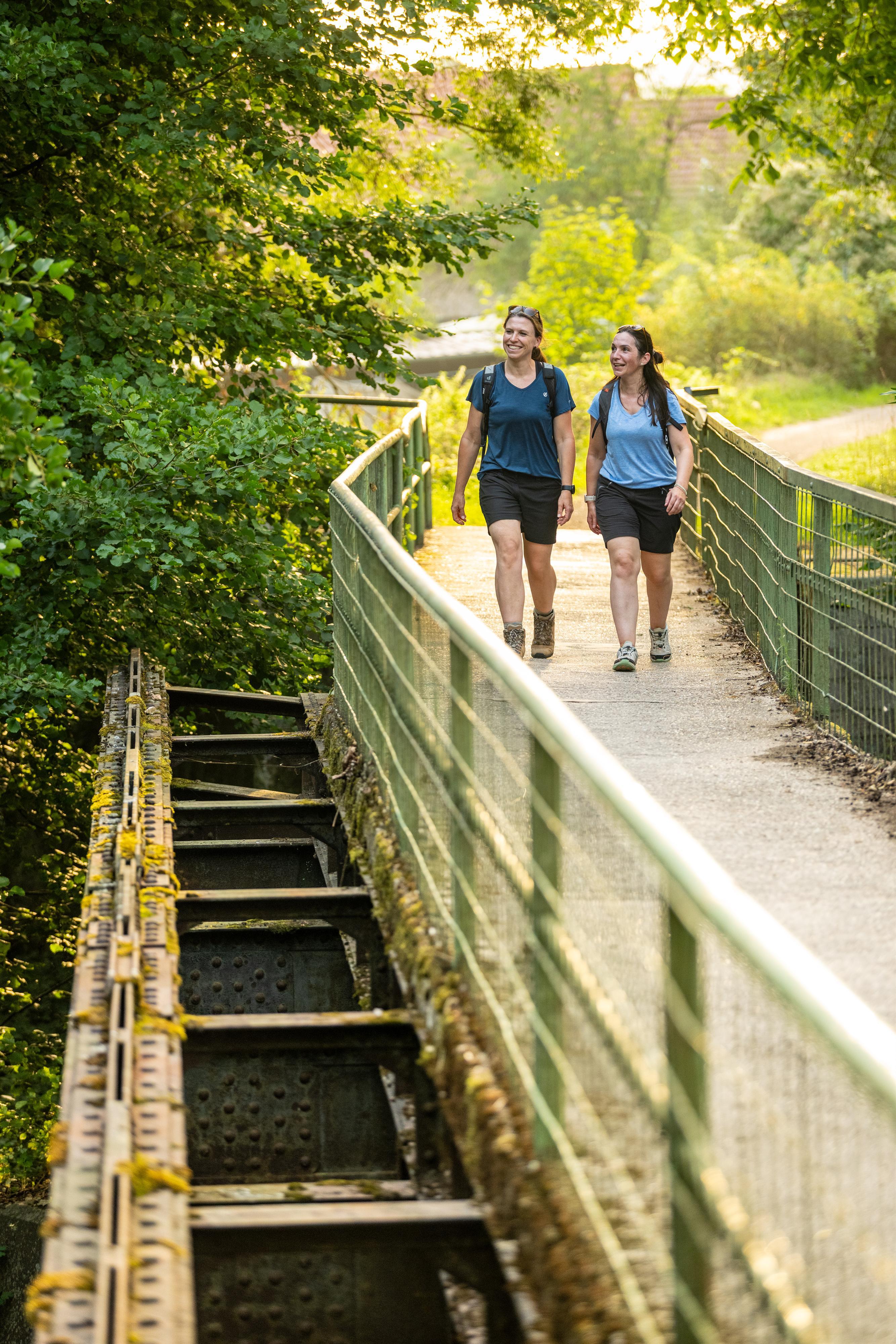
The former railway line was used since 1888 for the development of the quarries near Frei-Laubersheim and Neu-Bamberg, for the transport of agricultural products such as beets and wine, and for the products of the Wöllstein brick industry.
Passenger traffic played only a minor role. The focus of passenger transport on weekdays was on worker and market traffic, while on Sundays it was on excursion traffic. Up to six pairs of trains ran daily in each direction. After World War II, the "Bawettchen" even operated for a short time as far as Armsheim, since there was no connection to Alzey from Sprendlingen yet. The line in the Rheinhessische Schweiz was served by two tank locomotives, four passenger cars, two freight cars, and two railway master cars. After passenger traffic was discontinued and only goods were transported on the branch line, only a small locomotive was in use on the line. With the construction of the A61 motorway, the remaining section was decommissioned in 1973, as the bridge construction seemed too expensive.
Where does the name "Bawettche" come from? Bawettche is a diminutive form of the female name Babette commonly used in the Rheinhessian dialect. Various myths and legends surround the origin of the name for the railway line.