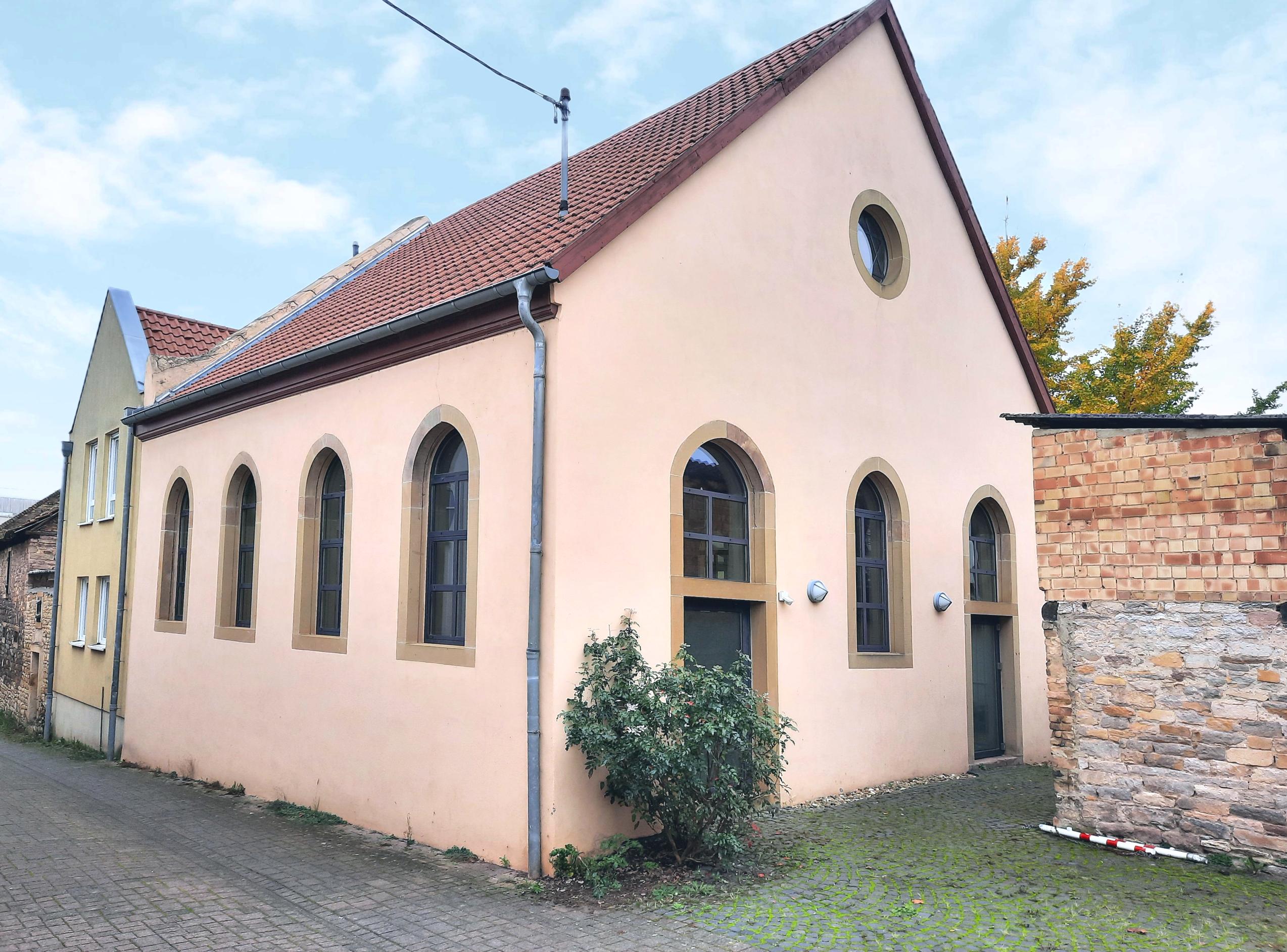
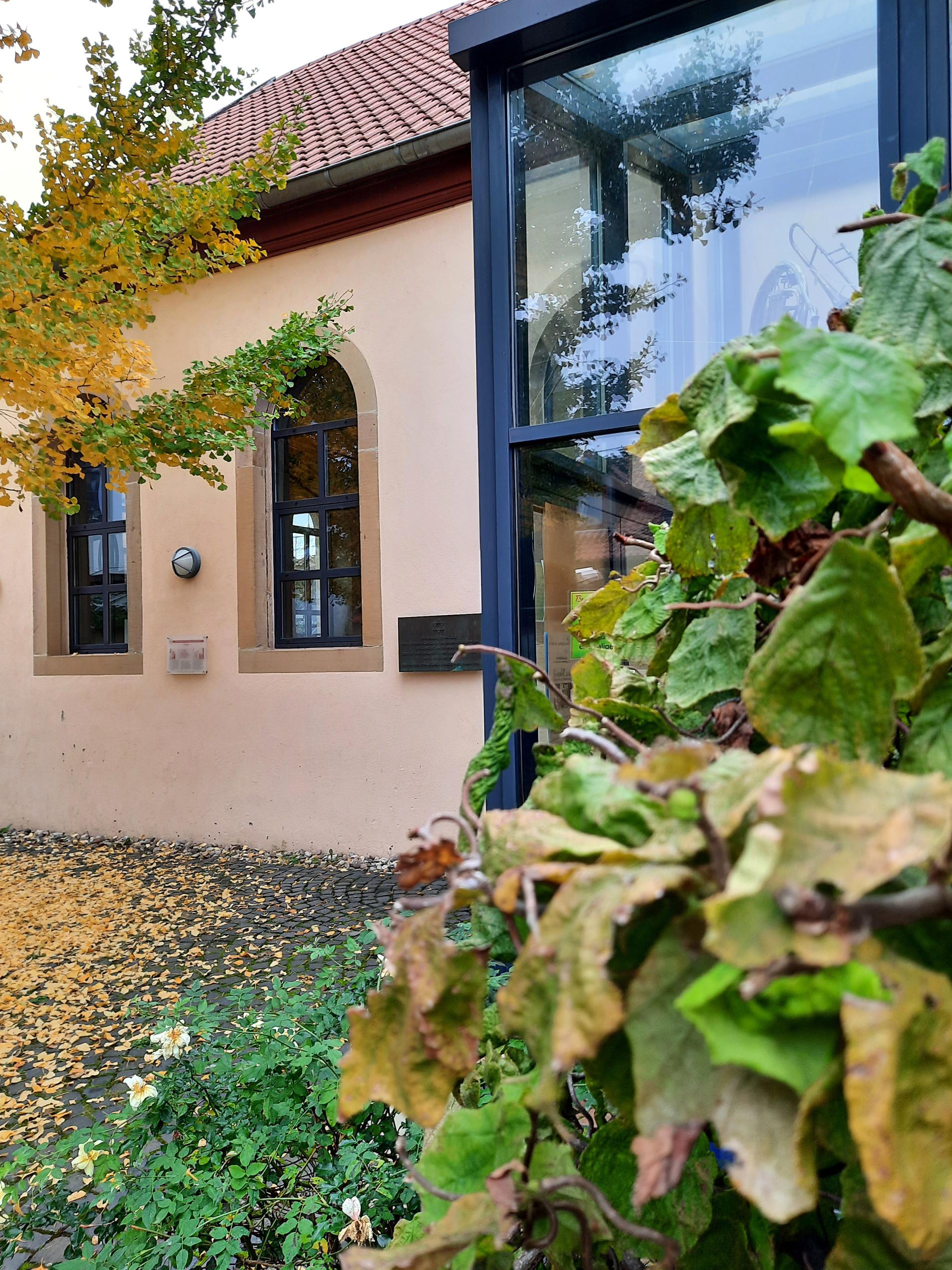
The construction of the synagogue in Synagogengasse in the early 19th century reflects the desire to provide Jewish communities with their own space for gatherings and worship, similar to those of the evangelical and Catholic communities. The synagogue, which was completed and consecrated according to the records of Anton Stüber on March 19, 1825, is an example of the architectural development of Jewish worship buildings before the mid-19th century. The architectural style, which combines Romanesque and Baroque elements, shows the adaptation to the forms of expression of Christian churches of the time, before a specific and distinctive synagogue architectural style emerged. The nearly square structure with a large assembly room and a gabled roof running parallel to Synagogengasse, as well as separate entrances for women and men, testify to the social and religious practices of the time. The profiled sandstone cornice inside, designed for candles and chandeliers, emphasizes the central importance of the ritual use of the synagogue.
The history of the synagogue in Sprendlingen is a fascinating example of the change and preservation of Jewish heritage. Originally equipped only sparsely due to financial constraints, the building underwent its first restoration around 1900, transforming it into a colorful and dignified house of worship. The decision by the monument preservation authority in 1984 to protect the synagogue highlights its significance as a cultural and historical monument. The community acquired the building in 1996 to ensure a suitable venue for cultural events.