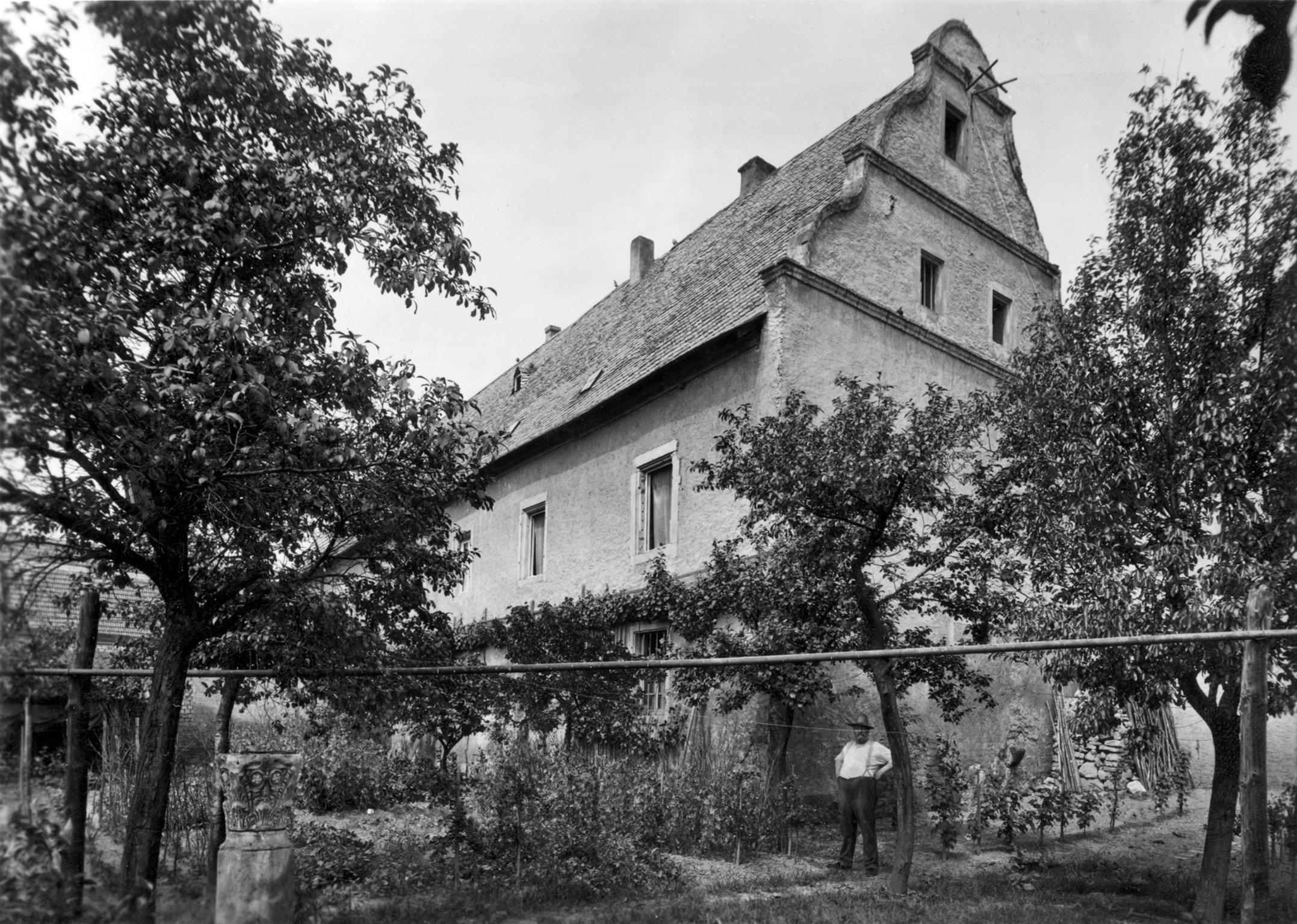
The construction of this manor house generally corresponds to the construction of the other Saulheim noble houses. The manor is 36 metres long, two-storey with Renaissance windows and a curved gable on the back facing east. The whole estate extended to the Mühlbach, to the east to the Eisenborn and partly to the Heileckergasse. To the east there was a fish pond which had its inflow and outflow to the Mühlbach. The building was largely constructed with field stones from the Saulheim district of the "Steinkaut". Burnt brick did not exist at that time and existing quarries were a long way away. The castle courtyard was enclosed by a stone round-arched gate like most noble courtyards and decorated with a cap stone. In 1803, Prof. Johannes Baptist Neeb from Mainz purchased or bought the estate at auction after a recommendation by his long-time friend Heinrich Fölix.