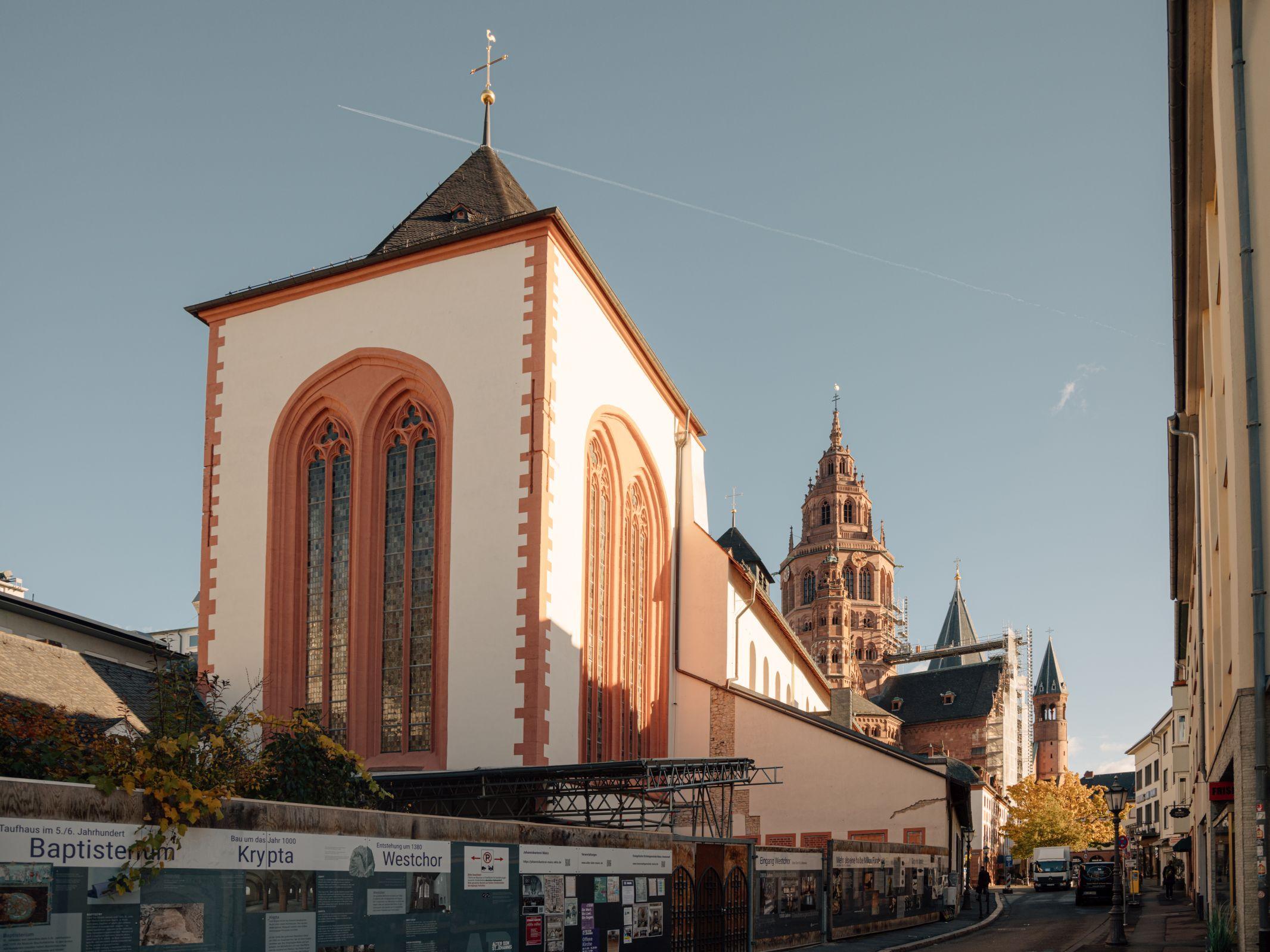
The Old Cathedral of St. Johannis is considered the oldest church in Mainz and is among the earliest bishop's churches north of the Alps. As the predecessor of the present Mainz Cathedral, it played a central role for many centuries as both a spiritual and political center in the early Middle Ages.
A first Christian church was established at this location in the 5th or 6th century through the repurposing of late antique structures. In the following centuries, the complex was expanded and redesigned multiple times: from an early medieval bishop's church with its own baptistery to an impressive Ottonian basilica in the 10th century. Significant figures in church history, such as Boniface and Archbishop Willigis, worked here, and two royal coronations took place in St. Johannis in the 11th century.
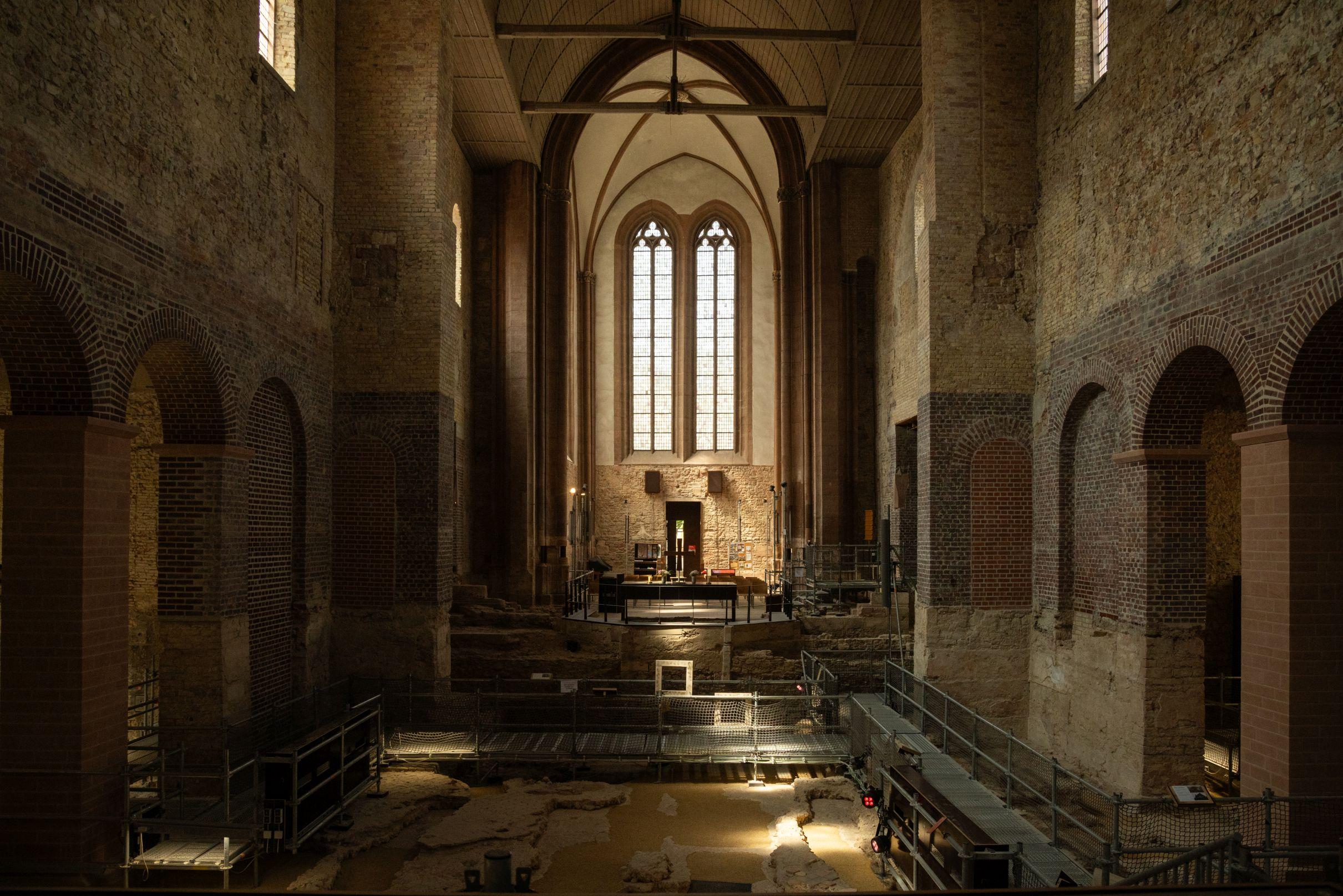
With the completion of the new cathedral in 1036, St. Johannis lost its function as a cathedral and became a collegiate church. Nevertheless, the building remained vibrant through the ages: a Gothic choir was added in the 14th century, and renovations in the late Baroque style took place in the 18th century. During the Napoleonic rule, the church was temporarily repurposed and used as a storage facility before it was transferred to the Protestant community in 1828. Since then, it has been an integral part of Protestant life in Mainz.
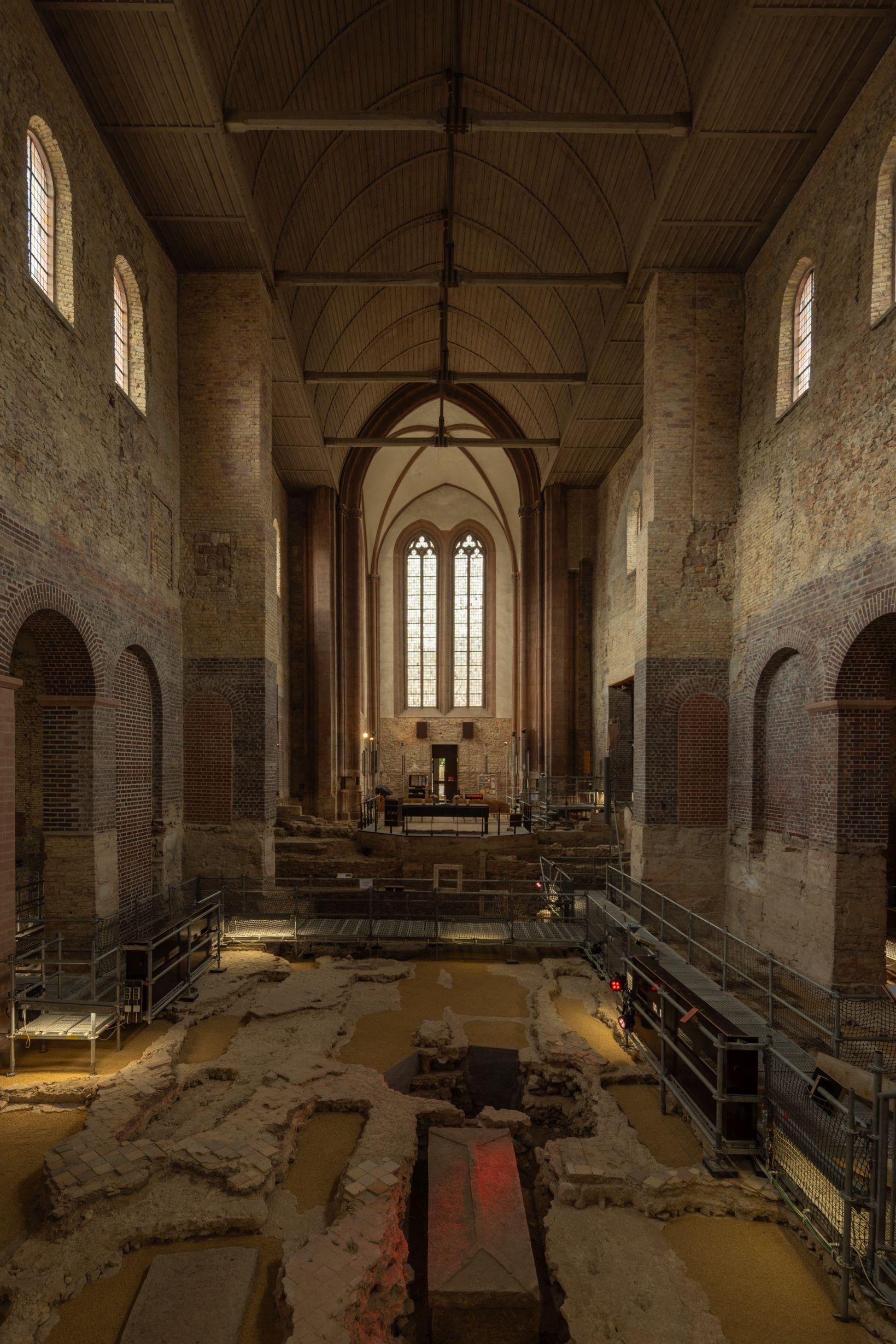
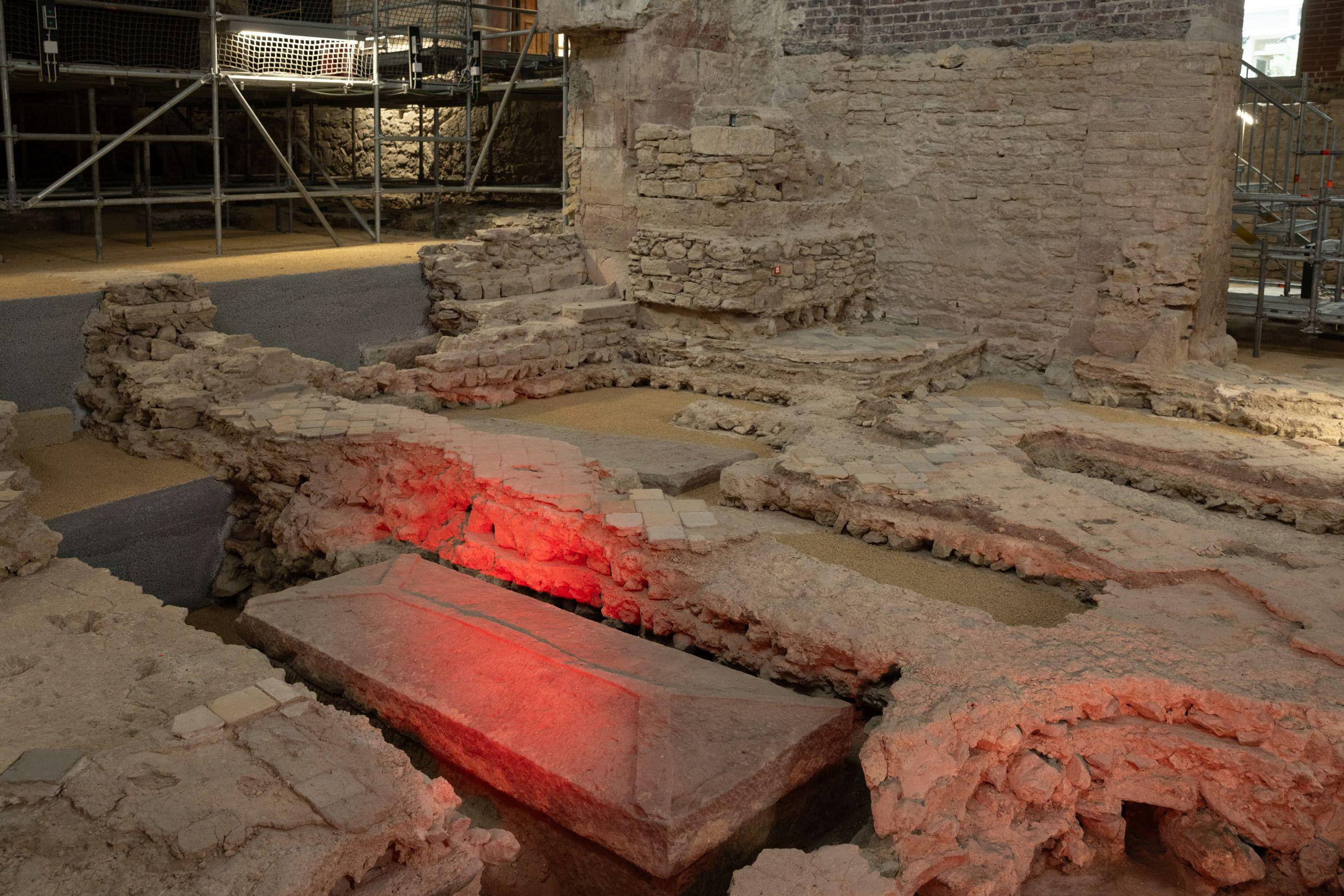
In World War II, the Old Cathedral suffered severe destruction but was rebuilt in the 1950s. Since 2013, archaeological excavations have provided new insights into the construction and usage history of the church. A notable find in 2019 was the discovery of the grave of Archbishop Erkanbald, who died in 1021.
Today, the Old Cathedral of St. Johannis presents itself as an extraordinary architectural monument, where traces from Late Antiquity, the Middle Ages, and modern times converge. At the same time, it is a place of faith, research, and culture – a vibrant meeting point in the center of the Mainz old town.