The allure of the landscape led wealthy outsiders to establish a residence or a country estate in Ingelheim since the beginning of the 19th century. The nationalization of ecclesiastical and noble properties on the left bank of the Rhine enabled the acquisition of large attractive plots of land.
In 1841, the Dutchman Albert Gerhard de Roock acquired this property. He had made a fortune in sugar production in Java. Through renovations and alterations to the existing house, the so-called "Villa Padjarakan" was created, named after his former sugar mill. The de Roock family was highly regarded in the community due to their social engagement, such as promoting clubs, church communities, and foundations. In 1863, Albert de Roock was appointed honorary citizen of Nieder-Ingelheim. After his death in 1867, his daughter Friederike Gertrude, née van Krieken, used the villa as a summer residence. She had the park, with its old trees, redesigned into an English landscape garden according to the plans of the Siesmayer brothers, featuring a winding, branching network of pathways, a pond, and a running fountain.
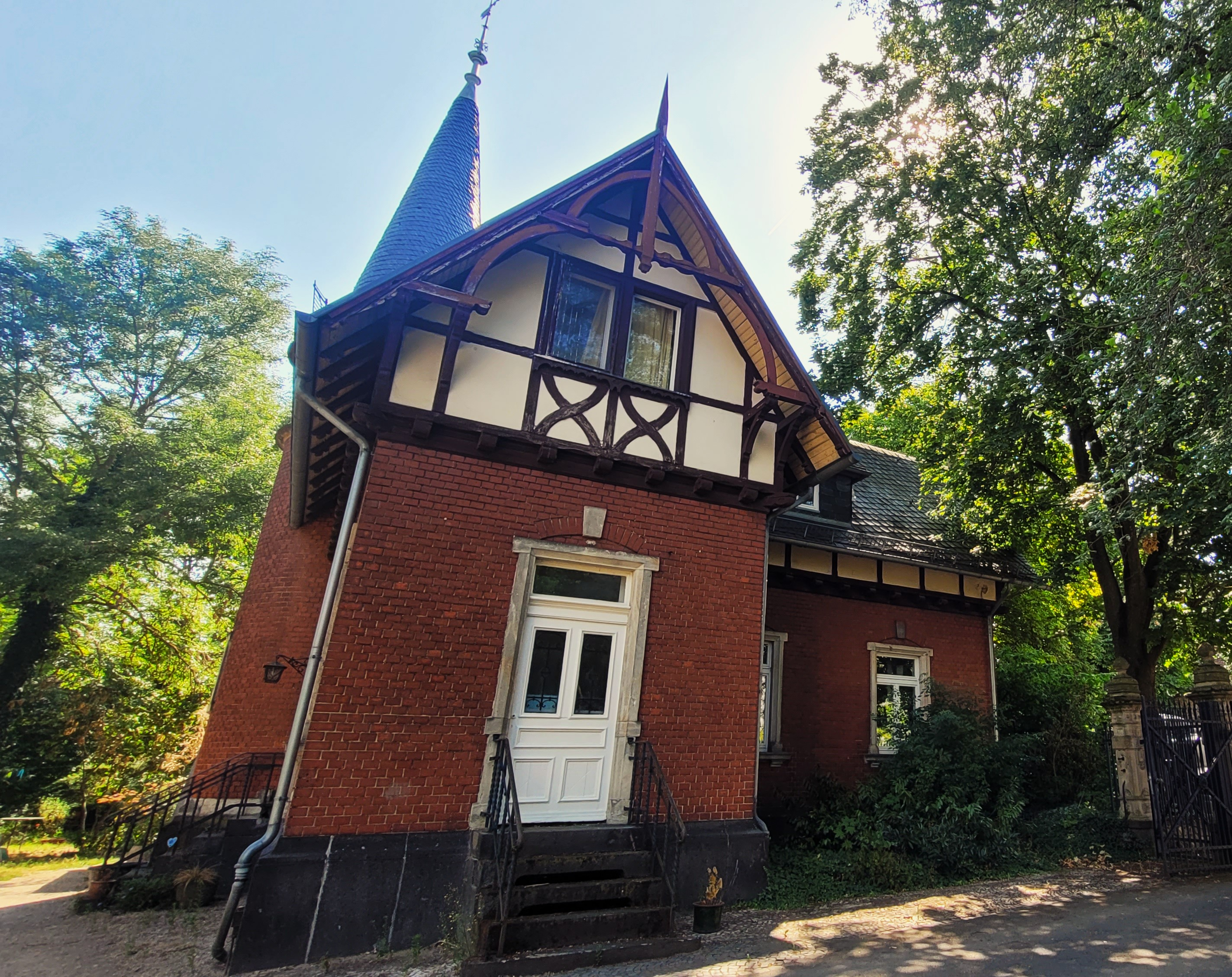
Around 1891, the two-winged gatehouse (An der Saalmühle 15) was built at the entrance to the estate in brick construction with a round tower.
Friederike Gertrude van Krieken also dedicated herself to charitable purposes and bequeathed a foundation for the promotion of non-profit projects, with which, among other things, the conversion of the Ludwigsstift hospital into a full-fledged hospital and the establishment of an orphanage were realized in Nieder-Ingelheim.
From 1935, her great-grandson Ernst Emmerling resided in the villa, which had undergone extensive renovation in 1926. The art historian distinguished himself as a secretary of the Historical Association Ingelheim e.V. and especially through numerous publications on local history.
The former "Servants' House" (An der Saalmühle 1) was built around 1897 according to plans by Johannes Hilgert from Nieder-Ingelheim. Due to the subdivision of the property, the former connection to the Emmerling estate is no longer recognizable.