The Settlement Stone
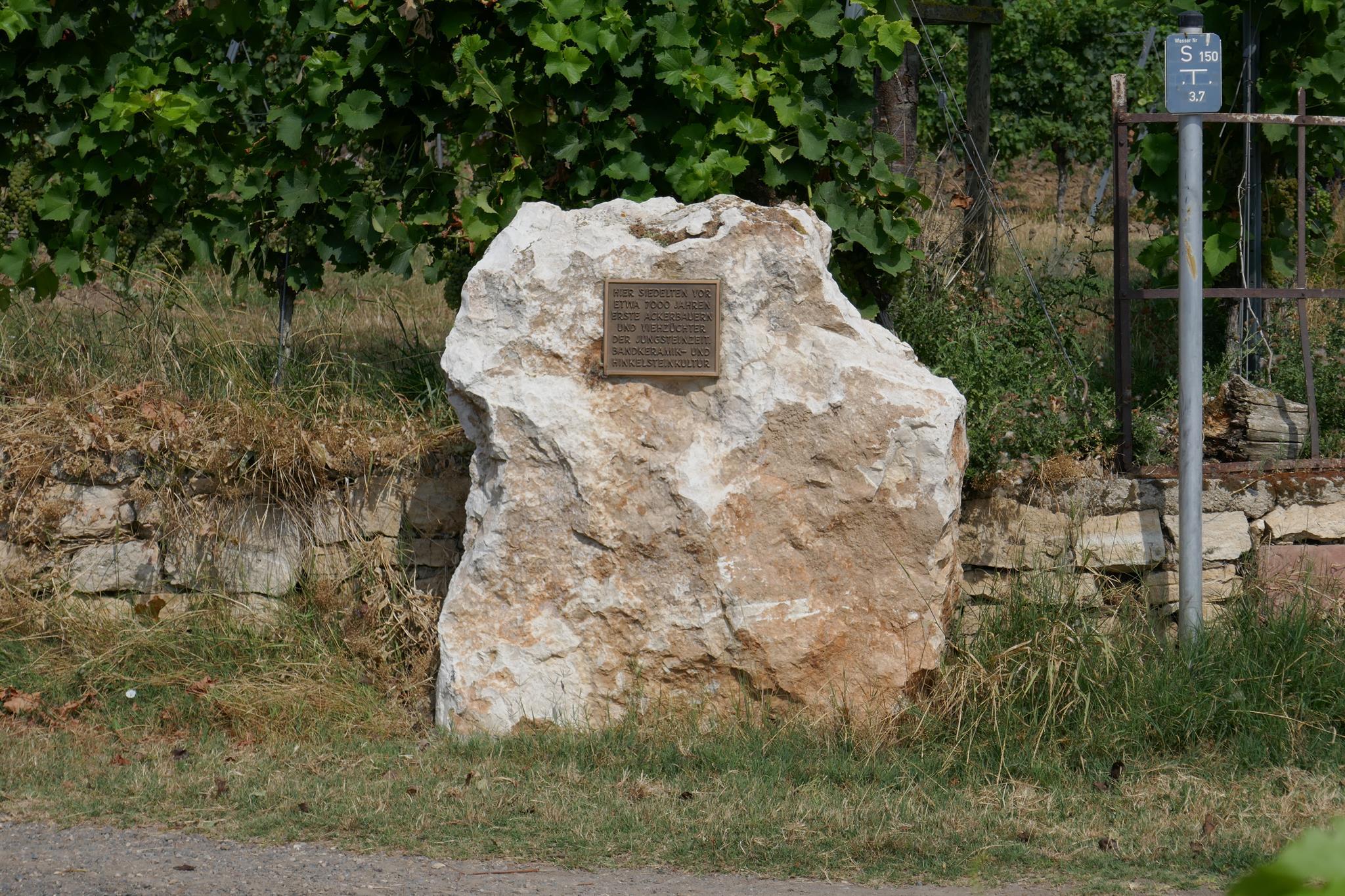
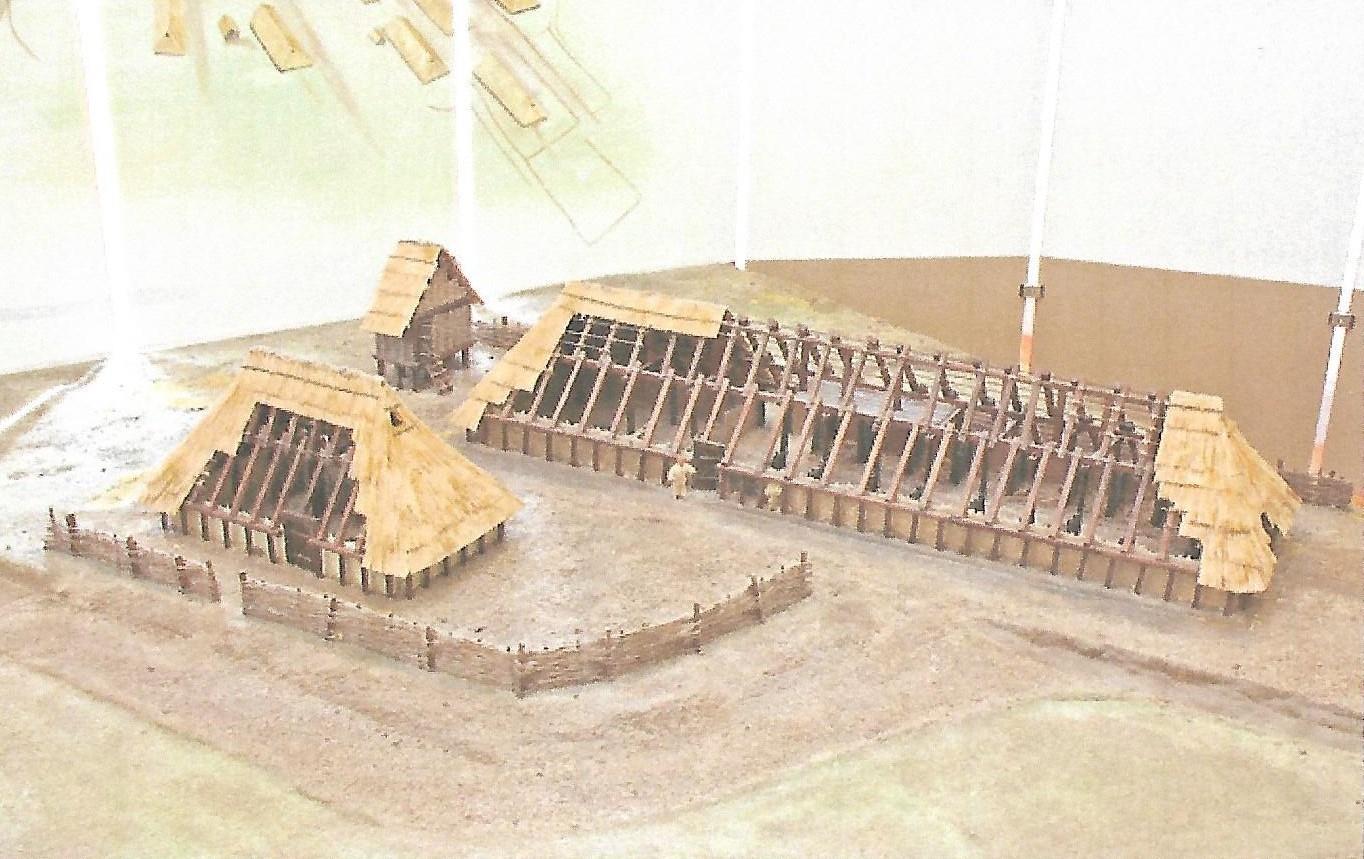
About 7000 years ago, humans already settled here. They lived in so-called longhouses, which served as living space, storage, and stabling all at once. This stone was created in memory of the archaeologically proven oldest settlers of Westhofen. Also, pay attention to the inscription on the plate donated by Mr. Hilgert.
The inscription on the plate reads:
Here, the first farmers and livestock breeders of the Neolithic era, Band Ceramic and Hinkelsteinkultur settled about 7000 years ago.
In one of the photos, you can see a reconstruction of an old Saxon homestead. In the background, the longhouse. This is how the longhouses may have looked. They were residential buildings, storage, and importantly, also stables.
FIELD NAMES
Behind the church to the left and right of the caterpillar path
1266 retro ecclesiam
1380 hinder kyerchen Westhouen
1348 uf rupenpade
1399 an rupenpade
1497 am Ruppenpfade
1606 am Rauppenpfadt
1934 Behind the church to the left and right of the caterpillar path
1954 ditto
Today ditto
As mentioned above, the two fields were only merged in more recent times. The first part points to a church estate, while the second part refers to the "rupe" - caterpillar. Through the merging, the longest field name in Westhofen was created, distinguishing between "Behind the church to the right of the caterpillar path" and "Behind the church to the left of the caterpillar path."
1681 im Raubenbauhm
1721 am raubenbaum
Whether the caterpillar is also related to the tree is not verifiable.