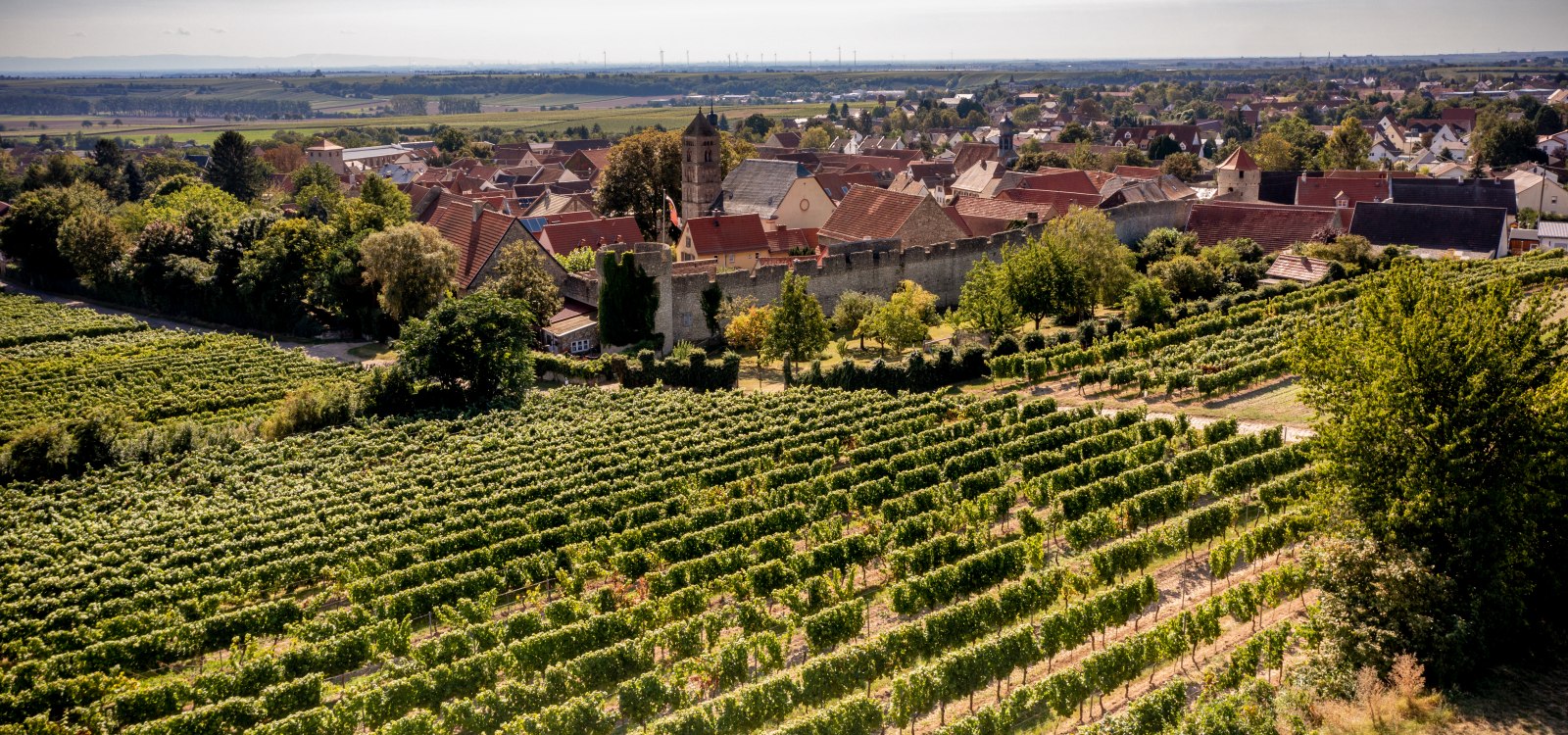
Dahlsheimer Bürgel  DJI_0388

About us

  • Winemaker Florian Feth
  • Vineyard-area 16 hectares
  • Ab-Hof/Vinotheque
  • Maxim origin Rheinhessen
  • Sylvaner

Contact details:

Weingut Feth
Florian Feth
Rodensteinerstraße 17 67592 Flörsheim-Dalsheim

Processed vineyards

back
Dalsheimer Bürgel

Dalsheimer Bürgel

Pinot wines and sparkling wines at the Fleckenmauer

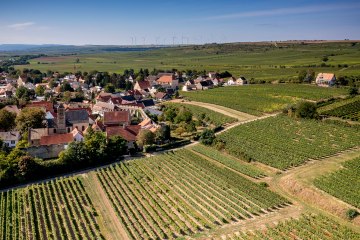
The single vineyard "Bürgel" is located by the famous Fleckenmauer. The vineyard was first noted in 1286 with the name "retro montem" (Latin: retro for behind, and mons for mountain). A hundred years later, in 1358, someone wrote down "uf dem berge"(engl. “on the mountain”), which became "Bürgel". Pinot grape varieties like Pinot Gris, Blanc and Noir grow especially well here. In addition to fertile loess and marl soil, the ochre-coloured limestone "terra fusca" is decisive for the quality. Not only for top wines, but also for sparkling wines. Therefore it is not surprising that the 1,100-metre-Fleckenmauer was built with limestone. It is the only medieval wall of this magnificence preserved in Rheinhessen.

  • To the other individual sites of Dalsheim: Hubacker
  • A former transmitter for starling defense has been converted into a lookout tower. Below: a typical Rheinhessen trullo. 
learn more
back
Dalsheimer Hubacker

Dalsheimer Hubacker

Of hooves and limestone rocks - a Riesling prime vineyard

In the past, farmers farmed their land with horses or oxen. The term "Hufe" or "Huffe" was a unit of measurement for a piece of land. In 1490, it was noted that 5 Hufen were worth 5 Mausi (a payment). The term "Hube" developed from "Hufe". In 1610, the location "am Hubacker" was mentioned in a document for the first time. Here Riesling grows on loess, clay marl and limestone rock. Expressiveness, filigree, minerality and ripeness potential at the highest level! In 2000, the Keller family of winegrowers built a 6.5-metre-high limestone tower there. A beautiful destination for an excursion!

  • To the other single vineyards of Dalsheim: Bürgel
learn more
back
Pfeddersheimer Sankt Georgenberg

Pfeddersheimer Sankt Georgenberg

The Riesling deed dating back to Luther’s times

Today there is no longer a monastery there, but researchers suspect that a provostry of the Benedictine monastery of Gorze was founded there as early as the 10th century. Saint George was thus also the patron saint of the single vineyard. Historically significant for viticulture in Germany: the first documented mention of Riesling from 1511 comes from Pfeddersheim. It is dated in manuscript to St. Martin's Day, i.e. 11 November. It was the time of Martin Luther, who did not recant his theses in Worms in 1521. Riesling, Pinot Blanc and Pinot Noir thrive on the loess and clay slopes of the single vineyard.

> Information in the monastery encyclopedia: https://www.klosterlexikon-rlp.de/rheinhessen/pfeddersheim-georgenberg.html
> Pfeddersheim is a suburb of Worms. It is worth a visit: https://www.worms.de/de/web/luther/Tourismus/ 
> Luther in Worms: https://www.worms.de/de/web/luther/Worms_1521/Reichstag/ 
> Rheinhessen blog: https://blog.rheinhessen.de/hier-stehe-ich-und-kann-nicht-anders-luther-bringt-in-worms-die-reformation-ins-rollen/ 

learn more
back
Mölsheimer Zellerweg am Schwarzen Herrgott

Mölsheimer Zellerweg am Schwarzen Herrgott (Zellerweg at the Black Lord's Cross of Mölsheim)

A weathered cross and two intersecting vineyards

This is one of the oldest vineyards in Germany: it was mentioned in a document as early as 1307 with the name "an Seller Weg". The name goes back to a wayside cross on the road to Zell (Donnersbergkreis/Kirchheimbolanden). Saint Philip of Zell is said to have placed a weathered cross here in the 8th century. A special feature of the site: the border between southernmost Rheinhessen and northern Pfalz runs right through the middle of the vineyards. Excellent mineral Rieslings and Pinot Noirs grow on heavy limestone and marl soils. The "Weinrast" a wine booth, is located in the middle of the site and offers a magnificent view over the valley. The site also contains two vineyard houses - a round tower from 1884 and a neo-Baroque mansard roof building from the 1920s.

> To the wine rest, bar of the local winegrowers on Sundays and holidays from the end of April to the end of October. Information at: https://zellertal-aktiv.de/portfolio-item/weinrast-mit-weitblick  
> To the Zellertal hiking trail: https://www.zellertalweg.de/ 
> To the cultural monuments of the village: https://xn--mlsheim-90a.de/moelsheim 
> Rheinhessen blog: https://blog.rheinhessen.de/der-zellertalweg-rundweg-monsheim-moelsheim-wachenheim/ 

learn more