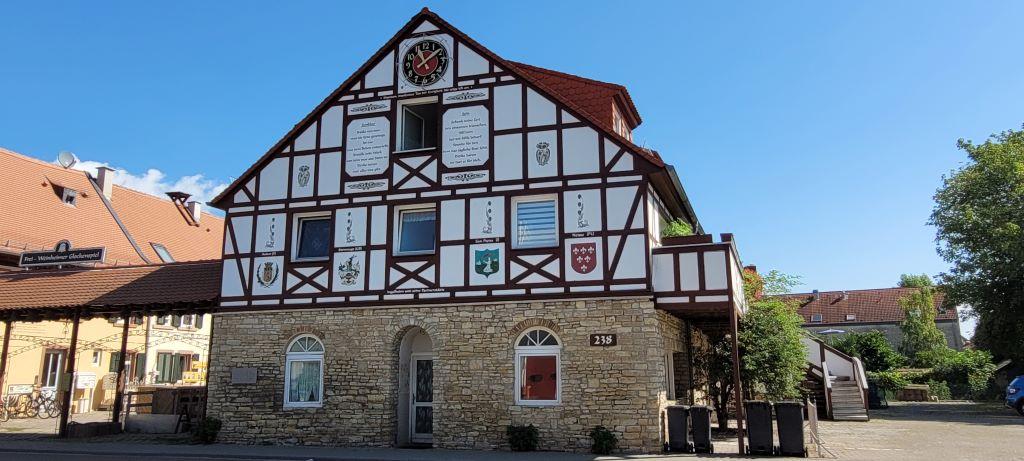
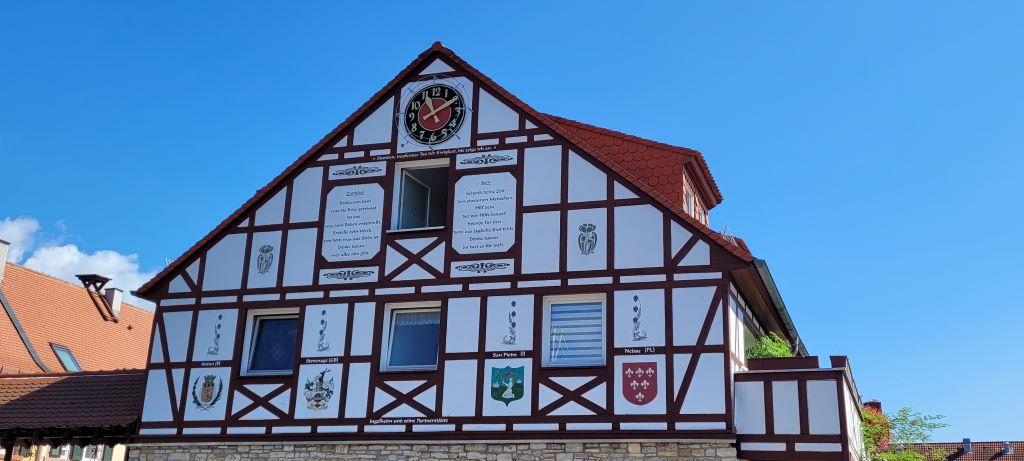
The former Frei-Weinheim marketplace was only built in the 18th century. Between 1700 and 1772, the weekly fruit market took place here on Tuesdays.
Nikolaus Schaurer and his descendants operated a thriving wood trade here from the 19th century onwards. His father had already been the lessee of the Electoral Palatine wood yard. The wood trade had a long tradition in Frei-Weinheim. Documented since the 15th century, rafts regularly landed here, mainly from the Black Forest, the Vosges, and the Spessart. Wood was the most important import good of the Frei-Weinheim port. From here, the wood-scarce surrounding area was supplied with construction and fuel material. Wood was also needed for viticulture in the form of vineyard stakes for tying the vines.
In the elongated residential complex, the structural substance of the former barn has been preserved, which provided space for over 20 horse-drawn teams with wagon loads. Storage and stacking areas of the Schaurer wood trade were located south of the barn and across the Rheinstraße on the site of today's fire station and AWO premises.