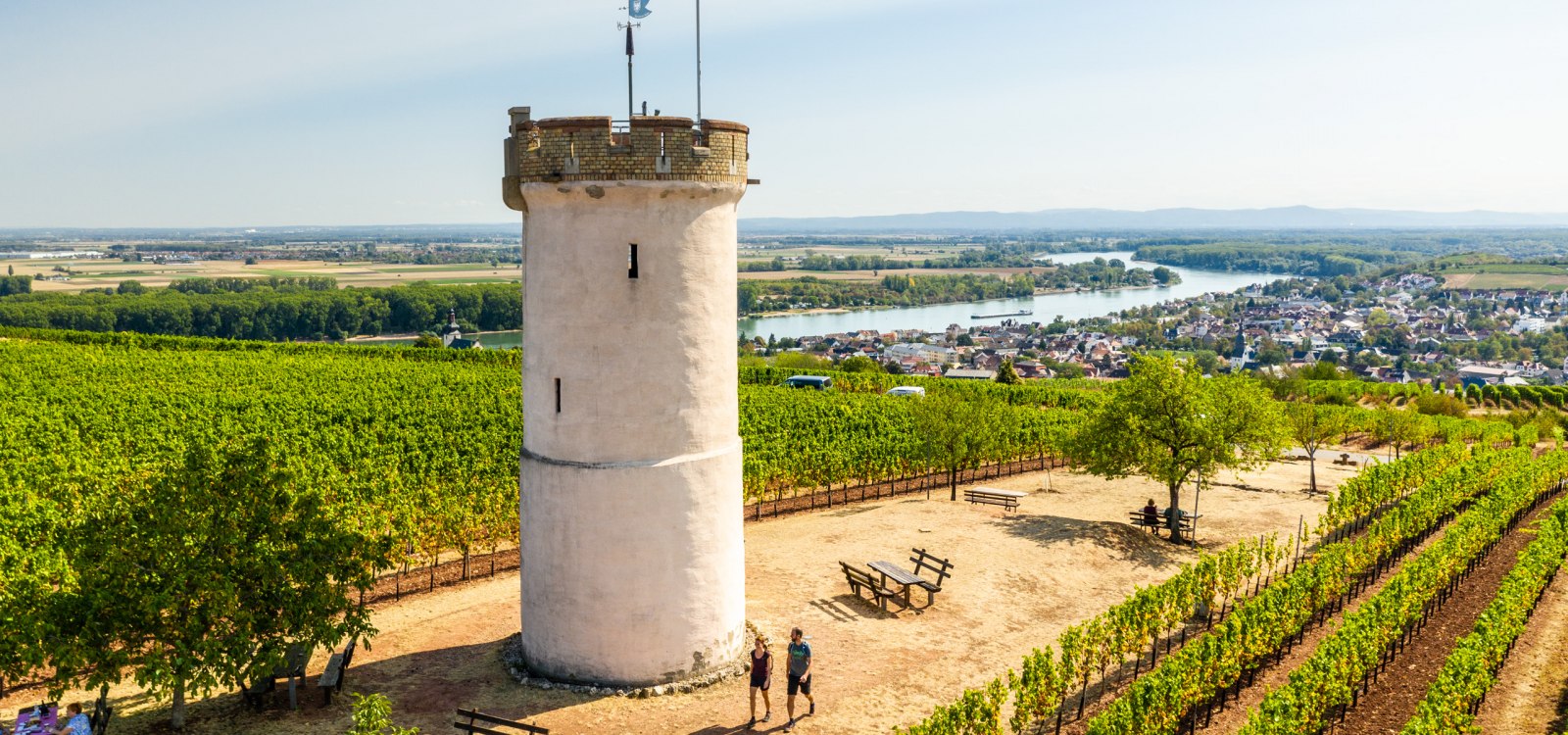
Hiking couple at the watchtower in Nierstein, © Dominik Ketz© Dominik Ketz

Culture on the hiking trail

Sights on the RhineTerrassenWeg

The Kaiserdome in Worms and Mainz, the Katharinenkirche in Oppenheim or the Rote Hang in Nierstein are known far beyond Rheinhessen and are an absolute highlight of every hike. But the RheinTerrassenWeg lives especially from the gems and moments in the wine villages. People like to talk about their regional attractions. Let yourself drift and enjoy the culture and the stories on the RheinTerrassenWeg.

Ehemalige Synagoge

Bechtheim

Ehemalige Synagoge Bechtheim

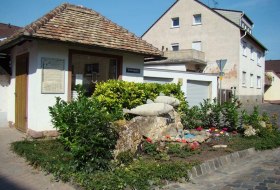
The foundation stone for the construction of the synagogue was laid in 1855, which was acquired by the local community in 1900 for use as a kindergarten. The synagogue served as a church only until the year 1874. After that, the building came into the possession of the Protestant parish, which originally wanted to demolish it to build a community center. However, due to the objection from the state monument preservation, this did not happen. Even today, the synagogue is used as a Protestant community center.   

Fischmarkt_1

Bechtheim

Fischmarkt und Kelterstein

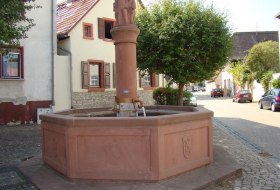
On the fish market stands the heavy pressing stone (3820 kg), which was found after a fire in the opposing manor house of Baron von der Leyen-Uexküll. The weighing house serves as a reminder that here the grape carts and the "Wutz" were weighed.

Lambertusbrunnen

Bechtheim

Lambertus- und Aegidiusbrunnen

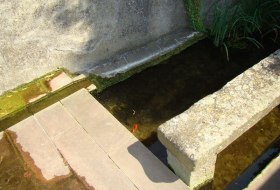
North and south of the basilica, connected to the underground pilgrim path of the crypt, are the Lambertus Fountain and the Aegidius Fountain (Gedd's Spring). The time of construction of these historical and water-rich wash fountains is unknown. The “Göttgensbach” is already mentioned in the morning book in 1688. The source of the Lambertus Fountain could have already been a sanctuary of the Romans.

Romanische Basilika Bechtheim

Bechtheim

Romanische Basilika St. Lambertus

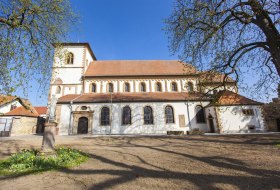
The basilica consecrated to St. Lambert of Liège (635 - 700) from the 11th century was formerly owned by the Augustinian canons at Mount Aegidius in Liège. Special features of the three-aisled basilica include a choir platform and a crypt with barrel vaults, as well as wall paintings from the 14th century. During the Middle Ages, it served as a pilgrimage church. From 1684 to 1910, the basilica was used as a simultaneum church. It is one of the most significant Romanesque village churches in Rheinhessen.

Ev. Kirche

Bechtheim

Evangelische Kirche Bechtheim

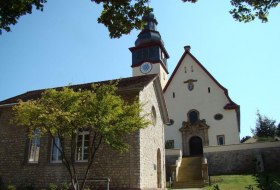
The 38-meter-high church tower of the Protestant church stands prominently visible and was inaugurated in 1910 after 17 months of construction. The organ, the ceiling painting, and the colorful windows radiate a special beauty. The interior of the church is designed according to the so-called "Wiesbaden Program." Accordingly, the altar, organ, and pulpit form a unity as they lie on a visual axis.

Historisches Rathaus  und Kirche

Mettenheim

Historisches Rathaus und Kirche

The historic town hall and the protestant church of Mettenheim are two particularly beautiful buildings in Rheinhessen. The town hall in the centre of Mettenheim dates from the 2nd half of the 16th century and has survived all the destruction of the 30 Years War. The parish church was built between 1748-1756 by master bricklayer Blattner from Osthofen and consecrated in 1756. Under the church is the Wartenberg family crypt.

Blick vom Friedhof auf die Heidenturmkirche

Alsheim

St. Boniface Heidenturm Church

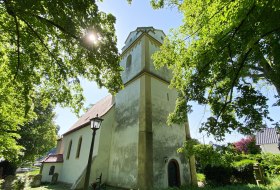
The Protestant church of St. Boniface is located directly on the Luther Trail between Worms and Nierstein. It is the smallest of the 4 Heidenturm churches in Rheinhessen. Hidden under old trees, it is reached through a wrought-iron gate and you enter a magical place of silence and reflection. The adjacent old cemetery, with half-sunken crosses and overgrown gravestones, is like visiting an enchanted world. An almost mystical place. The church and the cemetery are freely accessible, and a tour of the interior is possible by arrangement with…