
searchMenu
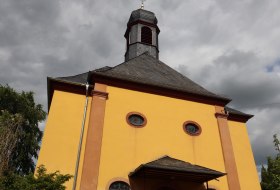
The Catholic parish church of St. Walburga was built in 1740. The Baroque hall church with a choir enclosed on three sides was formerly used as a simultaneous church. On the gallery of the parish church, you will discover a real treasure: the single-manual, eleven-stop organ built in 1763 by Joseph Anton Onimus. It is the only surviving organ by the famous organ builder and was lovingly renovated in 1993 by the company Förster und Niclaus.

According to historical maps, this round and two storey fortified tower with a pointed stone cone shaped roof was to the south-east of the old defences. The former eastward section of the wall led, across the later Neuweg, towards the Uffhubtor. The tower dates from the first half of the 15th century. This style of tower is most frequent in Ober-Ingelheim. In the 19th century they were often transformed to condominiums.

The Protestant church in Uelversheim is a special church, built in 1722 in the Baroque style as an octagonal central building. The original furnishings are still preserved today and convey an authentic impression of times gone by. In the center of the church building, along the main axis from west to east, you will find the altar, the pulpit, and the organ with its magnificent Rococo facade from 1754, crowned by trumpet-blowing angels. The gallery, which surrounds the room on five sides, was extended in 1836. The 20 balustrade panels of the…

The farmstead, which was built in the 1920s, offer a cross vault cellar which was reconstructed into a restaurant which can host up to 50 persons. General information about Rheinhessencow chapels The origin of the typical Rheinhessen vaults goes back to the early 19th century. At that time, farmers wanted to increase the yield of their cattle by keeping them in stables and use the leftovers as fertiliser for their fields. Initially, the cattle were housed on the ground floor of the half-timbered houses, above which hay and straw were…

The Catholic Church in Köngernheim is a branch church of St. Walburga in Friesenheim and today belongs to the parish of St. Mary Magdalene. Since its foundation in 2016, this parish has comprised the parishes of Friesenheim, Undenheim, and Weinolsheim. The church was consecrated in 1932. The interior of the church building is a simple space.

Important note: Guided tours of the cellar labyrinth can only be booked through the Oppenheim Tourist Information Office. Bookings, further information, and inquiries can only be made at: www.stadt-oppenheim.de/buchen | by telephone at 06133 4909-14 or 06133 4909-19 | or by email at tourismus@stadt-oppenheim.de Historic cellars beneath the old town With its extensive cellar complex, built between the 12th and 17th centuries, Oppenheim boasts a unique cultural monument. A circular tour through the underground town center of Oppenheim…

The town of Ludwigshöhe and its church are relatively young. The original town of Rudelsheim was located in the Rhine floodplains and was largely abandoned after a flood disaster in 1819. The last residents moved their houses to a higher location in 1830, and the original Rudelsheim church was destroyed by fire in 1832. In 1848, the new St. Vitus Church was built in the new village of Ludwigshöhe, towering above the village.

The wine table is a popular resting place in Rheinhessen. With a length of five meters, it offers even larger groups the ideal opportunity to take a break together. The wine tables are always located at particularly beautiful spots in Rheinhessen. The wine table at the Hiwweltour Heideblick is situated in the vineyard "Goldenes Horn" in the district of Siefersheim. From April to October, the wine sale of IG Biggsestick.komm takes place here regularly.