
searchMenu
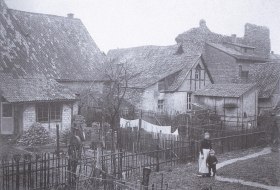
Almost four centuries after the Ingelheim imperial palace was established by the Carolingians, the Hohenstaufen had the entire Palatinate area renovated and converted into a castle. The semicircular building at the local site was secured by a defensive wall, the gate opening was closed. In the 14th century the Palatinate lost its function as a ruler's seat and an Augustinian canon monastery was set up in the Aula regia for a few decades. From 1402 the Palatinate area was released for settlement. The stable walls offered the residents safe…
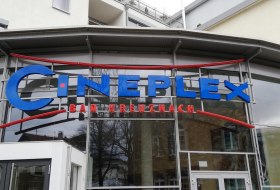
Premiere cinema: Here you can always find the latest movies. Arthouse program. In the afternoon, films for children and teenagers. Sound experience with Dolby Digital Sound System, state-of-the-art seating, partly reclining chairs. With Rick's Cafe, an excellent dining option is available - with a large outdoor terrace.
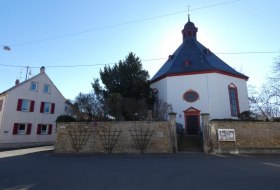
The Protestant church in Uelversheim is a special church, built in 1722 in the Baroque style as an octagonal central building. The original furnishings are still preserved today and convey an authentic impression of times gone by. In the center of the church building, along the main axis from west to east, you will find the altar, the pulpit, and the organ with its magnificent Rococo facade from 1754, crowned by trumpet-blowing angels. The gallery, which surrounds the room on five sides, was extended in 1836. The 20 balustrade panels of the…
The Wörrstadt Cultural Circle was founded on November 26, 1979. Its main task is to offer a diverse cultural program. Theater for adults and children, rock-pop-jazz concerts, staged readings, and lectures on the history of the region are among the main program points. Quadro Nuevo, Martina Eisenreich Quartet, Zydeco Annie & Swamp Cats, Acoustic Colour, Nighthawks, the Little Opera Bad Homburg, and Theater3D e.V. are just a few examples from our colorful program. Zettels Theater has been a guest with its Shakespeare plays in the…
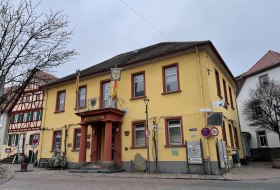
A journey through 500 million years of Earth's history The museum houses an exceptionally extensive collection of fossils. A stroll through the museum allows visitors to trace the evolution of life over millions of years up to the present day. The paleontological museum in Nierstein displays geological finds from all over Europe. Here, past worlds come back to life. The fossil collection The museum houses more than 1,000 exhibits, most of which originate from Europe. The oldest fossils are around 500 million years old and offer…
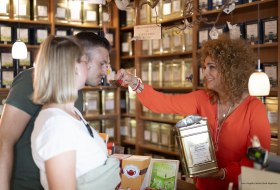
The Teekännchen, the special feel-good oasis in the heart of Ingelheim, enchants with its appealing, homely atmosphere and unusual variety of products, coffee specialities, over 400 types of tea, handmade waffles and cakes, decorative or gift articles, tableware and much more. Let us inspire you too!
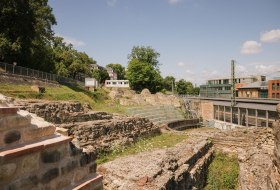
The Roman Theater in Mainz is one of the largest ancient stage buildings north of the Alps. Built presumably in the 1st century AD, it was located on the southern slope of the Kästrich, below the present-day citadel. With a stage width of about 42 meters and an audience diameter of 116 meters, the theater could accommodate around 10,000 visitors – an impressive scale that clearly illustrates the importance of Mogontiacum, Roman Mainz. Theaters of this kind were central places of public life in the Roman Empire and reflected the…
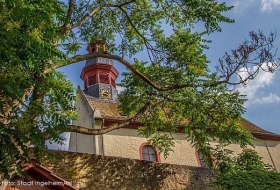
Already in 788, a church dedicated to Saint Martin is mentioned in a document from Fulda. At that time, the church was in the possession of the local noble family of Otakar. In 1348, it belonged as a parish church to the Wackernheim church community. In the mid-16th century, at the instigation of the Electoral Palatinate, first the Lutheran and then the Reformed confession was introduced. During the church division, the heavily damaged church, which had been severely affected by the Thirty Years' War, fell to the Reformed, who made up the…