
searchMenu
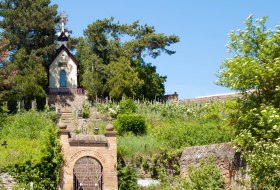
The chapel and tower of Villa Heiligenblut were built in the Romantic style in the 1780s. Today, civil weddings can be held in the chapel, which is owned by the Gerhard Hannemann family.
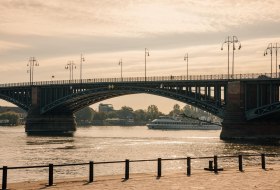
Since 1885, the Theodor-Heuss Bridge has connected Mainz with Kastel and spans the Rhine River. The distinctive steel arch construction shapes the city's skyline and is still considered one of the most important crossings over the river – for cars, cyclists, joggers, and walkers alike. Built near historic Rhine crossings such as the Roman bridge and the electoral prince's ship bridge, it continues a long tradition of cross-border connections. From early on, the bridge was more than just pure infrastructure: festivals and their symbolic…

In the cross vault of the Engelthal Monastery fine seasonal dishes are offered. Matching every dish there are in-house wines. General information on this typical kind of Rheinhessen vault, called "Kuhkapelle" (cow chapel) The origin of the typical Rheinhessen vaults goes back to the early 19th century. At that time, farmers wanted to increase the yield of their cattle by keeping them in stables and use the leftovers as fertiliser for their fields. Initially, the cattle were housed on the ground floor of the half-timbered houses, above…
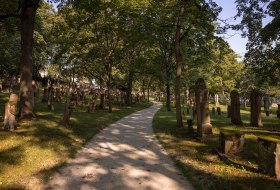
In 1880, the city architect of Mainz, Eduard Kreyßig, established a new Jewish cemetery on Untere Zahlbacher Straße next to the main cemetery of Mainz. This ended the use of the old cemetery Judensand on Mombacher Straße. A memorial plaque at the entrance has commemorated since 1948 with the inscription: "In memory of our victims. To the shame of the murderers. As a reminder to the living." The graves remained intact during the Nazi regime and wartime, and to this day, members of the Jewish community are buried here. The…
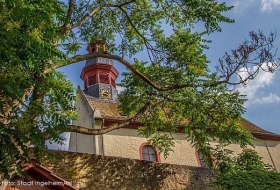
Already in 788, a church dedicated to Saint Martin is mentioned in a document from Fulda. At that time, the church was in the possession of the local noble family of Otakar. In 1348, it belonged as a parish church to the Wackernheim church community. In the mid-16th century, at the instigation of the Electoral Palatinate, first the Lutheran and then the Reformed confession was introduced. During the church division, the heavily damaged church, which had been severely affected by the Thirty Years' War, fell to the Reformed, who made up the…
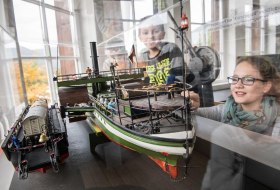
Grandiose nature and centuries of human labor shape the landscape at the gateway to the UNESCO World Heritage Site of the Upper Middle Rhine Valley. Located directly at the gateway to the Upper Middle Rhine Valley, the signaling station Human|Nature|Technology presents this unique interplay of humans, nature, and technology at the Binger Loch. In the rooms of the former railway signal box Bingerbrück East (Bot), this unique interaction is made tangible and experienceable in a multimedia and interactive exhibition for young and old…
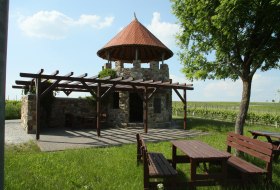
In collaboration with the Spiesheim Farmers' Association, the local community of Spiesheim built the Wine Tower in 1998. The Spiesheim Wine Tower was the first within the Wörrstadt municipal association. It has become a true landmark of our hometown to this day. The tower brings many people together from near and far; family celebrations, hiking trips, and much more regularly take place up here. On beautiful days, the view offers a fantastic panorama of the Rheinhessen hilly landscape, with a total of 28 local communities visible from…
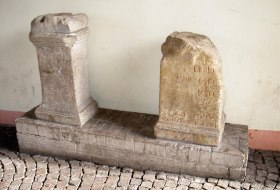
The cult of Mithras was brought to Mainz by Roman legionaries as early as the 2nd century. It was in direct competition with the emerging Christianity, as both religions showed some parallels. The underground sanctuaries, called Mithraea, consisted of elongated vaults with a Mithras altar at the end and were painted to resemble the starry sky. The followers of the cult therefore met underground, but symbolically under the canopy of heaven. The well-preserved altar is made of Odenwald marble. Its originally red inscription reads: “To…