
searchMenu
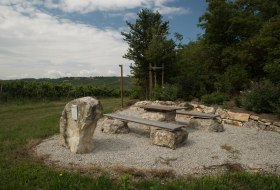
The Old Cemetery is located southeast of Stadecken-Elsheim and originally belonged to the abandoned village of Hedesheim, which was deserted in the 14th century when the residents settled closer to the newly built Stadeck Castle. The cemetery was still in use until 1804. Today, a small grove reminds visitors of its former location, and in front of it, a small rest area invites people to linger.
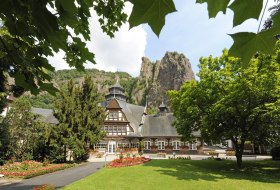
The half-timbered spa house, behind which the Rheingrafenstein rock rises, the romantic natural riverside of the Nahe, the refreshing salt air of the 160-meter-long brine evaporation tower, a Kneipp facility, and generous shaded relaxation areas make the Bad Münster am Stein spa park an island of tranquility and serenity. Even on hot days, it is pleasant to linger here. The Kurhaus restaurant, with its beautiful outdoor terrace, is a popular dining establishment in a well-kept atmosphere. From the spa park, you can reach the other…
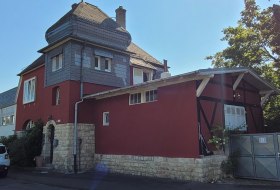
From 1904, Frei-Weinheim had a railway connection for goods and passenger traffic for exactly 50 years. The former train station building in Heimat style is still preserved. The single-track Selztalbahn connected the Rheinhessen hinterland from Jugenheim-Partenheim to the port in Frei-Weinheim. In Nieder-Ingelheim, there was a connection to the left bank Ludwigsbahn, which had been running between Mainz and Bingen since 1859. Since the Selztalbahn was primarily used for the transport of sugar beets, it was nicknamed…
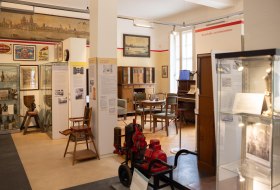
Somewhat hidden behind the café and directly next to the Drusus Stone on the Citadel lies the City Historical Museum in Building D – opened in 2003, but still almost a insider tip. The museum is a private institution and is funded by membership fees, donations, and entrance fees. The sponsor is the Mainz City Historical Museum Association, which was founded in 1996. The museum offers a comprehensive overview of the history of the city of Mainz, but places a particular emphasis on social and economic historical aspects. Exhibits…
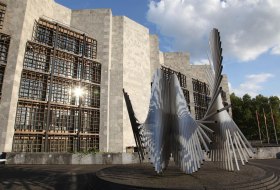
Colloquially, the building is jokingly referred to as "Fuchsbau" – in reference to the then-serving mayor Jockel Fuchs – or "officials' prison." It is undoubtedly a distinctive building with its own, unmistakable form language. For five centuries, Mainz had no town hall until the city council commissioned the renowned Danish architectural firm Jacobsen and Weitling to design a new building in 1968. Otto Weitling, one of the architects, expressed his hopes in 1974: "We believe we have created a place of high value that will arouse…


Protestant parish church, formerly St. Nicholas Collegiate Church. The large building with its high tower to the west dominates the Obermarkt with its long side. Despite severe damage during the War of the Palatinate Succession in 1689 and World War II, the three-nave hall offers an impressive, albeit somewhat austere, interior, due to the loss of most of its furnishings. Some of the tomb slabs erected in the nave originate from the Cistercian convent of Weidas, which was located near Dautenheim and was destroyed in the 16th century. The…
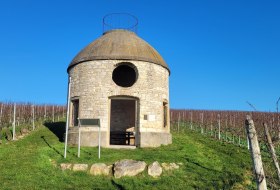
The "Babo Cottage" is a charming old vineyard cottage, built in 1786 by the Electoral Palatine Privy Councillor Johann Lambert Gregor von Babo. The cottage is perfect for a break with a beautiful view.