
searchMenu
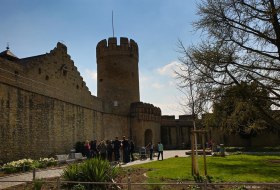
The Malakoffturm marks the southwest corner of the curtain wall around the Ober-Ingelheim castle church. In 1856, the former Alte Wache was renamed and has been called the Malakoffturm since then. The reason was - in the abbreviated version - the storming of the Malakov bastion in the Crimean War (1853-1856) by the Allies. The victory ended the war and as a result massive, large towers were given the name Malakoff throughout Western Europe. From the 19 meter high tower you have a nice view over the roofs of Ingelheim over to the…
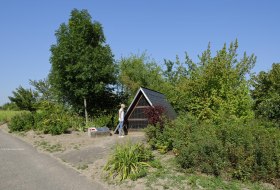
This archaeological presentation area is divided into two levels. On the lower level there is a once underground water basin from the Carolingian era. On the intermediate level, which corresponds to the walking level of the 8th century, an incision in the ground allows one to see the exposed supply line of the basin. In the past, the basin was mistakenly called "Karlsbad". draws. In fact, it was related to a seven kilo meter long long-distance water pipeline running underground from Heidesheim the Wackernheimer Tal led to the Kaiserpfalz.…
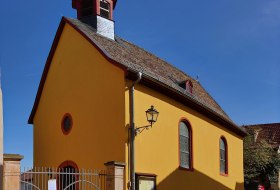
After the only church at the time, St. Martin, was assigned to the Reformed during the church division, the Catholics initially had to retreat to a chapel in honor of All Saints at Bornstraße 14. There, the Catholic cemetery had already been located since 1610. The Catholic Church of the Sorrows of Mary was built in 1733. Its construction was made possible by a donation from the Mainz patrician family Gedult von Jungenfeld, who provided the land. The interior furnishings partly consist of furniture from other Christian places of…

The Wine Village Museum in Horrweiler is located in the old centre of the village, opposite the "Alte Kelter". Interested visitors can gain a comprehensive insight into village life in past centuries. In the entrance area, the imposing striking mechanism of the Horrweiler tower clock can be marvelled at and is a particular attraction for those interested in technology. A large part of the exhibition is dedicated to winegrowing from bygone times with various tools. On the upper floor, we immerse ourselves in the classroom from earlier times;…
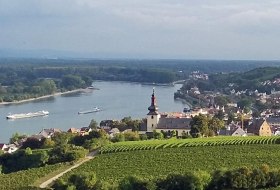
Discover Nierstein, the largest wine-growing town on the Rhine, on a guided tour full of exciting stories and wine tradition! Bookable for groups of 5 or more people Cost: €50 flat rate Duration: 90 minutes

The Schillerplatz is one of the central and historically significant squares in Mainz. Named after the poet Friedrich Schiller, it is today a lively meeting place with a striking historical backdrop, characterized by magnificent noble palaces such as the Osteiner Hof and the Erthaler Hof. Its baroque appearance bears witness to the urban development of past centuries, and the square is closely linked to the Mainz Carnival: Every year on November 11th, the fifth season is ceremoniously opened here. In the center of the square, the Carnival…
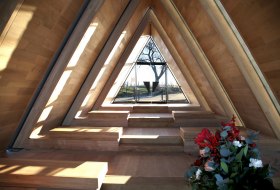
Countless vines, gentle hills, the most beautiful wine view of Rheinhessen... and: a small chapel in the middle of this beautiful landscape. Anyone walking in Zornheim's nature cannot escape this charm: The chapel in the midst of the Zornheim vineyards is a special gem, a gift from the Peter E. Eckes family. The extraordinary architecture, a triangular wooden-glass construction, masterfully captures light and landscape and offers views all the way to the Feldberg and the Frankfurt skyline. The chapel is open to all visitors - as an idyllic…
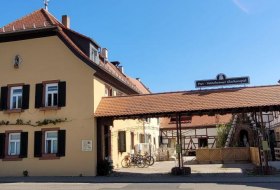
Only a part of the entrance of the former Lutheran church building is still visible. The sandstone plaque above refers to the year of construction 1753. After both the Catholic and Reformed congregations had their own new houses of worship, the six resident Lutheran families joined forces with fellow believers from the Kurmainz Rheingau across the Rhine. With the help of a collection, a modest small church was built and used jointly. As the only church in Frei-Weinheim, it did not have a bell. The Lutherans were assigned to Ober-Ingelheim.…