
searchMenu
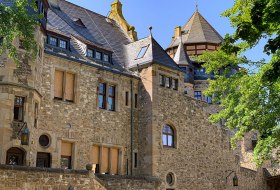
The complex, which was probably built in the 13th century, was the nucleus of the Rhenish Palatinate, a secondary residence and the seat of the district administration. Under the two Ruprechts in particular, Count Palatine Ruprecht II and Ruprecht III, who was German king as Ruprecht I from 1400 to 1410, Alzey Castle was one of the favourite residences of the Counts Palatine. Ruprecht II was therefore sometimes referred to as the ‘Duke of Alzey,’ and during King Ruprecht's reign, Alzey and its castle were even considered the…
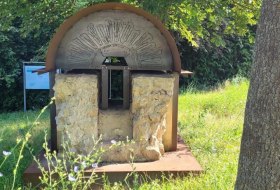
Here you see a section of an early medieval long-distance water pipeline. It was found in 2004 in close proximity. Scientifically, it has been dated to the construction period of the Imperial Palace, namely the late 8th century AD. The long-distance water pipeline supplied high-quality drinking water from the spring area "Karlsquelle" near Heidesheim through the Wackernheimer Valley to Nieder-Ingelheim, into the palace of Charlemagne. This was achieved through a 6.8 km long canal, which mostly ran underground. The structure, built from…
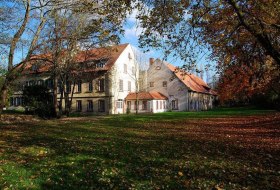
The Anhäuser Mühle in Monsheim is something very special. As the seat of the municipal administration and the tourist information office, it is idyllically located in the countryside. For art and culture lovers, it has developed into a venue with its own unique flair in recent years. Numerous performances, concerts and exhibitions take place throughout the year. In the open-air season in the unique courtyard of the mill building, in the cooler season in the adjacent council hall or even the historic cross vault (wedding room). This…

300 years of Roman culture and history on the banks of the river Nahe! In a rustic ambience, the exhibition shows you excavation finds from a colossal palace villa from the Roman "cruciniacum", which once stood on the site of the museum. The exhibition presents the luxury of wealthy Romans on the Rhine border of the Roman Empire. At the centre are two magnificent mosaic floors (gladiator mosaic, Oceanus mosaic), images of gods, funerary monuments, glass art and everyday objects. Directly next to the Roman hall are the accessible and thus…
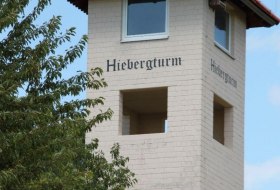
Main Signpost Intersection Adam Elsheimer Circular Trail In the place of today's Hiebergturm, there used to be a shelter made of field stones, which probably belonged to the Selz position of the Mainz fortress and was demolished after World War I. In the 1960s, the Hiebergturm was built here on its foundations as a base for starling control, which was renovated in 1985. The outdoor area and tower were later redesigned and were ceremonially inaugurated in 2014.
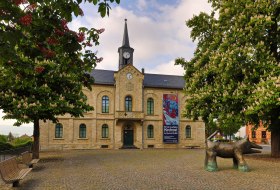
Great artists in the red wine city Andy Warhol, Chagall, Miró, Picasso, Rembrandt, Dürer, Goya and Paul Klee - to name just a few - have already found their way to Ingelheim. The old town hall in Nieder-Ingelheim, right next to the museum near the Kaiserpfalz, has served as a barrier-free location for world-class art enjoyment since 1986. Boehringer Ingelheim is partly responsible for this. Thanks to the pharmaceutical company's great commitment to the arts, the "International Days" have been held here for more than 60 years.…

Gallé-Blick Before the Gallé family acquired the Heisje, it was almost completely dilapidated. Since then, it has been restored and is lovingly maintained. Above the door is the Gallé family crest with the year 1988. The protruding canopy is meant to resemble the shape of a barrel. Height: 186 District: "Am Hinkelstein" History / Stories / Anecdotes: The Heisje was almost completely dilapidated and was lovingly restored by the Gallé estate. The family keeps it in good condition and also brings…
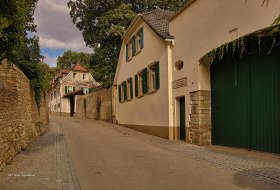
The lower part of Stiegelgasse and Edelgasse form one of the early cores of Ober-Ingelheim’s settlement. Here a significant number of aristocratic estates were concentrated. Most were singular farmsteads surrounded by large gardens or parks. The estate Stiegelgasse 65 with the Bodepark once belonged to the von Beuser family, one of the two sidelines of an early mentioned old Ingelheim kin of nobles. Around 1837, on this site, the estate of the wine and vinegar merchant Philipp August Gerhard was created, using old foundations. The…