
searchMenu
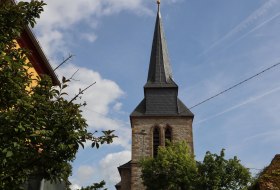
After centuries of use as a simultaneous church by the neighbouring Catholic Church, the foundation stone for the Protestant Church in Friesenheim was laid in 1885. After just over a year of construction under the supervision of architect Professor Heinrich von Schmidt from Munich, the church was consecrated in 1886. While the exterior walls of the building are made of Oppenheim limestone in a square shape, Dexheim limestone was used for the interior walls. The rest of the interior was designed with Flonheim sandstone. The windows, designed…
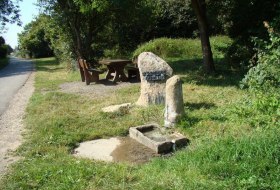
The sulfur spring is located in immediate proximity to the barbecue area. Sulfurous water flows from it.
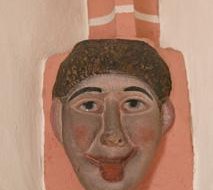
The church is situated on high ground and was once surrounded by a defensive wall and an Effenring (elm trees), as was common in Rheinhessen. The compact little choir room in the tower and the sacristy attached to the east were fitted with a net vault in 1494, as evidenced by a corbel stone in the sacristy. A well-preserved late Gothic mural (St. Cyriacus or Laurentius and St. Erasmus) can be admired in the reveal of the eastern window of the choir.
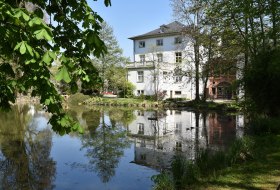
The Museum Schlosspark is a picturesque 18th century castle in a romantic landscape park and presents art and city history collections, as well as exhibitions of contemporary art. The sculptures of the Cauer family of sculptors from Bad Kreuznach are particularly worth seeing. Particularly noteworthy in the museum are the sculptures of the famous sculptor family Cauer from Bad Kreuznach. One of the highlights is the hunting room. The coffered ceiling in this room, the ornamented parquet floors and the wall panelling and built-in furniture…
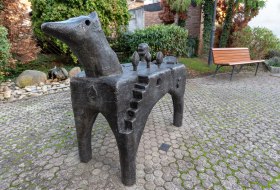
Liesel Metten Sculptures Path Nieder-Olm Join us on an unusual and exciting artistic journey in the center of Nieder-Olm. Rarely can one observe the artworks of a renowned sculptor couple in such close proximity. We are talking about the sculptures of Liesel and Johannes Metten in the public squares of our town. Between 1977 and 2016, a total of 14 works in bronze were created - animal figures and mythical creatures that have conquered the public space in Nieder-Olm. On small brass plaques, viewers can read the title, the year of creation,…
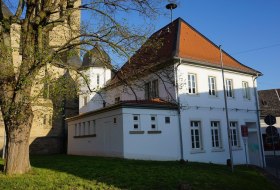
The town hall is two-storeyed, built of small field and quarry stones, which were quarried in the Gewann Steinkaut, called " Steinstück " in earlier centuries. The corners are made of house stones. The round tower attached to the building in the Renaissance style makes it possible to use the upper rooms of the town hall inside completely, as can be seen in many former noble houses in the 16th and 17th centuries. These rooms are reached via a beautiful stone spiral staircase in the staircase of the round tower. On the broad side of the…
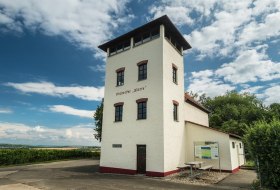
The Stadecker Warte is a historical agricultural building in the vineyards above Stadecken-Elsheim. It was built in 1930 by the winemakers of the region at the edge of the vineyard Stadecker Spitzberg and originally served as a preparation site for pest control. In the 1980s, the Warte was raised and fitted with a tower. Until the end of the 1990s, it was an observation post from which shooting devices could be triggered by radio to drive away the starling flocks from the vineyards. Today, the Stadecker Warte is a scenically attractive…
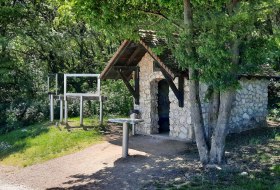
The Falkenberghütte, located above Dienheim, offers hikers along the RheinTerrassenWeg the opportunity to take a break. The hut, donated by the Dienheim Reconstruction Community, invites for a well-deserved rest after an eventful hike through the beautiful landscape. Two large panoramic windows reveal a fascinating panorama that opens up the view towards the historic Oppenheim and the charming Dienheim. The gentle hills of Rheinhessen with their picturesque vineyards provide a dreamy backdrop for beautiful photo motifs.