
searchMenu
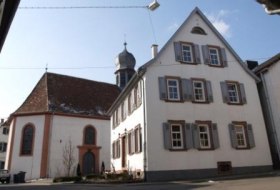
Former Lutheran church, built 1738-42 in rural baroque style - tower 1930, three-sided hall, stucco ceiling and furnishings from the time of construction, "pneumatic cone chest organ" from the workshop Förster & Nikolaus Lich/Upper Hesse from 1915, also called winter church, since the installation of a church heating system at the end of the 19th century. Text Signposting with kind permission of the Orsgemeinde Flörsheim-Dalsheim This location is part of an audiovisual route and offers the possibility to watch/listen to…

The Protestant church in Wintersheim, built in 1897, is a neo-Gothic quarry stone building. With its charming hipped roof and striking ridge turret, it dominates the townscape of the municipality. During the war years, some of the bells were melted down for war material and later replaced with new bells.
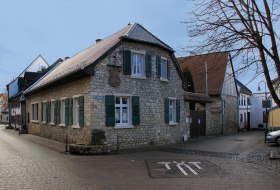
The Wettig forge was a blacksmith workshop from 1776. The workshop, with its furnishings and tools, is still preserved in the original condition of the 1920s. The barn offers space for exhibitions, music, literature, and theme nights. The cultural forge and the art association Glockwerks Lichte Kunstprojekte e.V. offer a varied cultural program throughout the year.

The former estate belonged to the family of Wackernheim's mayor Heinrich Klippel since the beginning of the 19th century. Through marriage, the property passed to Heinrich Krebs, who originated from the Heidesheim sand mill. In the 1860s, he housed and cared for the community bull. The keeping of the so-called "Faselochsen" (breeding bull) was clearly regulated and supervised by the district office in Bingen. The tenant had to purchase the bull at his own expense. The community paid a fixed annual amount for the maintenance of the animal. The…

The Roman Tower in the Guntersblum vineyards is a popular excursion destination right on the RheinTerrassenWeg. The lookout tower, constructed in 1998, is 9.8 m high. After 19 steps, you will find a covered viewing platform with an impressive panoramic view over the Rhine Valley, the Odenwald, the Taunus, and on clear days even up to Frankfurt. The tower recalls Guntersblum's Roman past: the Roman Tower stands near the site where a Roman Villa Rustica with a wine cellar was discovered a few years ago. Tip: From the end of April to…

Gallé-Blick Before the Gallé family acquired the Heisje, it was almost completely dilapidated. Since then, it has been restored and is lovingly maintained. Above the door is the Gallé family crest with the year 1988. The protruding canopy is meant to resemble the shape of a barrel. Height: 186 District: "Am Hinkelstein" History / Stories / Anecdotes: The Heisje was almost completely dilapidated and was lovingly restored by the Gallé estate. The family keeps it in good condition and also brings…
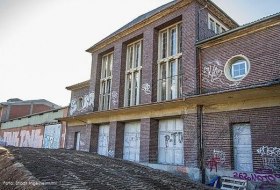
The market hall, built from 1920 to 1921 predominantly in dressed red sandstone near the train station, is considered an important functional building of the early 20th century, which still has a significant impact on the local landscape due to its location and size.
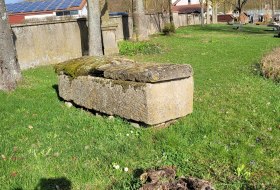
During a vineyard rearrangement in 1978, three adjacent sarcophagi were found and excavated on the hilltop "Greifenberg." The investigation by employees of the State Monuments Office in Mainz revealed that they date back to the 4th century AD. One of the sarcophagi is now located in the Sulzheim cemetery. The grave goods, glass jugs and glass vials, are housed in the museum in Alzey.