
searchMenu
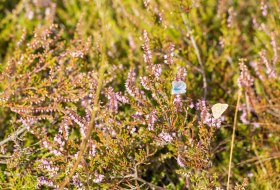
The Siefersheim Höllberg comprises a rocky hilltop of rhyolite with a rare plant community of e.g. rock pears, medlars, roses and heather as well as a dense ring of woody plants on the slopes.
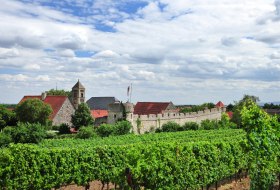
The eastern wall tower of the Fleckenmauer Flörsheim-Dalsheim is designed as a half-shell tower with three storeys and some embrasures that are still visible today.

In 2010, the Mainz patron Stefan Schmitz took over the now severely damaged ruins of St. Christoph. In 2012, the "Initiative St. Christoph" was founded, with the aim of restoring the dignity of the site with the help of public and private funds. Together with the city of Mainz, a restoration plan was created that aimed to complete the memorial in time for the 70th anniversary of its destruction on February 27, 2015. The plan was successfully implemented: The ruins, the tower, and the outdoor facilities were extensively renovated. Since 2015,…

The carnival museum, opened in 2004, vividly conveys the history of Mainz Carnival. The exhibition showcases everything from jester hats, orders, guard uniforms, and costumes to songbooks, programs, and historical audio and video recordings, as well as excerpts from the famous television shows "Mainz, wie es singt und lacht" – thus making an important part of Mainz's history and culture tangible. The exhibits cover the carnival from its beginnings in 1837 to the present day. In particular, the politically literary tradition of the…
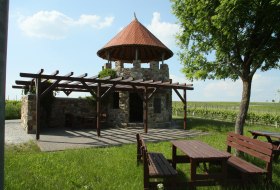
In collaboration with the Spiesheim Farmers' Association, the local community of Spiesheim built the Wine Tower in 1998. The Spiesheim Wine Tower was the first within the Wörrstadt municipal association. It has become a true landmark of our hometown to this day. The tower brings many people together from near and far; family celebrations, hiking trips, and much more regularly take place up here. On beautiful days, the view offers a fantastic panorama of the Rheinhessen hilly landscape, with a total of 28 local communities visible from…
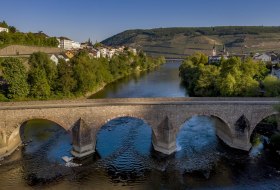
The bridge chapel in the land pier of the Drusus Bridge is probably the oldest preserved bridge chapel in Germany and the only underground one. The bridge chapel in the Drusus Bridge, 2021. Unfortunately, we do not have a current photo of the interior of the chapel in the city archive, hence this one from Wikipedia. Marion Halft: Early Romanesque bridge chapel under the Drusus Bridge, Bingen on the Rhine. CC-BY SA 4.0. Carved from the slate rock of the right bank of the Nahe, it lies on the axis of the Nahe Bridge 4.50 meters below the…
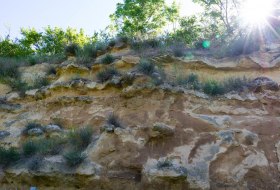
The Geotope in Alzey-Weinheim shows sea deposits from the time of Tertiar (Oligozän) over 30 Million years ago. It is also a former seabed, not a coastal cliff.

Bad Münster am Stein Ebernburg
From the railroad station to the House of Art - in the disused Ebernburg railroad station, visual artists exhibit their works of painting, graphic art, sculpture, ceramics or photographic art. 30 years ago, the building was converted into an exhibition house run by volunteers. Every year the Künsterbahnhof invites 3-4 scholarship holders* to move into an apartment in the building and work in the studio for a few months. Old works and new ones created in Bad Münster am Stein-Ebernburg are then presented in an exhibition. The annual…