
searchMenu

The church, built in 1863, is a simple rubble stone structure with a rectangular floor plan oriented east-west. The entrance in the east leads through a park-like forecourt with linden trees, where the congregation annually celebrates the "Kirchgartenfest – Unter den Linden." The slate-covered gable roof is equipped with small dormers on both sides. The side walls are characterized by four colorful stained glass windows each, extending over two floors. One enters the interior via a few steps, where the centerpiece is the organ from…
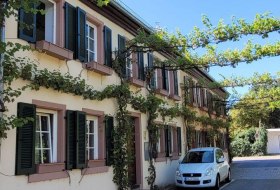
The construction of a forester's lodge in the second half of the 18th century is linked to the appointment of a kurfürstlichen forester. He was responsible for the entire Ingelheimer territory. The government aimed to combat the ongoing wood shortage with targeted reforestation. Sand dunes in the Nieder-Ingelheimer district were planted with pines. The wooded floodplains of the Rhine were managed. With the oversight of the planting of white mulberry trees to promote silk production, the forester received an important additional task…
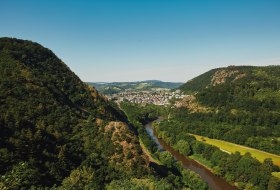
Shaped from fire and water: The Goose Rock Formation From the Salinental, one looks eastwards to a rock formation that looks like a huge slagheap. This was given its name in Celtic times: "Ganda", i.e. steep slope with rock debris. Elementary forces have shaped the goose. 280 million years ago, magma came to the surface from the earth's interior, solidified and formed a rock massif to which both Rotenfels and Rheingrafenstein belong. The Nahe - Celtic "Nawa" - carved its way into this rock and dug its way deeper and deeper into it. This is…
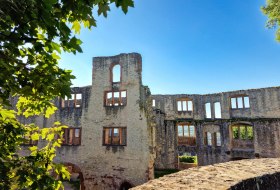
Welcome to a tour through the history of the old imperial town of Oppenheim from its beginnings in the 12th century to its destruction in 1689. An easy walk takes you to the Landskron ruins above the town, past our famous St. Catherine's Church and the ossuary, the stately Burgmannen houses and the remains of our medieval town wall. You will be rewarded with a sweeping view over the town and the Rhine Valley. Private tour for closed groups (max. 20 people) Duration approx. 1.5 hours Barrier-free access Bookable all year round Prices…
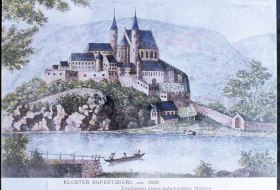
Around 1150 Hildegard of Bingen left the women’s cloister at the Disibodenberg monastery with 20 companions after her first work "Liber Scivias" had gained great notoriety. She founded her first own monastery on the Rupertsberg near Bingen. Here, the abbess, who now abandoned her secluded cloister life in favor of a public role, connected to the important trade routes of the Rhine. Most likely between 1155/58 and 1165, the new monastery complex was created with the three-nave, representative church at its center. During her nearly 30…
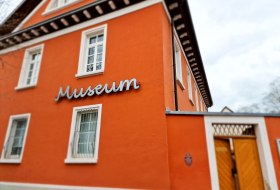
The Nackenheim Local Museum "MUXUM" conveys the history of the community of Nackenheim to visitors from different perspectives. In the "village treasury", the permanent presentation on the history of Nackenheim (ground floor), selected exhibits are displayed, each of which had a specific significance for the village and the region. A Q-code on the respective display case allows interested museum visitors to delve deeper into the history. The permanent exhibition "Nackenheim - the lower village shaped by the Rhine" (ground floor),…

An overview of the world of wine The prosperity of the town has always been linked to wine. Even today, Oppenheim vineyards such as Sackträger, Krötenbrunnen, and Herrenberg enjoy an excellent reputation among wine connoisseurs from all over the world. At the German Wine Museum, you can experience the tradition of winegrowing up close: in addition to informative insights into winegrowing in Rheinhessen, you can expect exciting insights into Germany's wine-growing regions, wine production, and the enjoyment of wine. The museum…
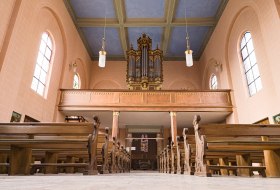
The Catholic parish church of St. Peter in Ketten is a single-nave hall building with coffered ceiling, built in 1725 in the neo-Gothic style in the centre of Gau-Bischofsheim. The choir windows were designed by the well-known painter and glass artist Heinz Hindorf in collaboration with the glass workshop R. Münch. The weather vane on the church tower shows the church's namesake, St. Peter. In the 1990s, the church was extensively renovated and refurbished. The “Johann Geissel organ” in the church is the oldest church…