
searchMenu
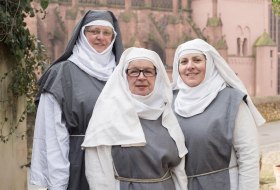
Beguines were women in the Middle Ages who, under the protection of the Christian community, strove to lead an intense life following Christ. Through their work in nursing and educational institutions and their knowledge of herbal medicine, they had a significant influence on social life at the time. Without entering a convent or taking a permanent vow, they were largely independent of the local Franciscan convent. Even though the three well-known beguine houses in Oppenheim are no longer preserved, we still invite you to travel back in time…

The water tower built in 1906 on the Höllberg near Wöllstein is considered a landmark of the place. The listed tower was restored in 2025. It is a popular meeting point and picnic area and is located on the Küstenweg Rheinhessen hiking trail.
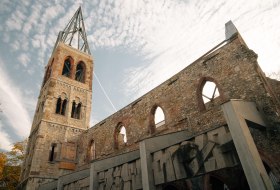
In 2010, the Mainz patron Stefan Schmitz took over the now severely damaged ruins of St. Christoph. In 2012, the "Initiative St. Christoph" was founded, with the aim of restoring the dignity of the site with the help of public and private funds. Together with the city of Mainz, a restoration plan was created that aimed to complete the memorial in time for the 70th anniversary of its destruction on February 27, 2015. The plan was successfully implemented: The ruins, the tower, and the outdoor facilities were extensively renovated. Since 2015,…
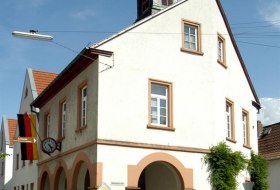
The town hall was built in 1832. In exchange for another site, the municipality of Monsheim received the building and the land from the Möllinger family. From then on, the house served as the town hall, and later the kitchen, the milk collection point and the fire brigade were also housed here. Today, meetings of the local council are held here, as well as the office hours of the local mayor. Text taken from Tour of Monsheim with kind permission.
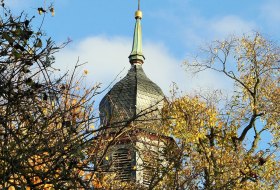
At the time of the Reformation, Ensheim already had a parish church, which – despite several repairs and two renovations – is still in use today. The first major renovation took place in 1722, as the nave had become dilapidated and was no longer sufficient for the growing congregation. The main building was extended and renovated during this process. In 1830, another renovation followed, which was limited to the choir. In the following hundred years, the church underwent several renovations, particularly in the years 1875 and…
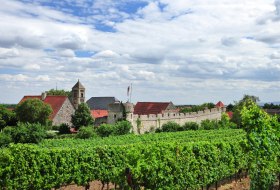
The south-eastern wall tower of the Flörsheim-Dalsheim Fleckenmauer is the simplest wall tower.
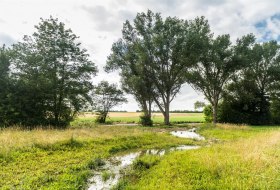
In 2017, the Saubachtal, named after the Saubach, was extensively renatured. Thanks to several created ponds, the Saubachtal offers an ideal retreat for animals and plants. A rest area with a quiet bench invites you to linger in the most beautiful spot.
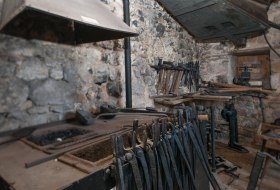
Built in 1750. The village blacksmith shoed horses, produced waggon wheel metal for carriages and repared small devices for the agriculture and the wine growing. The last active blacksmith let the fire go out forever in 1959. In 1989 the municipality could buy the forge together with its furniture and preserved an authentic testimony through useful additions of the equipment.