
searchMenu
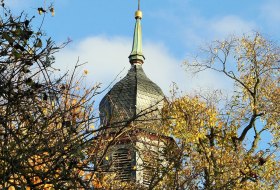
At the time of the Reformation, Ensheim already had a parish church, which – despite several repairs and two renovations – is still in use today. The first major renovation took place in 1722, as the nave had become dilapidated and was no longer sufficient for the growing congregation. The main building was extended and renovated during this process. In 1830, another renovation followed, which was limited to the choir. In the following hundred years, the church underwent several renovations, particularly in the years 1875 and…

First mentioned in 1413 and thus the oldest mill in Monsheim. The mill was converted into an electricity plant in 1900. The first electric current in Monsheim was produced here. The landowner at this time was Hermann Finger. A special feature of the mill was the historical boundary between Monsheim and Kriegsheim, which ran right through the middle of the estate. Since about 1920, the mill has been owned by the Milch family, who successfully run a restaurant and wine-growing business here. Text taken from the Monsheim tour with kind…

In one of the most beautiful buildings in Worms - the former Andreasstift, a late Romanesque building complex from the High Middle Ages - is the historical museum of the city. Through significant exhibits from Worms and its surroundings, we invite you on a journey of discovery through 7000 years of settlement history. In the two new cloister wings on the ground floor, the themes of city history, the history of the museum, and the model of the city are presented. On the upper floors, numerous interesting exhibits from the Neolithic,…

The sand-lime brick profile and the accompanying information panel provide information about the geology of the region and its impact on wine growing.
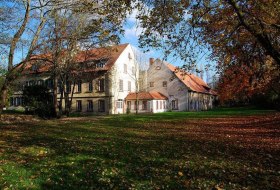
The Anhäuser Mühle in Monsheim is something very special. As the seat of the municipal administration and the tourist information office, it is idyllically located in the countryside. For art and culture lovers, it has developed into a venue with its own unique flair in recent years. Numerous performances, concerts and exhibitions take place throughout the year. In the open-air season in the unique courtyard of the mill building, in the cooler season in the adjacent council hall or even the historic cross vault (wedding room). This…
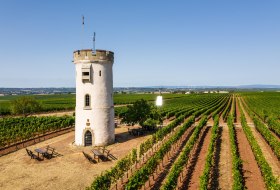
Above the town of Nierstein, located to the north in the Red Slope, lies the Wart Tower – the landmark of the town and one of the most beautiful viewpoints in the region. From here, an impressive panorama of the vineyards and the Rhine Valley opens up, extending to the Donnersberg, the Hessian Bergstraße, into the Taunus, as well as to Wiesbaden, Mainz, and the Rhine-Main area. Its origin dates back to a medieval signal tower from the 12th century. The stones from the demolished Kings Chair between Nierstein and Lörzweiler…
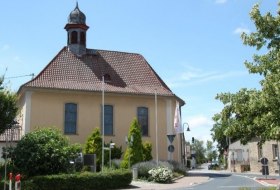
A Baroque hall structure with a hip roof, built from 1747 to 1751, extension of the community center, the south forecourt, and the new sacristy in 1970/71. Until the early 1970s, the former Catholic school was located nearby. The origins of the Church of Walburga, which stood on the Selz south of the current town center, can be dated back to the late 9th century based on the patronage documented since 1328. The first mention as "capella," initially probably a branch of Engelstadt, under the patronage of the Mainz St. Mauritius Foundation, is…
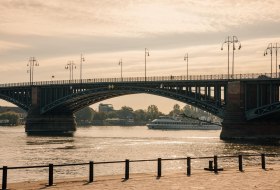
Since 1885, the Theodor-Heuss Bridge has connected Mainz with Kastel and spans the Rhine River. The distinctive steel arch construction shapes the city's skyline and is still considered one of the most important crossings over the river – for cars, cyclists, joggers, and walkers alike. Built near historic Rhine crossings such as the Roman bridge and the electoral prince's ship bridge, it continues a long tradition of cross-border connections. From early on, the bridge was more than just pure infrastructure: festivals and their symbolic…