
searchMenu

Pastry shop, café, confectionery Our master confectioner Christine Jung surprises you every day with fresh delicacies from our confectionery. Are you still looking for a "souvenir"? Then we recommend our handmade chocolate specialities.
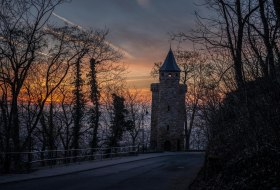
The Schneiderturm tower, which stood beneath the Landskron castle complex, was destroyed in 1689. In 1903, it was rebuilt in its current form, with the exterior façade clad in the same stone material as the Oppenheim district court. Thanks to the voluntary commitment of the “Förderverein Ruprechtsturm” (Ruprecht Tower Support Association), a comprehensive and fundamental renovation of the accessible observation tower was made possible. Guided tours are available on request from the Oppenheim Tourist Information…
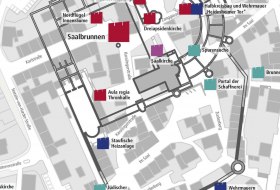
At this location, there is a well shaft that was situated beneath an asphalt surface until 2012. As part of the urban renovation, the Saalbrunnen has once again become a component of the local landscape. Today, travertine blocks mark its location. The location of the Saalbrunnen is particularly interesting: It is precisely at the intersection of the longitudinal and transverse axes of the Carolingian core buildings. Thus, the location of the Saalbrunnen marked the center of the palatial complex around the year 800. The symmetrical…

The Winzerkeller is not just a piece of Ingelheim's wine-growing history. It still characterises the face of the town today and bears witness to a great cooperative achievement. The multimedia wine experience exhibition brings this history back to life. At the centre of the permanent multimedia wine experience exhibition on the second basement floor, everything revolves around the history of the Winzerkeller and the people who laid the foundation stone for this extraordinary building almost 120 years ago. Step into the experience…
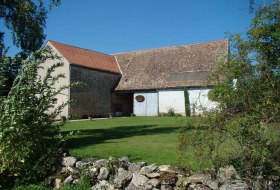
The Johanniterhof was first mentioned in a document in 1306. Parts of the building fabric are even older. After 500 years of belonging to the Order of St. John, the estate was divided into three manor farms under Napoleon. The former size of the entire complex is still clearly recognizable today.

For centuries there has been a large country estate just outside the medieval town wall of Bad Kreuznach - today it is a romantic tree garden, which was created in the 19th century as a landscape park. The pond in the park dates back to the 18th century, when a moated castle stood here. Over the years, however, the park was repeatedly redesigned by its changing owners. Today, the Schlosspark Museum is located in the middle of the park, which together with the pond forms an aesthetic unit that in itself is worth visiting.

Rich collection from over 200 years of winery history and development of the general wine growing.
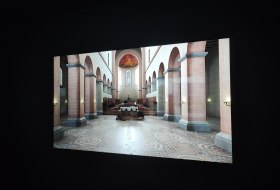
With the 'Elevator to the Past', the former Hildegard Monastery becomes tangible Almost 400 years ago, the proud Monastery of Rupertsberg, the place where Hildegard of Bingen worked, was burned down in the Thirty Years' War and reduced to ruins. In 1803, the grounds were then transferred into private ownership. The monastery arcades were walled up. In the Villa Rupertsberg, starting from the original monastery arcades of the Hildegard Church, the disappeared Hildegard Monastery has been revived and can be discovered with all senses through…