
searchMenu

Carl Zuckmayer set a literary monument to his birthplace Nackenheim with his play "The Merry Vineyard". Open-air performances of his works take place here regularly. You can find out about his family history in a permanent exhibition in the local museum. A bust in front of the town hall commemorates Nackenheim's most famous son.
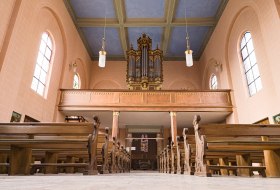
The Catholic parish church of St. Peter in Ketten is a single-nave hall building with coffered ceiling, built in 1725 in the neo-Gothic style in the centre of Gau-Bischofsheim. The choir windows were designed by the well-known painter and glass artist Heinz Hindorf in collaboration with the glass workshop R. Münch. The weather vane on the church tower shows the church's namesake, St. Peter. In the 1990s, the church was extensively renovated and refurbished. The “Johann Geissel organ” in the church is the oldest church…
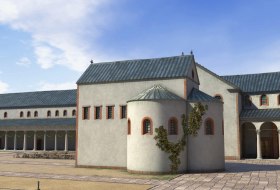
In 2004, two predecessor buildings of the Saal Church were discovered during archaeological excavations on the Saalplatz. The older of these buildings is a so-called tri-apsidal church (Trikonchos), named after its three semicircular building ends, which resemble the shape of a cloverleaf remember. It is an ancient building with a reference to Byzantine architecture. The eleven metre long sacred building from the 8th or The 9th century was connected to the north wing. Recent research suggests that it was a stately private chapel. Later the…

Rich collection from over 200 years of winery history and development of the general wine growing.
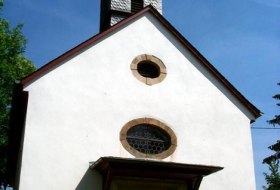
The predecessor building standing in the middle of the walled churchyard was dedicated to all saints. However, it had to give way to the current structure in 1755, which is characterized by a uniform design from the time of its construction.
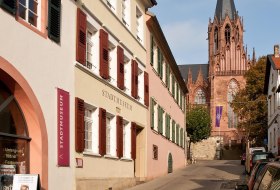
The Oppenheim City Museum offers a tour through the city's eventful and rich history—from prehistory to the end of World War II. It is the perfect addition to a visit with or without a tour guide. The ground floor displays artifacts and historical information from Roman times to the 17th century.
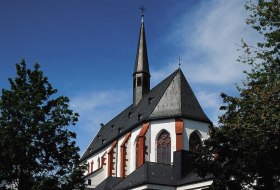
The first Carmelites came to Mainz around 1270; the first proper monastery with a church was built in the first half of the 14th century. As part of the secularization, the monastery was dissolved in 1802. Over a century later, in 1924, the church returned to the mendicant order that had been established in Mainz since 1270. In the meantime, it served as a storage space and was preserved only thanks to the protests of the citizens of Mainz against its demolition. The construction of the current monastery began in 1963, and since 1964, monks…

Today's Dreikönigskirche (Church of the Three Kings) in Neugasse was not completed until 1935. Although the architecture of the building is very simple, its windows radiate impressive splendor. Particularly noteworthy is the large, three-part window in the south wall, which bathes the church in bright, radiant light on Sundays when the sun shines. Instead of a bell tower, the church has a ridge turret in which three bronze bells hang, which were cast in Heidelberg in 1959.