
searchMenu
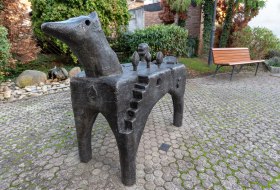
Liesel Metten Sculptures Path Nieder-Olm Join us on an unusual and exciting artistic journey in the center of Nieder-Olm. Rarely can one observe the artworks of a renowned sculptor couple in such close proximity. We are talking about the sculptures of Liesel and Johannes Metten in the public squares of our town. Between 1977 and 2016, a total of 14 works in bronze were created - animal figures and mythical creatures that have conquered the public space in Nieder-Olm. On small brass plaques, viewers can read the title, the year of creation,…
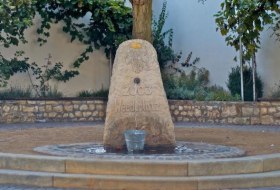
In 2003, the square in the town center was redesigned. The centerpiece of the square is the fountain. Water bubbles here from a large hewn sandstone, which stands under a shade-giving chestnut tree.
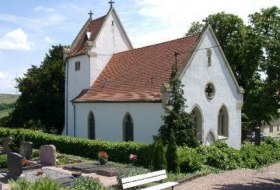
The baptismal church of Hildegard of Bingen in Bermersheim v.d.H. has been used repeatedly since the Reformation and finally to the present day as a Simultankirche - a church used separately by both denominations. This is a Franken characteristic and it stands under the patron of Saint Martinus.
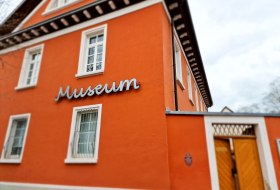
The Nackenheim Local Museum "MUXUM" conveys the history of the community of Nackenheim to visitors from different perspectives. In the "village treasury", the permanent presentation on the history of Nackenheim (ground floor), selected exhibits are displayed, each of which had a specific significance for the village and the region. A Q-code on the respective display case allows interested museum visitors to delve deeper into the history. The permanent exhibition "Nackenheim - the lower village shaped by the Rhine" (ground floor),…
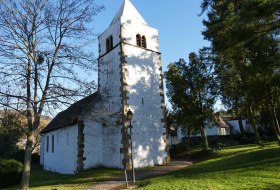
Bad Münster am Stein - Ebernbu
Surrounded by shady trees, the Old Johanneskirche, the oldest preserved building in the district of Ebernburg and indeed the entire city, stands in the cemetery. The whitewashed church was built before the year 1200 and was first mentioned in writing in 1212. Its location between the hill of Ebernburg and the massive porphyry masses of the Rotenfels gives the place a particularly romantic aura. The church was part of the city wall, which is why it was called a fortified church. The marked feature is the pyramid-shaped roof of the square…

The German Cabaret Archive is not only an archive but also a modern museum dedicated to cabaret. It serves as a place for information, encounters, and events for all age groups. Here, visitors can quench their thirst for knowledge, laugh, marvel, discuss, exchange ideas, or simply feel comfortable. A particularly inviting meeting point is the cabaret bar, located in the middle of the archive. Since 2019, Martina Keiffenheim has been directing the archive. Until 2021, she was also the artistic director of her own cabaret stage…
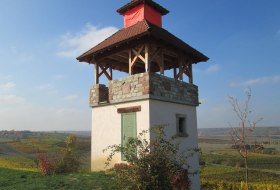
With the Pertelturm, I realised a long-standing dream that had already developed in childhood. Back then, I was surprised by a thunderstorm during a potato harvest; a Wingertshäusjen provided shelter for many farmers and even their livestock that day. That left its mark. Today I would like to show with this tower, which is a living recycle from many regions of Rheinhessen, that we in Reinhessen can also get something going. Only by prior request! With two cosy rooms and two viewing platforms, it is intended to be a contact point for…
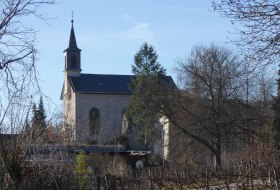
The town of Ludwigshöhe and its church are relatively young. The original town of Rudelsheim was located in the Rhine floodplains and was largely abandoned after a flood disaster in 1819. The last residents moved their houses to a higher location in 1830, and the original Rudelsheim church was destroyed by fire in 1832. In 1848, the new St. Vitus Church was built in the new village of Ludwigshöhe, towering above the village.