
searchMenu
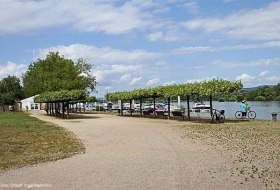
From 2001 to 2004, the Rhine riverbank in Heidenfahrt was extensively redesigned. Today, the riverscape combines local recreation and nature conservation and is particularly one of the most popular destinations in the region during the summer months. Some highlights of the river section include the promenade and sunbathing lawn, numerous waterfowl near the shore, and a fantastic view of the Rheingau.

At the mouth of the Nahe into the Rhine - a wonderful spot for views of the Upper Middle Rhine Valley and the Rheingau. Perfect, as the sun sets directly behind the Mouse Tower.

Digital tour, developed in a cooperation between the Research Center Kaiserpfalz Ingelheim and the Museum bei der Kaiserpfalz, which you can view on YouTube . It is led by Miriam Maslowski, historian and art historian (Museum bei der Kaiserpfalz). She introduces a number of outstanding women personalities of the High Middle Ages: They were all rulers who had an amazing wealth of power and even directed the fortunes of the Holy Roman Empire for a certain time. There is also evidence that all five empresses stayed in the imperial palace in…

The Schanzenhütte is located in the midst of the vineyards of Weinolsheim. From here, there is a beautiful view of the Petersberg and the Donnersberg. The covered hut provides protection in case the weather is not so good. On the vineyard loungers, one can enjoy the sun and simply relax. Additionally, it is possible to rent the Schanzenhütte for barbecuing by arrangement with the local community of Weinolsheim. The municipal administration of Weinolsheim can be reached as follows: Tel.: 06249 80210
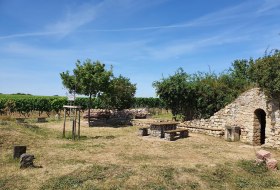
The vineyard cottage, estimated to be around 150 years old, was awarded a prize by the Rheinhessen Wine Brotherhood in 2015 after being expertly restored and refurbished by dedicated citizens of Uelversheim. A lovingly designed outdoor area provides opportunities to relax and linger. The earth-covered barrel-vaulted rectangular building of the Graunsberghäuschen invites visitors to sit down on a brick bench that runs around the interior. On the K41 road to Oppenheim on the left-hand side (second dirt road before the farmstead), a paved…
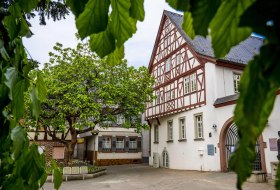
The museum offers insights into the life of the author who was born in Bingen in 1868. You can also see his writing desk, part of his bequest libary, examples of different book designs and editions as well as foreign language translations of George´s works and several sculptures.

The oldest Jewish cemetery in Europe has around 2,000 graves, the oldest gravestone dates from around 1058/1059 and is part of the UNESCO World Heritage SchUM Sites Speyer, Worms, Mainz - Jewish Heritage for the World. From the part on the former city rampart you have an impressive view of the cathedral, the so-called "Martin Buber View". The old Jewish cemetery "Heiliger Sand" is still of great importance to Jews worldwide. Numerous influential Jewish scholars and rabbis were buried here. The oldest gravestones date back to 1058/59 and thus…
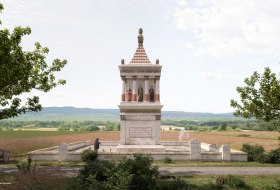
Experience "Ingelheim in Roman times" via augmented reality The Museum bei der Kaiserpfalz has developed a new mobile app that allows users to immerse themselves in the world of antiquity. The digital application focuses on three life-size Roman statues that were originally part of a monumental, colourfully painted tomb. This funerary monument is embedded as a digital reconstruction in the Roman settlement landscape of the 1st century AD and can be recreated astonishingly realistically with a 360° panorama as augmented reality. …