
searchMenu

Only riffraff meet at night? Not at all, because our night watchmen also take respectable people with them on their nightly rounds through Oppenheim. Learn about the way of life of people in the Middle Ages and the position of night watchmen. See Oppenheim from a different perspective in the dark. Enjoy a night walk with a difference. As the tour does not only follow paved paths, you should wear sturdy shoes and clothing appropriate for the weather. Public night watchman tours take place regularly. The exact dates can be found online at…
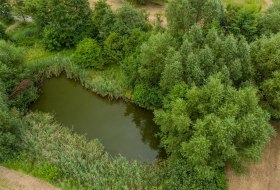
The Rohrwiesen biotope can be seen from far away on the Hiwweltour Zornheimer Berg. The many species in the biotope welcome hikers with an intensive natural background noise, which only decreases when the Hiwweltour passes into the vineyards.
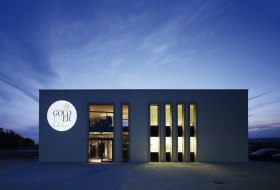
We are a young brewery concept with home-brewed beer in Rheinhessen, which has brought traditional gastronomy to life for young and old in an uncompromisingly modern architecture. PROST! Self-service beer garden with more than 500 seats
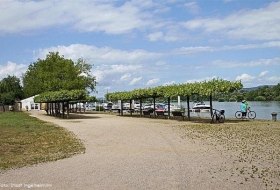
From 2001 to 2004, the Rhine riverbank in Heidenfahrt was extensively redesigned. Today, the riverscape combines local recreation and nature conservation and is particularly one of the most popular destinations in the region during the summer months. Some highlights of the river section include the promenade and sunbathing lawn, numerous waterfowl near the shore, and a fantastic view of the Rheingau.

Former Lutheran church, built 1738-42 in rural baroque style - tower 1930, three-sided hall, stucco ceiling and furnishings from the time of construction, "pneumatic cone chest organ" from the workshop Förster & Nikolaus Lich/Upper Hesse from 1915, also called winter church, since the installation of a church heating system at the end of the 19th century. Text Signposting with kind permission of the Orsgemeinde Flörsheim-Dalsheim This location is part of an audiovisual route and offers the possibility to watch/listen to…

Here once stood the Catholic school building, which was built in 1857. Already in 1850, the Catholic priest of Heidesheim, Heinrich Berthes, had promised the church fund the donation of this property. It was to serve as housing for clergy, accommodation for the organist and the bell ringer, as well as a classroom for the Catholic confessional school. Until the introduction of communal schools, the Catholic teacher Josef Becker from Heidesheim lived and taught here. Afterwards, the house was rented out and finally auctioned off in 1896 to…
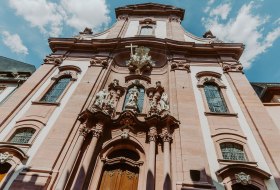
Behind the portal made of red sandstone, a modern glass entrance opens up access to a richly appointed Rococo interior. The Augustinian hermits, a mendicant order established in Mainz since 1260, maintained their monastery on Augustinerstraße until the year 1802. Between 1768 and 1772, both the nave church and the monastery buildings were completely rebuilt. Since 1805, the bishop's seminary has been housed in the complex. The extraordinary wealth of the church's furnishings is thanks to the generous support of patrons. The elector…

The soil profile is part of the Gau-Algesheim geoecological adventure trail. A soil outcrop and an information panel provide information about the formation of the Mainz Basin's calcareous tertiary.