
searchMenu
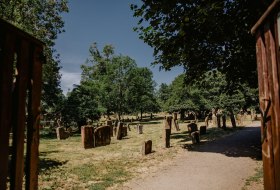
In July 2021, the cities of Worms, Speyer and Mainz were awarded the title of World Heritage Site by UNESCO for their ShUM sites. The cities are considered the cradle of Ashkenazi Judaism. Discover the Jewish monuments in Worms and their significance for the cultural heritage on this guided tour. You will visit the oldest preserved Jewish cemetery in situ in Europe, the ‘Holy Sand’, as well as the former Jewish quarter in the Judengasse with the synagogue. The monuments illustrate Jewish life in the city and, together with the…
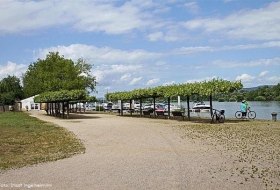
From 2001 to 2004, the Rhine riverbank in Heidenfahrt was extensively redesigned. Today, the riverscape combines local recreation and nature conservation and is particularly one of the most popular destinations in the region during the summer months. Some highlights of the river section include the promenade and sunbathing lawn, numerous waterfowl near the shore, and a fantastic view of the Rheingau.
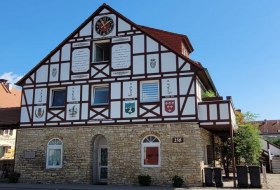
The former Frei-Weinheim marketplace was only built in the 18th century. Between 1700 and 1772, the weekly fruit market took place here on Tuesdays. Nikolaus Schaurer and his descendants operated a thriving wood trade here from the 19th century onwards. His father had already been the lessee of the Electoral Palatine wood yard. The wood trade had a long tradition in Frei-Weinheim. Documented since the 15th century, rafts regularly landed here, mainly from the Black Forest, the Vosges, and the Spessart. Wood was the most important…
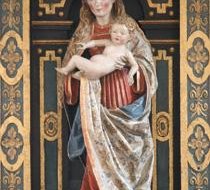
The high altar of the Baroque church encloses an exquisite statue of Mary made of lime wood, which was created around 1470 in the Upper Rhine region. It probably originates from the previous building, which belonged to a pilgrim hospital on the Way of St. James in the Middle Ages.
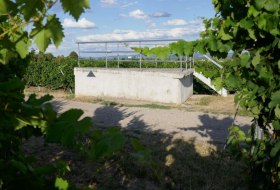
The Heisje was built during the war as a bunker for the Osthofen Flak observation post. After the war, a wooden cabin was built on the bunker as a Wingertsheisje. Parts of it are still present today. In 2014, the Osthofen Wine Ring renovated the bunker as a viewpoint, which offers beautiful views all the way to the Bergstraße and is a popular photo hotspot. Architectural Details: triangular base form, designed as an observation platform, with stainless steel staircase and railing the bunker entrance was bricked up during the…
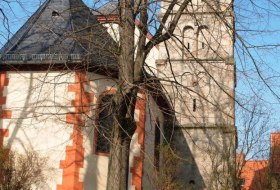
In the 11th/12th century, the parish was assigned to the diocese of Worms. The construction of the bell tower in Romanesque style, which has been preserved to this day, probably dates from this period. in the Romanesque style probably dates from this period. In the late 18th century, the church was extensively rebuilt. 1699-1705 Used simultaneously by Catholics and Reformed. 1706 Handed over to the Catholic parish. At the end of the 19th century, the bell tower was added and rebuilt on its present site. The silent organ still preserved…
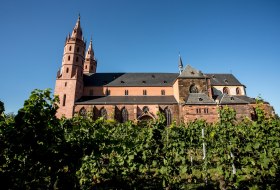
The medieval Liebfrauenkirche is surrounded by vineyards. It was built in the Gothic style from 1276 and was completed in 1465 according to the building inscription. Originally, it served as a collegiate church, in whose construction the citizens of Worms took a lively interest. It is the only one of the many Gothic churches in Worms that have been preserved. The surrounding vineyards and their wine, the "Liebfrauenmilch", received their name from the church. The original "Liebfrauenmilch" is still cultivated in the area around the church…
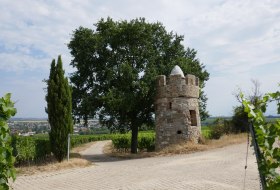
Juliusturm Built in the style of a medieval watchtower. Use of rubble stones, bricks, and baroque elements, including a boundary stone from 1600. The tower has a ground floor and a first floor, from which one can access the battlement via an iron ladder. After construction began in the spring of 1966, the inauguration took place on Ascension Day in 1971. The tower was renovated in 1999. It is named after its builder, Julius Grünewald. History / Stories / Anecdotes: As is well known, the…